RSS

Tag Archives: Grief

I Don’t Have to Say Goodbye!

(Originally published on Facebook 12/5/14)

Love this song – it fills a spot in this grieving heart. This morning I happened to reread a journal entry I wrote July 10th. I was in a contemplative mood, I guess, because I wrote, “I get the impression that within the Christian community we believe the presence of peace equates to the absence of pain and sorrow. True peace, as I understand it, is the absence of fear – not the absence of pain, sorrow, anger, frustration, and a multitude of other emotions.” I can only think of one place in my Bible where God told someone not to mourn – Ezekiel 24: 15-27 – and as in everything else God does, there was a purpose. Ezekiel’s failure to grieve in the outward manner that was typical of the day, served as a powerful sign to the House of Israel. His unexpected, and obedient behavior ensured the prophecy God had given would be heard and remembered.

I thought I’d include the lyrics here. Words are important to me, Getting them right, matters. I think I’d change “I will shoulder the blame” to “I will shoulder the pain”, but then no one asked me!

I also added a few more comments after the lyrics – if you’ve managed to read this far, you might as well read those too!

Lyrics:

Sometimes your world just ends
It changes everything you’ve been
And all that’s left to be
Is empty, broken, lonely, hoping
I’m supposed to be strong
I’m supposed to find a way to carry on
And I don’t wanna feel better
And I don’t wanna not remember,
I will always see your face
In the shadows of this haunted place
I will laugh, I will cry, shake my fist at the sky
But I will not say goodbye
They keep saying time will heal
But the pain just gets more real
The sun comes up each day
Finds me waiting, fading, hating, praying,
If I can keep on holding on
Maybe I can keep my heart from knowing that you’re gone
And I don’t wanna feel better
I don’t wanna not remember
I will always see your face
In the shadows of this haunted place
I will laugh, I will cry, shake my fist at the sky
But I will not say goodbye
I will curse, I will pray, I will re-live everyday
I will show through the blame
I’ll shout out your name
I will laugh, I will cry, shake my fist at the sky
But I will not say
Will not say goodbye
I will not say goodbye
I will not say…

It’s true, sometimes I don’t want to feel better – but, not all the time. It is also a comfort to know that I don’t have to say good-bye. As a believer in Christ, in spite of pain in the loss, I Do Not Grieve As One Without Hope! Therefore, See you soon is far more accurate than good-bye or as the ever bouncy Tigger of Winnie the Pooh fame (the first known individ . . . er, cartoon character, known to use “chat speak” in everyday conversation) was known to say, TTFN – Ta ta for now!

 
Leave a comment

Posted by on February 22, 2016 in Faith, Grief, Links


Tags: , , , , , , , , , , ,

Pity Party or Grief – That’s the Question

What exactly is a Pity Party?  That’s a question I have asked myself over and over again. In what other way will I know if I am throwing one of epic proportions?

Maybe I would have been better served to ask myself why I’d ever entertain the idea that my grief, in any way, could be construed as a pity party.  But I think I know the answer to that question.  It’s because a few brave souls have gently suggested such a thing.  Might you be simply enjoying a pity party, Janet?

Okay, as offensive as I find that question, I’ve chosen to take time to seriously consider it. Have I crossed the line from grieving to donning sackcloth and ashes in an outward display of grief for the purpose of inciting others to feel sorry for me?  In order to determine the answer to that question I first need to figure out the difference between grief and a pity party.  So I googled my way to a reasonable definition for both terms which you will find below.  If you get the chance though you really should take the time to see the Urban Dictionary’s top definition for a pity party.  It’s a nice and fairly accurate tongue-in-cheek definition that simply proved to be a bit lengthy for my purposes.

The Oxford Dictionaries defines a pity party as:

“An instance of indulging in self-pity or eliciting pity from other people.”

IMG_4821

And medicinenet.com defines grief as:

“The normal process of reacting to a loss. The loss may be physical (such as a death), social (such as divorce), or occupational (such as a job). Emotional reactions of grief can include anger, guilt, anxiety, sadness, and despair. Physical reactions of grief can include sleeping problems, changes in appetite, physical problems, or illness.”

IMG_4833

IMG_4837

Grief is about loss.  It’s about the intrinsic value of life, hopes, dreams and expectations. But today, I want to talk about life.

In my personal opinion, the idea that any single life is less valuable than another ultimately devalues all life.

We live in a culture that has become unconsciously and yet increasingly ambivalent toward the value of human life.  Why?  Maybe because abortion in the form of the Morning After Pill or the prevalence of far more invasive procedures combined with the recent Death with Dignity legislation is to blame.  Abortion and euthanasia have rendered life valuable primarily in terms of cost and convenience.  The subtle message that invades our hearts is that only the wanted, and the healthy have value in this world.  But what happens when the wanted become unwanted? Unmanageable? Inconvenient? Unhealthy? Too costly?  What then?

At the same time we live in a fast moving society.  The technology age with the advent of microwaves to microprocessors, has sped our ability to acquire, use and process data and shorten the waiting period for a vast number of things.  We are impatient people.  We want what we want now and fully anticipate the ability to achieve success or resolve problems post haste!  Now!  Yesterday!

IMG_4836But some things in life cannot be rushed.  Some things simply take as long as they take, which doesn’t seem to prevent us from feeling frustrated with the wait or pushing ourselves and others to shorten the amount of time to accomplish a given task. And that impatience has spilled over into every area of our lives including the expression of grief. A new definition can be added to Oxford Dictionaries definition of a pity party. It reads something like this: A term applied to an individual’s behavior when society and has lost patience with someone who has suffered a loss of grievous proportions.

The normal response to loss has been reduced to indulgent self-pity.  No, you say, that can’t be true.  But how often have you heard the grief stricken encouraged to “move forward” or “let it go”?

The difference between self-pity and grief is that self-pity is largely a matter of choice. And frankly, I don’t want your pity, and I haven’t met many bereaved parents who do. The bereaved want and need understanding, their feelings validated and they want and need affirmation – not pity. But let me be very clear on this:  Those who mourn can and will suppress their grief for a variety of reasons. Societal pressure, holding it together for spouses and children, caring for those who may be injured or aging, or because they need help processing it and are afraid or unwilling to seek counseling.  And while it might appear from the outside that this individual has completed the mourning process that is patently untrue. Unresolved grief lies in wait. Unresolved grief creates new problems. Unresolved grief is not healing, it’s harmful to oneself and to other relationships. Unresolved grief often leaves an individual incapable of talking about their loss, wounded yet diligently clinging to a positive perspective, and spiritually inconsolable or amputated for lack of a better way to describe that area of the heart that is walled off and God is refused entry.

Mourning the loss of a significant loved one should never, ever be confused with a pity party.  Grief is a normal and healthy response that testifies to the innate value of every life.  That is why parents grieve following a miscarriage, stillbirth or infant death.  All lives matter regardless of their duration or perceived contribution to this world.  All lives have value.

 
4 Comments

Posted by on February 11, 2016 in Faith, Grief


Tags: , , , , , , , , , , , , , , ,

Conversations with Melanie – Part 2

download (3)A fellow bereaved parent and blogger, Melanie, recently asked me if I still struggle with feeling God’s love. The question came in response to a post I published several months ago entitled, “Uncovering Unknown Issues of the Heart”.  Yesterday I posted an edited version on my initial response to her.  Melanie replied back and here you will see how our subsequent conversation ended.  I should say, I’ve also edited my response after mulling over my initial off the cuff comments.  Here goes, and feel free to share your personal thoughts.  As Melanie recently reminded me, iron sharpens iron.  Weigh in with what God’s Word and personal experience has taught you.

Melanie:  “I can see what you mean when you place it in context of our relationships with other humans. You’re right–we can’t MAKE others FEEL love even when we know we are loving them. And I had honestly never thought to ask God to help me recognize and feel His love. Submitting to Him has always been the focus of so many teachings and sermons and it has become my default answer to myself when I can’t “feel” God–it must be that I am resisting Him–so I back up and try harder (kind of an oxymoron, isn’t it) to submit. And this losing a child–on the one hand I think I have submitted. I do honestly believe that my children are given me to steward, not to own. I mean, his name was Dominic–belonging to God–and I chose it on purpose because I believe it. But then the days and weeks and months that come after losing a child. The loss really never ends. Living with the constant reminders and the ever-new daily losses (like when his friends graduate law school and pass the Bar) just add up and cloud my vision. . . I will ask the Father to teach me how to recognize and feel His love. To unwrap the gift.”

The gift Melanie refers to above is a response to this statement I made in yesterday’s post:

“I can ask God to help me not only accept His love, like a gift wrapped package and to receive it by opening the gift but also to open my heart so I value the gift as it was intended.”

Janet:  Melanie, I too have my default “theologies”. I think, and I say that because I’ve found there are often layers to my thoughts – layers of beliefs.  So I think I believe one thing but as I wrestle with it, I find it’s really the top layer to another more fundamental belief.  I’m pretty sure other people do this too.  A core belief gets layered over by insights (right or wrong) we gain as we assimilate Biblical teaching and life experience. In my post, “What is the Value of a Child’s Life?“, I included a brief prayer in which I asked God, “Am I so rebellious that the only way you can teach me is through suffering?”

Probably my biggest overall theological belief is that there are two over-reaching purposes for every experience (good and bad) we encounter in life. The first is to reach the lost with the gospel and the second is to conform the believer into the image of Christ. But really, is that true or just the theology that allows me to understand God whose thoughts and ways are higher than mine? We want so desperately to make sense of life’s tragedies but maybe the answers are far more simple. Maybe you aren’t failing to submit at all. Maybe I’m not too hard-headed to learn. Maybe someone’s free-will intersected with our lives; or when sin entered the world, mutated genes, deficient immune systems, or rogue cells were some of the consequences that affected all of creation resulting in genetic diseases, cancer, and other deadly illnesses, and God, in His wisdom, choose not to intervene in our individual lives, not because you or I needed to be corrected, but for some higher reason we can’t begin to fathom.

tumblr_mmnbe46lP11r1ibwko1_1280

I’m not sure what your theological background is, i.e., different denominations teach different things. Baptist or Pentecostal. Nazarene or Catholic. Those affiliations influence what we believe about topics from salvation to grace and everything in between. I believe we are saved by grace not works. But you know what? On some levels a works-based theology is easier even though the opposite often appears to be true. I like to follow rules because then I don’t have to guess and possibly get my theology wrong. But those same rules, just like the Ten Commandments, scream conviction and condemnation when things go fall apart. I must have done something wrong and that’s why this terrible thing happened to me. I must be really bad because bad things, big tragedies in fact, not simple course corrections keep happening to me. Down deep inside I must be rebellious. And you and I keep trying to “fix” ourselves and another layer is added to a core belief that may have started out as simple and pure and is now buried beneath correct and incorrect assumptions and teachings.

But what of grace? Grace is harder for me. It’s like an endless open field and I don’t know what to do because there are no boundaries. Grace says, “You aren’t resisting me, Melanie.” , “You aren’t rebellious, Janet.” This open field is your green pasture beside still waters – rest so that I can restore your soul.” But this open field of love and acceptance, of unmerited favor, in spite of my failure to trust or be faithful, feels overwhelming to me and instead of appreciating it, I’m filled with anxiety as I try to figure it all out so that I don’t get hurt again.

deep-green-valley-sea-tunnel-hd-wallpaper-1920x1080

Was Job failing to submit to God when Satan appeared before Him and asked, “Have you considered my servant Job?” No. Did Job learn a valuable truth about God by the end of the story? Yes; but did God set the events of the book of Job in motion in order to teach Job about His sovereignty? The book of Job never tells us that God allowed all those things to teach Job, or even his friends anything. Those lessons are an example of how all things work for good, but we seem to warp the meaning of that verse into saying God allowed certain events to happen for this greater purpose, thereby making God ultimately responsible for every tragedy that befalls us for the ultimate purpose of teaching us some lesson.

Maybe Satan still appears before God. Maybe God asked Satan, “Have you considered my servant Melanie?” Maybe you are the shining example God proudly draws Satan’s attention to for the purpose, not of correcting your failure to submit, but instead to once again show Satan, that you don’t love Him (that mankind in general doesn’t love Him) because He has richly blessed you; instead you love Him because He first loved you.

Maybe you will unwrap that gift and think, “What am I going to do with this? I was hoping for something else.” And maybe, just maybe, at the end of our stories we will look back on that gift that so baffled us and appreciate it for the precious and perfect gift it really was because we will find it wasn’t about God’s sovereignty or how to submit, but instead it was the gift of God’s grace and peace – maybe peace results when the Holy Spirit enables us to comprehend, assimilate and experience the wonder of grace.  Maybe that’s when we will feel the fullness of God’s love for us.  Maybe that’s when we will fully rest in God’s love.

eph31718


Paul’s Prayer for the Ephesians:  “…that He would grant you, according to the riches of His glory, to be strengthened with power through His Spirit in the inner man, so that Christ may dwell in your hearts through faith; and that you, being rooted and grounded in love, may be able to comprehend with all the saints what is the breadth and length and height and depth, and to know the love of Christ which surpasses knowledge, that you may be filled up to all the fullness of God.” Ephesians 3:16-19

 
7 Comments

Posted by on February 9, 2016 in Faith, Grief


Tags: , , , , , , , , , , , , , , , , , , , ,

Hard Times, Satan’s Devices & Faith

Hard Times, Satan’s Devices & Faith

The last quarter of 2015 was particularly hard for me.  Gracen had settled in well at JBU, David had changed responsibilities at work, which he was really excited about.  I on the other hand, encountered, a big gaping void.

Preparing to send Gracen to college and living independently after I had spent the last year and a half helping with her personal care needs, left me anxious on a level I’d never experienced before.  Her physical safety was my primary concern and following the deaths of three children, let’s just say I had little confidence that I would not lose Gracen too.

1k0

In addition, in April or May of last year I began fielding a new and distinctly different set of questions.  With graduation on the horizon people began asking me what I intended to do with my time – with the upcoming “empty nest”.   Not one person acknowledged that I was not supposed to have an empty nest.  No one seemed to realize that fear for Gracen’s safety, a premature empty nest and an utter lack of purpose might be frightening and emotionally overwhelming.  Then again, maybe people did understand but felt ill-equipped to address it so avoidance was deemed the most comfortable solution for everyone; myself included.  Unfortunately, avoidance left me feeling alone, stranded in my grief, disappointment and fear.  It also left me feeling as if Katie was unimportant in the eyes of the world and as if my fears for Gracen’s safety were unreasonable in spite of the fact that I knew Gracen was at high risk for injury on campus.

IMG_3801

So, by the time graduation passed, I was a bit of a mess.  I began taking an anti-depressant early in 2015 and by June I was unquestioningly aware that I needed more help.  So an anti-anxiety medication was added to the mix and it made a significant difference.  I had not realized just how much anxiety I’d been living with until the miracle of modern pharmaceuticals provided some much needed chemical relief.

Still, I was weary, frightened and at loose ends so once Gracen settled into school and dorm life, I settled into my bed.  I found myself alone, overcome with the grief I had suppressed in Gracen’s presence, fighting to process it or push down to avoid the excruciating pain and rudderless. I also began sleeping later in the day which affected my medication schedule.  One day I realized that I couldn’t recall when I’d last taken my prescriptions.  Knowing I had an upcoming appointment with my PCP I decided to wait to see him so he could help me restart them safely.  Looking back, that was not a good decision.  A downward spiral took hold.

medication-tired

A typical day looked . . . okay, looks (present tense), because this is still a typical day in my world . . . something like this.  I wake up, get a cappuccino or chai latte, return to bed to read.  I read, write, browse Facebook and email and nap on and off throughout the day. David comes home, FOX news comes on and more often than not he makes dinner.  After dinner, I read, he watches Fox and plays on the computer and finally, lights out.  I toss and turn, mind whirling and when I can’t stand my thoughts and the inability to fall asleep any longer, I start reading again.

Unless I have an appointment with my grief counselor, my trauma counselor (for PTSD), or my PCP everyday is much like the day before.  I’m comfortable with that.  The silence and being alone is easier than being around people. People make me anxious – incredibly anxious.  How does one answer all the oh so simple questions without making others uncomfortable?  How do I answer them without feeling pitiful myself?  “What have you been up to?”, “Will you get a job?”, “Any new hobbies?” A simple, “I’ve missed you” leaves me paralyzed and frantically searching for an appropriate response.  “Me too” is what longs to escape but “Um, thank you” is generally what spills forth.  And as to the what have you been up to question, not much is my reply. No new hobbies, no plans for a part-time job.  The reasons for those brief responses go unspoken as the listener will either feel uncomfortable with my answer or will try to explain to me why a job or hobby would benefit me.  Regardless, a simple “no” is awkward enough as it doesn’t open the door for further conversation.

Is my current daily activity healthy?  Surprisingly, the answer is yes. . . and no.

All those churning thoughts and my writing are a means of working through my grief. The reading is also good for me.  I read suspense, mysteries, thrillers, and romance. They engage the mind.  If I was simply laying in bed, not working through my sorrow and not engaging my mind, that would be cause for concern.

Facebook and email allow me safe access to the outside world.

And the sleep; it’s good too.  I’m trying to take my PCPs advice and get some much needed rest.  He pointed out that should I fail to recharge spiritually, physically and emotionally, I will be running on empty when Gracen inevitably needs additional support. To say Gracen’s shift from walking to using a wheelchair was an enormous change is an understatement of vast proportions.  Wheelchair use involves a mirad of complications I had never considered.  Transfers into and out of the wheelchair, bathroom use with and without handicapped facilities, transporting the chair, finding safe and viable entrance and exit doors, dealing with weather – oh my, dealing with weather!, and a multitude of unforeseen considerations became the new norm.  No one can estimate the demands the next transition in her health will require.  Therefore, I need to be prepared, or be able to get up to speed quickly, in spite of the emotional impact those changes bring.

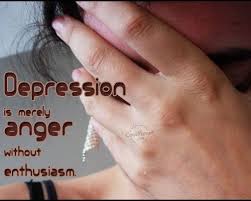
So I find myself withdrawing from the world around me, to rest, to grieve, to avoid assuming responsibility for making others comfortable with the realities of my life.  I don’t have the motivation or the energy to continue to push myself. Gracen was my motivation.  For her, I would, and still do, force myself forward, but in her absence . . . I lack the impetus to do much of anything.  I’ve struggled with the blues in the past, but never before have I found myself fitting the defined parameters of the clinically depressed.  Just hearing those words uttered by my grief counselor left me deeply ashamed and utterly humiliated.
IMG_4260

Why?  Why would a diagnosis of clinical depression leave me ashamed and humiliated?  I mean really, my counselors keep reiterating that I have suffered loss on a scale uncommon to the average individual, so depression is certainly not an uncommon or even an unexpected response.  I think I felt ashamed because depression is a mental illness and in our society a stigma is still attached to mental illness. Secondly, I had higher, albeit, unrealistic expectations for myself and for my faith.  Clinical depression represented, in my mind, both a personal failure to overcome and, far more painfully, a failure to avail myself of the power of God.  It stank of insufficient faith; not an insufficient God.

At some point along the way I drank the kool-aid and ascribed to the cultural expectation that I was capable of conquering every obstacle by sheer force of will and tenacity.  I should have realized, and in fact, from an intellectual perspective alone, I knew that was lie of epic proportions straight from the slithering serpent in garden of Eden.  That far too prevalent belief system is nothing more than the heart and mind’s rebellious desire to proclaim the soul god.  It’s the cunning and insidious whisper of the snake luring us into believing that with enough knowledge, with enough determination, with enough effort, we are in control.

347cd084-1316-4a6b-ae11-7351050ea284In truth, that idea is nothing but a craftily designed hologram. An idea without formative substance. It’s equivalent to the land of Oz and the impotent wizard hiding behind the castle doors and green drape.

How many times have you heard or used the analogy that if it walks like a duck and talks like a duck, it’s a duck?  Therefore, a Christian can easily conclude in the deeply buried regions of their heart and mind, that if they fail to conquer the human emotions grief generates, from guilt to fear, sadness to anger, and so forth, they are failing to walk by faith.  They are failing to apply the principles of their faith.  They are not the Christian they believed themselves to be and often worse, they have failed to live up to the perceptions and expectation of fellow Christians to inspire saints and sinners alike, to give God glory and praise in the midst of their despair and to minister to others.  In other words, God is not insufficient, their faith is insufficient.  They have failed God’s test of their faith.

But is that really true?  This duck analogy sounds good, but is it universally applicable? The truth is that in a paradoxical fashion, faith demands doubt.  The very essence of faith is to fall short of fact.  Jesus has always been the bridge that spans the gap between what we know to be fact and what we trust to be true.  When my faith, when your faith, falls short of expectation are we then dismal Christian failures?  I don’t think so.  We have simply lived up to the limits of our personal faith at that point of time – and lived up to the very essence of faith in general.

The longer I live the more aware I am of exactly how dependent I am upon the Lord God Almighty.  I am the instrument He forms at the potters wheel for His use.   I am made in His image but I was not, nor was any human, created with His perfect power and holiness. As a result, I am vulnerable to temptation and a failure to differentiate between truth and lies and good and evil on occasion.  And yes, I have fallen victim to Satan’s devices.  I’ve both allowed Satan to cunningly communicate a stark untruth about a simple diagnosis and to lead me to question God’s love and kindness by contemplating the idea that He may have withheld the desires of my heart in spite of the fact that I did my best to delight myself in Him.

What exactly does it mean to delight yourself in the Lord you might ask?   Gotquestions.org addressed that very question and their answer follows:

Psalm 37:4 says, “Take delight in the Lord, and he will give you the desires of your heart.” Taking delight in the Lord means that our hearts truly find peace and fulfillment in Him. If we truly find satisfaction and worth in Christ, Scripture says He will give us the longings of our hearts. Does that mean, if we go to church every Sunday, God will give us a new Rolls Royce? No. The idea behind this verse and others like it is that, when we truly rejoice or “delight” in the eternal things of God, our desires will begin to parallel His and we will never go unfulfilled. Matthew 6:33 says, “But seek first his kingdom and his righteousness, and all these things [the necessities of life] will be given to you as well.”

Did God withhold the desires of my heart?  No.  Children were my heart’s desire and I’ve been blessed with four.  I got to love and nurture each one for a finite amount of time.

Did God steal the desire of my heart from me?  The answer to that is no as well.  My children were on loan to me.  They were always His creation and David and I the chosen stewards.

Were they taken from us because we proved to be unworthy stewards?  I don’t believe that at all, in light of scripture.  God predetermined the number of my childrens’ days and in the case of my daughters he allowed man’s free will to intersect with Bethany and Katie’s number of days.  The Bible tells us that sin impacts all of creation and the cost of sin is death.  So be it accident or illness, intent or natural event, all death can ultimately be traced back to sin.

IMG_4284 (1)My grief recovery is complicated by the anticipation of more loss and the very real and reasonable fear of the destruction another loss will wreck within my heart.  Even grieving families that aren’t dealing with progressive disease often struggle with the anticipation and fear of more loss.  They’ve lost their naiveté – they know bad things can and will happen to them – not someone else – down the road.  But for most it is a vague Spector on the periphery of their minds.  For me it is a far more tangible presence and I must find a way to make peace with that and what it teaches me about the Lord.

Our family was living with progressive disease long before the collision that took Bethany and Katie’s lives. The difference between then and now is the loss of worldly hope.  There is a popular saying, “Where there is hope, there is life.”  I have lost the majority of my worldly hopes.  I know just saying that out loud will cause a great many people to reflexively remind me of all the worldly hopes that still lie before me.  What they don’t understand is that I no longer wish to have any worldly hope.  Worldly hope leads to expectations.  Expectations often lead to deferred hope and as we are told in Proverbs 13:12,  “Hope that is deferred afflicteth the soul: desire when it cometh is a tree of life.” – Douay-Rheims Bible.

I prefer to invest my expectation in eternal hope alone; that of eternal life with my savior and fellow saints, because that hope is the only one guaranteed to come to fruition.  I’m confident my hope of eternity will be fulfilled and not deferred.

However, I have yet to make peace with the role progressive disease will play in our lives, precisely because of all my prior losses.  It feels unfair.  It feels too much to ask of any one believer.  If this is what God’s love looks like, my more cynical perspective leads me to beg Him to share the love (with someone else)!  And yes, God can carry me through anything He allows to happen in my life, but before anyone reminds me of that truth (because I am well aware it’s true) put yourself in my shoes.  Google ARSACS (a rare form of Muscular Dystrophy) and read about what it does to an individual and then imagine walking that path with your child.  Imagine helping your child as their health declines.  Imagine standing by helpless to change it or improve their quality of life.  Imagine the things I’ve eluded to and left unspoken.  Making peace with God’s plans, with His will, with His sufficient grace is far harder when it’s personal, when you find yourself “feeling” as if His grace might not be quite be sufficient for you after all you have endured already.

PTSD-battle-PINI have reached the point of acknowledging that the best I may be able to hope for in regards to ARSACS, may consist of a cycle of repeated but temporary interludes of peace.

We live in a continuous grief cycle.  Gracen loses a previously mastered skill and we mourn and despair it’s loss and the daily ramifications that ripple out in waves from that loss. Eventually, we adapt to her new normal and settle into a wary peace until the cycle restarts with a new loss.  It’s just the way life works in our home.  Every time the cycle begins anew, we hurt.  Fear arises as does disappointment and sometimes even despair. I’m not sure if the Holy Spirit is actually doing a new work of trust and peace with each cycle or if each cycle simply forces me to acknowledge an as yet unconquered weakness (or doubt) in my faith.  Maybe I just keep spinning my wheels without making any forward progress.  Yet a person who is maturing rarely notices the subtle changes until enough growth has occurred and their pants are inch too short.  I imagine spiritual maturity is as subtle a process as manifest in physical maturity.  It’s only looking back far down the road that real progress is recognized.

Food-antidepressantToday, I am doing well to say without shame, my name is Janet Boxx.  I am clinically depressed.  I have anxiety issues.  I have PTSD.  I self medicate my anxiety with food.  (Ok, that I’m ashamed of – although I’m happy to report that while I may be a glutton, at least for now I’m not a suicidal, drug or alcohol addicted, glutton).  I lack the motivation to return phone calls, emails  and text messages; to clean my house, pay bills, shop for groceries, do laundry and sometimes even to shower.  It is what it is and my response to my life’s circumstances is not abnormal in the bereaved parents community, even two years down the road.

Having said all that; do not drop by unannounced!  I still have the capacity to feel great embarrassment and utter mortification.  Just because I’m comfortable in my current state of sloth doesn’t mean I’m equally comfortable having friends and family witness it.

Before speculation germinates, let me just say that David has demonstrated the utmost patience and support. He has taken on the tasks I normally do without complaint, anger or resentment.  He has a servants heart and demonstrates his love for Gracen and I in actions more than words.  He guards my privacy. David is better at compartmentalizing his grief than I am.  He has not, nor has ever, abandoned me to my grief and more importantly has never criticized or judged the way in which I am coping with the very same losses he, himself, is dealing with.  Our experiences with trauma are different because we were exposed to different things and took on different roles at the scene of the accident, at various hospitals, at home caring for Gracen during her recovery, with the medical community and the legal system and we simply deal with trauma differently.

This is what my life looks like when the Potter decides the pot He previously formed has served its intended purpose.  This is what my life looks like once I was fractured into minuscule pieces, returned to softened clay, and set to  spinning on the Potter’s wheel while He molds me into a new shape with a new or more complicated purpose in mind (after all, I am still a wife and mother).

b7d1824f3c676afed4e1e924034f0d73

And you know what?  As ugly as this lump of clay currently is, as uncomfortable as it is for me to find myself in this state, it’s okay to be a lump of clay in the Creator’s hands. There is no safer place to be and while others, myself included, may worry about who and what I’m becoming, I’m confident God is not.  He sees beyond the here and now – past the dark tunnel I’m traveling through – clear to an eternal future where He will literally light my world.

 
23 Comments

Posted by on January 29, 2016 in Adversity, Faith, Grief, Muscular Dystrophy


Tags: , , , , , , , , , , , , , , , , , , , ,

Adventures in Limboland

I am living in Limboland – Purgatory, if you will, as it is just a little bit of Hell.  Limboland is that in between place – a pressed in place as the limbo bar is steadily dropping lower and lower.  My grief counselor described it as being forced through a funnel and she is right in that my circumstances have forced me from a wider plane – a place where options and choices once existed into a smaller place.  There are still choices but they have been greatly narrowed down and very few of the things I dreamed of for my life remain – or maybe the remnants of my dreams have been so warped that things like marriage and motherhood while technically still exist are barely recognizable as the dreams I once held.  My life is not a fairy tale.  It never was, but at one point in time, before the lenses of my rose colored glasses became scratched and cracked, the fairy tale still felt attainable.


img_0352But the limbo bar has lowered and I am left to bend and contort myself in an attempt to fit within the new shrunken boundaries of my life.

Standing before the bar – do I turn from the bar walking away and concede defeat in exhausted resignation or do I defiantly walk into it rebelliously refusing any attempt at attacking the challenge that lies before me?  Maybe I should twist and arch trying to negotiate a means beneath this bar that I once navigated with effort but a modicum of confidence.  But the bar has fallen so much lower now that I have no real confidence in my ability to contort myself beneath it and frankly, I wonder if I have the flexibility required to be successful and if I have the fortitude to deal with the humiliation of both a failure to try and/or a failure to succeed.

I once read to shut out the constantly churning thoughts; my minds futile attempt to either work out a new, happier ending, or at the very least to thoroughly examine every detail in order to contain it and be able to pack it away in a small box that gets shoved into a back corner of the closet – never to be reopened but too valuable, too costly, to discard.

Now I read to hide from the utter silence.  It is too difficult, or I simply have not learned the discipline of sitting silently before the Lord.  I’m impatient and it’s frustrating trying to hear that still small voice and instead nothing more than silence echoes back. Alexander Theroux once said, “Silence is the unbearable repartee.”  Can you relate?

So I’m imprisoned in Limboland although Purgatory is a more apt description in my estimation.  Trapped between what was, lingering in this silent spot waiting for my heart to heal sufficiently so that I’m prepared to move into whatever God has planned – no longer angry yet still wounded leaving me resistant to what comes next but simultaneously antsy at this inactivity.

Fernando Ortega sings a song, “I Will Wait For My Change”.  The chorus of that song goes:

“All the days of my struggle
I will wait for my change,
I will wait for my change to come.
Only do not hide Your face from me,
Don’t take Your hand away,
Don’t take Your hand away.
I will wait for my change to come.”

And this is where I find myself, waiting for my change to come, unable to see the Master’s face, trusting He will not take His hand away.  And fast on the heals of this refrain, an old Avalon song plays through my mind – the Master’s plea to me? – Avalon’s “Dreams I Dream For You”:

“You taste the tears
You’re lost in sorrow
You see your yesterdays
I see tomorrow

You see the darkness
I see the spark
You know your failures
But I know your heart

The dreams I dream for you
Are deeper than the ones you’re clinging to
More precious than the finest things you knew
And truer than the treasures you pursue

Let the old dreams die
Like stars that fade from view
Then take the cup I offer
And drink deeply of
The dreams I dream for you”

img_0351And I wait.  I wait for healing. It can’t be rushed.  It takes as long as it takes for the Holy Spirit to do His work in my heart – for my terror of God and His plans to subside – for my resistance to a future void of my most precious dreams to recede – for my heart to soften, for it to feel safe enough to tear down the protective walls I’ve built in an attempt (futile though it may have been) to guard my heart from any more excruciating pain.

We advise friends to wait on the Lord, to trust in the Lord as if doing either is a simple thing to accomplish – but the old man wars with the new man.  Intellectually we realize that yes, we do need to wait on the Lord, we need to trust in Him, but putting it into practice is no easy feat – it’s a life long battle played out in different arenas of our lives from the arena of work, to parenting, the lust of the flesh and the arena of pride.  The same battle plays out over and over demanding greater faith and more commitment with every consecutive battle.

My purgatory is not a punishment.  I sincerely believe that God intends this season between my past and my future as a time of rest, a respite from the storms I’ve weathered and a time of renewal before the next storm is unleashed in my life.  Believe me, I see the storm clouds on the horizon brewing and I’m not sure how much time I have before the next major storm in my life erupts.  But during this time of respite I am struggling to rest. It’s hard to shift gears from constant diligence to rest.  The mind has simply been conditioned to living on high alert and a new form of anxiety develops in the void left when the need for hyper awareness dissipates but you also know it’s just a matter of time before the winds whip up again and the storm is upon you with little or no warning.

How does one let down their guard in these kind of circumstances?  How does one quiet themselves?  I wish I had the answers.  Maybe, the truth I’ve yet to accept is that I’m dependent upon the Holy Spirit for that as well – that I’m dependent upon Him for every little thing.  He tells me to quiet myself and after metaphorically chasing my tail for far too long, I recognize that I can’t do it in own power and I break down and with humility ask God to help me to quiet myself.  Then I’m back to waiting until one day I randomly notice that I’ve gone completely still within.  It wouldn’t surprise me to find out this is exactly how it works as years ago I went through a very similar exercise in a battle over the power of fear in my life.  How hard these lessons are to learn!  How stubbornly defiant is the old man within, doggedly determined to tackle problems his way!  How ignorant, slow witted, or lackadaisical the new man is having to relearn the same process repeatedly!

So maybe that’s my answer and now I have to decide if I’m ready to begin that process. Again.  Am I ready to quit chasing my tail, to ask God to quiet my mind, my heart, my soul?  Have I reached that point where I know beyond a shadow of a doubt, that I cannot do this for myself?  That only God can quiet the restlessness within?  The demand for answers? The need for justice?  The fear of what this “next” plan holds?  Am I resolved to pay the cost of discipleship regardless of price demanded?  Am I ready?  Will I ever be ready or simply too tired of this chronic emptiness to stand still any longer?  Am I waiting on God or is He waiting on me?  I don’t know the answers.  I just don’t know.

img_0353

 
2 Comments

Posted by on January 18, 2016 in Faith, Grief


Tags: , , , , , , , , , , , , , , , , , ,

Grieving Mother Vilified

imageJob Being Scolded by his Wife, c. 1790, Francois-Andre Vincent

I recently read a blog post that contained a reference to Matthew 2:18b, “. . . Rachel weeping for her children and refusing to be comforted, because they are no more.” It brought to mind another reference to a grieving mother in scripture. Specifically, Job 2:8-10 which says, “And he took a potsherd to scrape himself while he was sitting among the ashes. Then his wife said to him, “Do you still hold fast your integrity? Curse God and die!” But he said to her, “You speak as one of the foolish women speaks. Shall we indeed accept good from God and not accept adversity?” In all this Job did not sin with his lips.”

One scripture reveals a frequently overlooked truth about grieving mothers. Grieving mothers do not want to be comforted – they want their children back! The second scripture seems to expect the reader to remember and consider that Job’s wife is also a grieving mother, because it certainly doesn’t come right out and say it.

“Curse God and Die”, words spoken by Job’s own wife, yet another villain in the book of Job. But is she really?

Search the commentaries and you will find that many believe that to be true.

The truth is, in today’s vernacular, her words are shocking and if we take them at face value, they are not what one would expect from an upright worshiper of God. Still the conclusions drawn by some commentaries go far beyond painting Job’s wife as an angry grieving mother. They assign her a role in this story that can only be based upon conjecture.

For example, Matthew Henry’s Concise Commentary says of Job’s wife, “His wife was spared to him, to be a troubler and tempter to him.” Interesting conclusion but think about who spared Job’s wife. God initially gave Satan power over all Job owned and restrained him only from touching Job himself. So God did not save Job’s wife to play the role of Satan’s tormentor; Satan did. Satan can hope that Job’s wife develops the attitude and has the influence to undermine Job’s faith, but unless she was demon possessed, he has no power to make her play that role. Satan could have spared Job’s wife assuming what her response would be but he could not be certain because he was not created with the ability to know the hearts and minds of men. So, at best, Satan could make an educated guess at how Job’s wife would respond just as he did when he stood before God Himself boasting that Job, God’s paragon of integrity, would curse God if he should take away all of the people and things Job most loved.

The Pulpit Commentary seems to concur. Allow me to refresh your memory and remind you that Job’s wife did not encourage Job to curse God and die after the death of her ten children. Nope. As the Pulpit Commentary points out, “Job’s wife had said nothing when the other calamities had taken place” instead she had “refrained her tongue, and kept silence, though probably with some difficulty.” The commentary goes on to state that, “Now she can endure no longer. To see her husband so afflicted, and so patient under his afflictions, is more than she can bear.”

Well, that’s one conclusion. But whose to say that this woman simply struggled to stand helplessly by and watch her husband suffer fast on the heals of the loss of her children? Whose to say she isn’t terrified that she will lose him too and that living in anticipation of his death is much harder than inviting it because it gives her the illusion of control in a life that has become defined by chaos and suffering. It’s a, let’s just get it over with attitude, eliminating the anxiety she is fighting to control.

The Pulpit Commentary goes on to say, “Her mind is weak and ill regulated, and she suffers herself to become Satan’s ally and her husband’s worst enemy. It is noticeable that she urges her husband to do exactly that which Satan had suggested that he would do, and had evidently wished him to do, thus fighting on his side, and increasing her husband’s difficulties.” Ouch, that’s harsh!

Where’s the compassion? These commentaries seem to focus on Job’s suffering and ignore the very deep grief of a mother who has just lost every single one of her children. This woman carried those ten babies in her womb, fed them at her breast, and nurtured them as they grew. A mother of that day and age had very defined responsibilities. Raising and caring for her children and running her household defined the bulk of her identity and life’s purpose. Not only is it likely that she fears the death of her husband but the protection and security he provides as well. Unmarried women were extremely vulnerable in that age. This commentary seems to overlook the very real and reasonable fears and emotions Job’s wife was surely experiencing.

The Pulpit Commentary continues to support the conclusions they’ve drawn: “The only other mention of her (Job 19:17) implies that she was rather a hindrance than a help to Job. Curse God, and die; i.e.”renounce God, put all regard for him away from thee, even though he kill thee for so doing.” Job’s wife implies that “death is preferable to such a life as Job now leads and must expect to lead henceforward.”

Is the idea that Job’s wife might, in her grief, consider death preferable to life really that shocking? I’m thinking the people who wrote this commentary have no firsthand experience as bereaved parents. I know, from talking to a number of mothers in mourning that this is absolutely not an unusual concept for a grieving mother to draw.

But then comes Gill’s Exposition of the Entire Bible. Gill points out that “Job had but one wife, and very probably she is the same that after all this bore him ten children more; since we never read of her death, nor of his having any other wife, and might be a good woman for anything that appears to the contrary; and Job himself seems to intimate the same . . .”

Gill contends that Job’s wife was not blaming her husband for insisting on his integrity and justifying his behavior, nor was she wondering aloud how he could keep his integrity “among so many sore temptations and afflictions”. Gill further states that Job’s wife was neither rebuking him for his religion and continued practice of it nor was she mocking him or hating him for continuing to live according to his to his religious convictions as Gill points out that Michal did David. Instead Gill contends Job’s wife was “suggesting to him there was nothing in religion, and advising him to throw up the profession of it; for he might easily see, by his own case and circumstances, that God had no more regard to good men than to bad men, and therefore it was in vain to serve him . . . ”

Gill also points out that “curse God, and die: which is usually interpreted, curse God and then destroy thyself . . . or do this [curse God] in revenge for his hand upon thee . . . [even] though [cursing God would have the following result] thou diest”. Gill finds this interpretation unlikely concluding it is “too harsh and wicked to be said by one that had been trained up in a religious manner, and had been . . . the consort of so holy and good a man”.

Gill explains that the phrase curse God and die can also “be rendered, “bless God and die”; and may be understood either sarcastically, “such as “go on blessing God till thou diest; if thou hast not had enough . . . and see what will be the issue [result] of it; nothing but death;” or understood to mean “wilt thou still continue “blessing God and dying?”

“Her words could also have been offered sincerely, as advising him to humble himself before God, confess his sins, and “pray” unto him that he would take him out of this world, and free him from all his pains and sorrow . . . ” or may be interpreted, “bless God”: take thy farewell of him; bid adieu to him and all religion, and so die; for there is no good to be hoped for on the score of that [God or religion] here or hereafter . . .”

Hmmm, could Job’s heartbroken wife, who had likely lost every trace of naiveté about the fragility of life, simply been encouraging her husband to make sure he was right with God prior to his impending death? Could her statement have been so emphatic because she was afraid for the state of his soul if his circumstances indeed reflected Job’s standing before God, which was a common belief of the time?

Was Job’s rebuke of his wife heated or was he simply attempting to broaden his wife’s spiritual perspective?

The Bible tends to read as a narrative, yet we here in the West are accustomed to reading stories liberally sprinkled with adjectives designed to ensure the reader understand the emotion or context relevant to the story.

The Bible, however, doesn’t coddle the reader with adjectives, and therefore interpretation becomes more challenging. For example, Job 2:9 does not read, “Then his wife incredulously or angrily said to him, “Do you still hold fast your integrity? Curse God and die!” And how do we really know if the correct translation is “Curse God and die!” Instead of “Bless God and die!”?

Likewise, Job 2:10a doesn’t read, “But he” reasoned with, yelled at, strongly rebuked or patiently corrected “her,” “You speak as one of the foolish women speaks. Shall we indeed accept good from God and not accept adversity?”

Was Job’s wife a villain as she is frequently portrayed? Overall, it’s not an important detail; unless you’re Job’s wife. But have you ever wondered why God left all those helpful adjectives out of his inspired Word? Could it be that He expects us to learn enough about the way people respond to grief in order to better discern the correct interpretation? Could it be that He wants us to take our time, meditate on His Word and ask Him to reveal those things if they could Help us to understand Him and His ways better? Could it be a bit of both?

As a bereaved mother, the manner in which Job’s wife is portrayed and understood is important to me. I hate it when others make judgments about how well or poorly I am traversing this passage through loss. We judge Job’s wife based on a few words with opposing meanings. We judge her because we are unaware that her words even have opposing interpretations. We jump to conclusions because the vast majority of people can’t begin to truly comprehend how a grieving mother thinks and at best can only imagine her thoughts and feelings. But in making these judgment her reputation and her integrity is either lauded or maligned which I believes bears consideration.

Still, the one very important detail that every commentary I consulted failed to address is that at the end of the book of Job, God had words of rebuke for Job’s friends, but not for his wife. Now that speaks to me! Maybe what the Bible doesn’t say can be as significant as what it does say.

The character and intention of Job’s wife may seem insignificant to many, but those who write commentaries seems to believe it important enough to explore. More importantly, 2 Timothy 3:16 proclaims that “All Scripture is inspired by God and profitable for teaching, for reproof, for correction, for training in righteousness;”. So, in my estimation, God felt the words of Job’s wife were indeed significant. God inspired the writer to record her words that the body of Christ might profit from them.

 
1 Comment

Posted by on January 7, 2016 in Adversity, Faith, Grief


Tags: , , , , ,

Graceful Gratitude

grace2

Thanksgiving started early for me this year. 2:15 a.m. to be exact.  That’s the time my cell phone rang alerting me that Gracen was in need of some help.  Following her call, I hurried to the bedroom next door to find Gracen flat on her back, thirsty, hot and trapped under her covers with her knees bent and sore.

I peeled her covers back and removed the new knee-high AFOs (Ankle/Foot Orthotics) she now wears to bed nightly. Then I helped her to straighten her legs out by pulling her ankles toward the end of the bed and simultaneously pushing down on her knees one at a time before getting her some water.

Through all that, she accepted help without one complaint, in spite of the fact that I slept through two text messages before she called my cell.

Then I kissed her goodnight for the second time and crawled back in bed hugging my pillow to my chest; and I thanked God for Gracen’s attitude and for the grace she demonstrates in the face of debilitating disease.

As I lay still waiting for sleep to once again overtake me, I absorbed the most recent physical changes in Gracen’s body.  It hurts to watch her body continuously fail her.  And I thought about gratitude. One thing I’ve found in the face of the deaths of my oldest and youngest daughters, Gracen’s injuries and progressive disease is that others, in sincere compassion, try to make me feel better by reminding me of the many blessings in my life.  It’s almost as if people believe that counting your blessings negates your sorrows; which is categorically untrue.

Gracen’s diminishing physical abilities actually set the stage for thankfulness for it is in light her losses that I find myself grateful for much simpler things.  In the wee hours of Thanksgiving morning I found myself thankful for my graceful daughter precisely because she has every reason in the world to be angry and resentful.

The point I’m trying to make is that gratitude is experienced in contrast to those things for which we are not thankful.  Andrew Downs said it far better in his book  Alex Hollick:  Origins:

“To walk in the shadows is not a curse and to walk in the sun is not a blessing.  They are simply relative points of harmony, by which we can appreciate what we have, what we once had and what we hope to have.  The sun means nothing without the shadows, nor would shadows without the sun.”

So, by all means, count your blessings; but don’t beat yourself up for the normal emotions that arise from trials and loss.  God doesn’t tells us to suppress our emotions.  He tells us to bring our burdens to Him and when we do, gratitude will likely follow as we witness His care and provision.

 
1 Comment

Posted by on December 1, 2015 in Chronic Illness, Faith, Grief


Tags: , , , , ,

What is the Value of a Child’s Life?

Silhouette, group of happy children playing on meadow, sunset, s

I recently recognized that a series of issues I’ve been struggling with all have one theme in common.   The thing that ties each of these issues together boils down to the worth of my children.

Death seems to strip an individual’s value from them in the eyes of the world.  Daily life moves forward and it’s not long before the phrase, “Out of sight, out of mind”, applies.

What is the value of one child’s life?  To their parents, their siblings, their extended family, their circle of friends and acquaintances, to the community they lived in and even to the world at large?  It doesn’t take a genius to figure out that their value generally diminishes as you go through the list.

The grieving long to have their loved one’s worth acknowledged, appreciated and validated beyond the funeral and burial, beyond the first week they return to work, beyond the year of firsts, beyond . . .

This bereaved parent questions her own value as well – to God in particular.  I wrote this quite awhile back.  It’s a prayer of a sort, and deeply personal, but it clearly reflects how circumstances can cause a person to contemplate their significance.  Keep in mind that my first child was stillborn, then I lost two in a car accident, and my surviving child has a rare and progressive form of Muscular Dystrophy.  I’ve taken a series of hits.

“Am I so much more expendable than other Christians?  Do my hopes and dreams mean so much less to You?  From a logical perspective I know the answer to those questions is no, but from an emotional perspective I’m not so confident.”

“Why do You keep hurting me or allowing me to be hurt?  Do I just suffer well for the cause?  Am I too stubborn or rebellious to learn the lessons you want to teach me without suffering?”

Value and worth, it’s a struggle I see other parents who mourn wrestling with.  Support groups, blogs, and Facebook posts are filled with the underlying theme.

Some make a shrine of their child’s room.  And the outside world shakes their heads in pity – failing to understand why.  Honestly, the parent may not be able to put into words why they do it themselves.  But their child’s possessions are a visual, touchable testimony of both their existence and who they were below the surface.  That room and the pictures they treasure, are often all the parents have to hold onto.  They’ve lost their child and cling to the things they loved and touched in their absence.

And really, if you think about the alternative, can you blame them?  Does anyone really think about the emotional price a parent pays when they sort through the remnants of their child’s life?  Do they realize how it feels to decide what to give away – and who to give it to?  What to keep.  What things most effectively reflect the child they loved.  What to throw away; now that, well that’s the nauseating one.  Disease or accident, murder, suicide, or addiction,  military or public service, has snatched their child from their hands and now they feel as if they are choosing to throw away their child, bit by excruciating bit.  Maybe the shrine makes more sense now.  It’s not shameful, it’s nothing less than a grieving parent defiantly refusing to toss away the evidence of their child’s life.  It’s all about value and worth.

Almost two years after the collision that killed my daughters, I am still sorting, still deciding what to keep, what to give away – what to throw away.  Granted, I was caring for Gracen, but I’ve had time to complete the task.  Every once in awhile, I open the doors to the two rooms that hold the things my children once touched and I make value judgments until my heart can tolerate it no more.

Some parents set up foundations in their child’s name for a cause their child was passionate about or to raise funds or awareness for the disease or tragic circumstance that took their child from them.  Those foundations meet needs, keep their child’s memory alive, and validate their child’s worth.  And some parents stand jealousy on the sidelines because their child did not live long enough to discover their purpose and passions.  There will be no foundation and their child will all too quickly be forgotten, overlooked, or intentionally left out for fear of reminding the grieving parent of their death.  Personalized gifts will not include their name, you will be introduced as the parent of one less child – and the parent of a stillborn child will not be asked about their child’s birth weight and length; all in the name of compassion.  It’s not always true that actions speak louder than words.  It’s amazing how loudly silence speaks.

Polite society encourages the family to let go, move forward, have another baby, take in foster children, adopt, and of course, be thankful for the children you have left; unwittingly conveying the message that the child you lost no longer has significance and that continued grief equates to a lack of appreciation for those you still have.

And the grief-stricken parent fights the war within; attempting to reconcile the worth of their child between the messages they receive from society and the intellectual truth that their child’s worth never stemmed from their accomplishments but from the fact that they were theirs and created by God.

The grieving parent is begging – demanding really – that society validates the worth of their child; their contribution, their significance in this world; regardless of their length of life.

I’m not sure any parent passes through the grief process until they either “feel” the validation they crave (because a small group of people do just that) or until they resign themselves to the real truth – that it is enough if they alone recognize the worth of their child in this world.  The battle within has been won, the enemy defeated by love – the love of God and the love of the parent.  The only thing the parent needs to let go of is the desire to have their child’s worth validated by society.  However, that’s easier said than done.  Knowing what needs to be done does not make it easy to do.  The heart wants what the heart wants, and it’s a process that’s mastered one painful step at a time.

 
4 Comments

Posted by on November 18, 2015 in Grief, Muscular Dystrophy


Tags: , , , ,

Thanksgiving 2015

imagejpeg (8)

This Thanksgiving we will return to Kansas City as we have for the last ten years. Every time we choose to go “home”, we pass the accident site twice. In fact, we rarely drive north unless we are heading back to see family and friends. The crosses usher in a heighten level of anxiety for the painful moments that are simply unavoidable. And the return trip heralds in memories of where it all went so wrong. To say I need to emotionally prepare myself for these trips is an understatement of gigantic proportions. But staying home – being alone in our unnaturally quiet house – is exponentially worse.

Gratitude and grief co-exist within my heart. Therefore, this year I plan to allow myself permission to do something I’ve never permitted myself to do in the past. If I feel overwhelmed, if the sight of healthy intact families, and bright futures pinch just a bit too much, I will slip off and ensconce myself in the room we make use of when we are in town.

I will not make myself be strong when I feel weak as I have done in seasons past. I will not force myself to wear a mask in order to make others comfortable in my presence. I’ve long been aware that I’m not responsible for how comfortable others feel with my grief, at the same time I’ve always assumed responsibility for shielding others from my emotions, for their sake and mine.  Frankly, an open display of my vulnerabilities is abhorrent to me. In the past I’ve felt as if leaving the room was just as bad as crying in public. Doing either draws attention and leads people to talk. Now, I’m just tired. I also realize that it’s not unreasonable or shameful to remove myself from a situation in which I’m uncomfortable. To remain, to pretend good cheer, that’s a burden too great for me to bear and this year – I just don’t have the energy.

Small talk is chief among my personal anxieties. I can talk about Gracen. I can talk about David; but I cannot talk about myself. I have absolutely nothing to share. So if conversation stalls, I will remind myself that I am not individually responsible for keeping the conversational ball in play. If asked questions that are awkward, I will, for the first time ever, say, “This is not a good time to discuss that.” or “I don’t want to talk about that.”

Deflection, a highly valuable social skill, is not one I’ve ever become adept at using. Over the years I’ve been put on the spot and found myself exposing vulnerabilities to family, friends or mere acquaintances to my personal detriment. In the coming weeks I will practice simply not answering a direct question by responding with a question of my own.

Grief is teaching me a world of useful and unexpected lessons and fiction has provided a multitude of examples from which I intend to draw. (I knew I’d eventually uncover a completely reasonable excuse to justify the inordinate amount of reading I indulge in.)

Most importantly, I will remind myself of this truth:  Honesty does not require transparency; nor does it require vulnerability. It is my right to choose both when and what I feel comfortable sharing and with whom I wish to be transparent and vulnerable.

I don’t want attention or pity: I want privacy and understanding. I don’t want others evaluating how I’m doing based upon their personal perceptions. If asked, I’ll share what I’m comfortable sharing and hope if others later inquire, that no more than what I’ve shared will be disseminated. Anything more is little more than fodder for gossip.

I will never forget how gutted I felt when I bumped into a friend following the death of my son and she said, ‘I heard you weren’t doing very well.’ What was worse was realizing that the person who reported on my well-being had never asked me how I was doing; they simply watched me and drew their own conclusions.  Gossip hurts.  While long forgiven, and completely beyond my control, I remain hypersensitive to how I am portrayed to others. It’s my reputation and it’s my heart that suffers for idle words spoken.

While the things above may seem simple to many, they are challenging for me. So this year, I will keep the commitments I’ve made to myself and will do my best to let go of the things I can’t control. There is grace and forgiveness for those things.

Of the many things for which I’m thankful – the blessings among the thorns, I’m most grateful that I still have David and Gracen. However, I dread that moment that often occurs at Thanksgiving gatherings when asked to share that for which we are thankful. To express my thanks for my husband and daughter draws attention to those who are missing. It’s awkward – for me and for everyone else. While grief may overshadow my gratitude, that doesn’t mean I don’t recognize and appreciate my blessings. So this year, I will give thanks, but I might not have a happy Thanksgiving. Contrary to what the Veggie Tales teach, a grateful heart is not always a happy heart; and that’s OK, gratitude is sufficient.

 
2 Comments

Posted by on November 16, 2015 in Grief


Tags: , ,

Suffering & Sanctification

(Facebook Post 9/8/15)

I recently read, FEARLESS, the story of Navy SEAL, Adam Brown, an Arkansas native. Adam wrote the following statement in his journal while deployed. In order to better understand the quote, you should know that Adam overcame an addiction to cocaine in order to become a SEAL.

“I’m not afraid of anything that might happen to me on this Earth because I know no matter what, nothing can take my spirit from me… How much it pains me…to think about not watching my boy excel in life, or giving my little baby girl away in marriage… Buddy, I’ll be there, you’ll feel me there when you steal your first base, smash someone on the football field, make all A’s. I’ll be there for all your achievements. But much more Buddy, I’ll be there for every failure. Remember, I know tears, I know pain and disappointment, and I will be there for you with every drop. You cannot disappoint me. I understand!”

What I like about this quote is not that he tells his son and daughter that he will be there for their big moments, but that he will be there for every failure. I think that’s what Jesus would tell us, “I’ll be there not just for the high points of your life but for every failure. (OK, I like to add in – “not to judge or criticize but to support and encourage”). I imagine Christ saying to us, just as Adam said to his children, “Remember, I know tears. I know pain and disappointment, and I will be there for you with every drop. YOU CANNOT DISAPPOINT ME. I UNDERSTAND!” (No shouting intended – just emphasizing the point).

I don’t know about the rest of you but I do a fair amount of self-criticizing for my failure to do this grieving thing, and every other misstep during life’s trials, well from a Christian perspective.

Today a good friend sent me the following excerpt from “Boundaries: When to Say Yes, How to Say No, to Take Control of Your Life” by Dr. Henry Cloud and Dr. John Townsend:

“God is free from us. When he does something for us, he does it out of choice. He is not “under compulsion” or guilt or manipulation. He does things, like dying for us, because he wants to. We can rest in his pure love; he has no hidden resentment in what he does. His freedom allows him to love.

Many Bible characters ran into God’s freedom and learned to embrace it. Embracing his freedom and respecting his boundaries, they always deepened their relationship with God. Job had to come to accept the freedom of God to not rescue him when he wanted. Job expressed his anger and dissatisfaction with God, and God rewarded his honesty. But Job did not “make God bad,” in his own mind. In all of his complaining, he did not end his relationship with God. He didn’t understand God, but he allowed God to be himself and did not withdraw his love from him, even when he was very angry with him. This is a real relationship.

In the same way, Paul accepted the boundaries of God. When he planned trips that didn’t work out, Paul accepted the sovereignty of God. He asked God repeatedly for a certain kind of healing that God would not give him. God said, “No, I do not choose to love you in the way that you want right now. I choose to love you with my presence.” Paul did not reject God for setting that boundary.

Jesus was perfected through his suffering (Heb. 5:7-10). In the Garden of Gethsemane, he asked that his cup of suffering pass from him, but God said no. Jesus accepted God’s wishes, submitted to them, and through that “became the source of eternal salvation for all who obey him” (Heb. 5:9). If Jesus had not respected God’s boundaries and God’s no. we would all be lost.”

I especially like the part where it describes Job’s response to God’s sovereign plan. It seems as if we equate the fact that Job did not sin or blame God in response to all his trials as saying that he did not struggle with his losses or with God’s sovereign plan – and I guess I expect myself to do the same. But it’s not true. Job did struggle and he desperately wanted an audience with God to plead his case.

And Paul obviously didn’t simply shrug off his request for healing either or he would not have continued to pray for it. He came to terms with God’s decision not to heal him over time. The Bible doesn’t tell us how much time that took but we might consider that Paul may have experienced three seasons of praying for the thorn in his flesh to be removed instead of three individual prayers expressing his request for healing.

We would also do well to bear in mind that Jesus was both fully God and fully human. Maybe his dual deity/humanity allowed him to pray, “Thy will not mine be done”, in one nights time, in spite of his obvious anguish, whereas, we are being made holy and need to allow ourselves more time to come to the same place instead of beating ourselves up for failing to be holy while we are still living out daily the process of sanctification.

“There is therefore now no condemnation to them which are in Christ Jesus, who walk not after the flesh, but after the Spirit.” (Romans 8:1) Jesus is not looking down from above, shaking his head and uttering sounds of dismay as we struggle our way through our trials. He feels our pain, hurts with us in the struggle, but is not surprised by it, alarmed by it, or disgusted by it. He knew we would respond this way – knew it would take us time to come to terms with his sovereign plan and is far more likely to be heard muttering, “You hang in there, Janet. You hang in there __________, (insert your name here), because you will overcome this through my power in time as the Holy Spirit continues the work of sanctification within you. Keep your eyes on me, and quit worrying about what others think and quit beating yourself up. You are right on track and you bring glory to my name in the midst of your struggle, not just when you come out on the other side of it.” (At least that’s what I think and hope is happening amid the great cloud of witnesses in heaven who are encouraging us to keep fighting the good fight for our faith). That’s my story and I’m sticking with it – today anyway!

 
Leave a comment

Posted by on October 22, 2015 in Books, Faith, Grief


Tags: , , , , , , , ,