
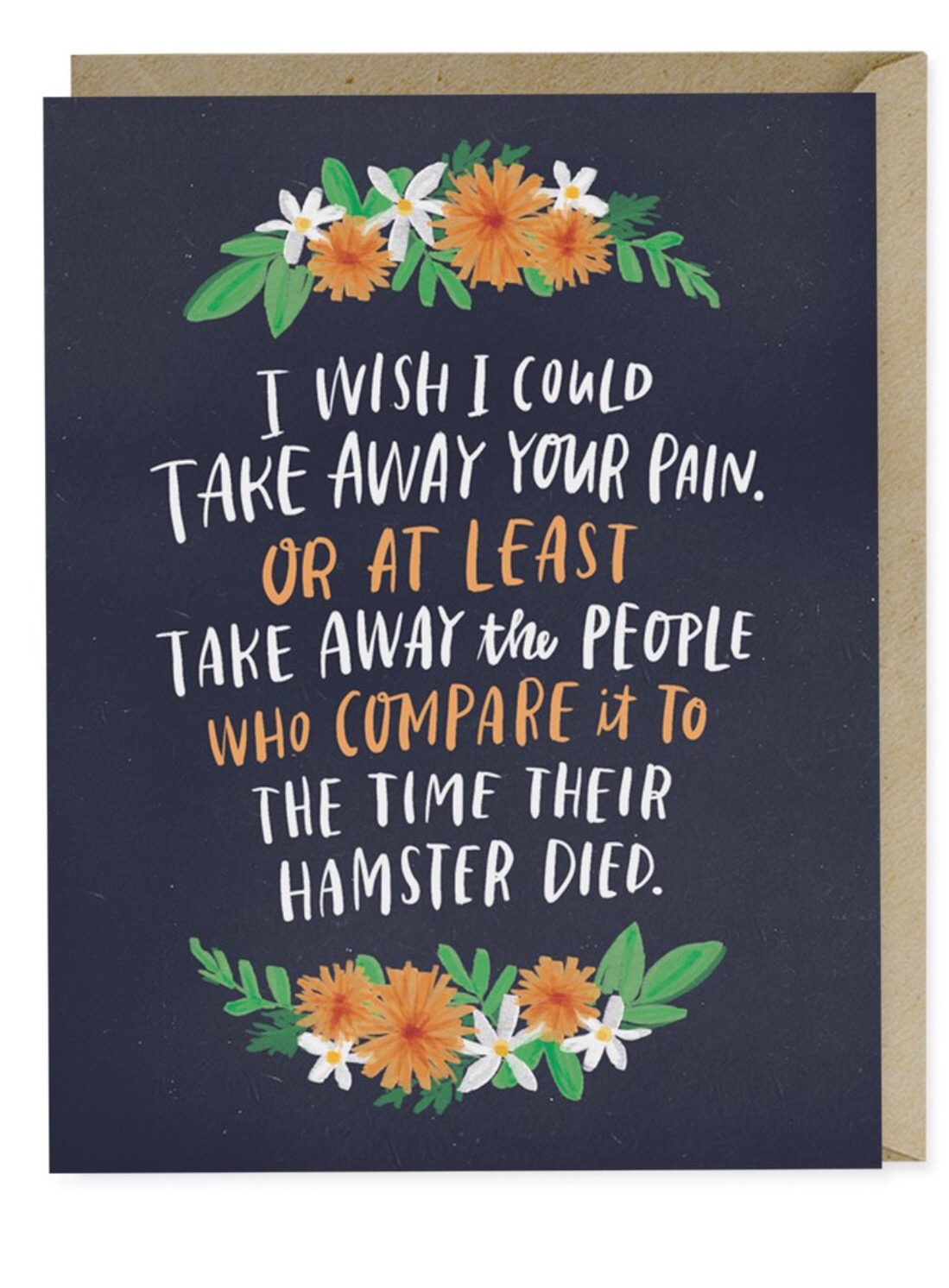
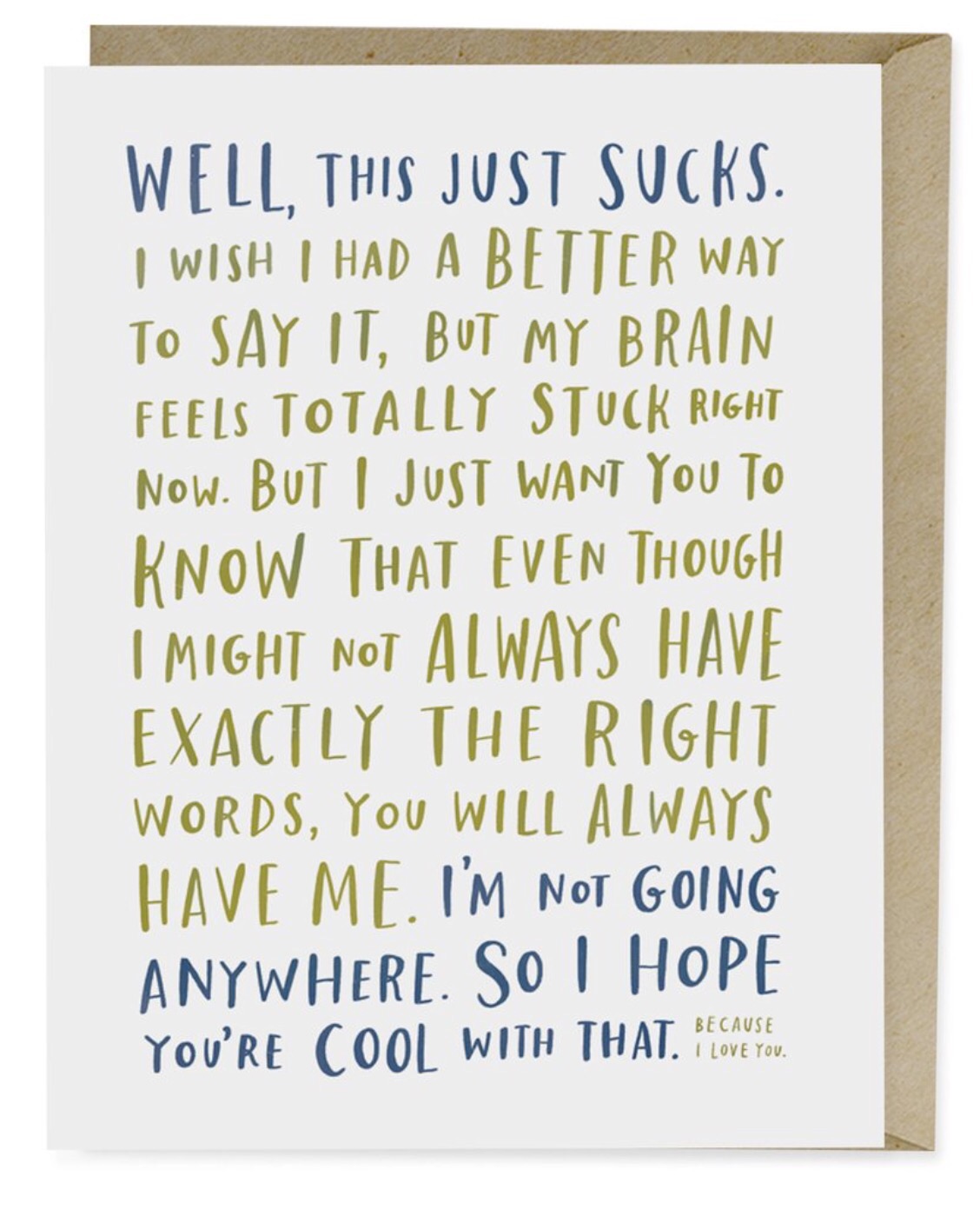
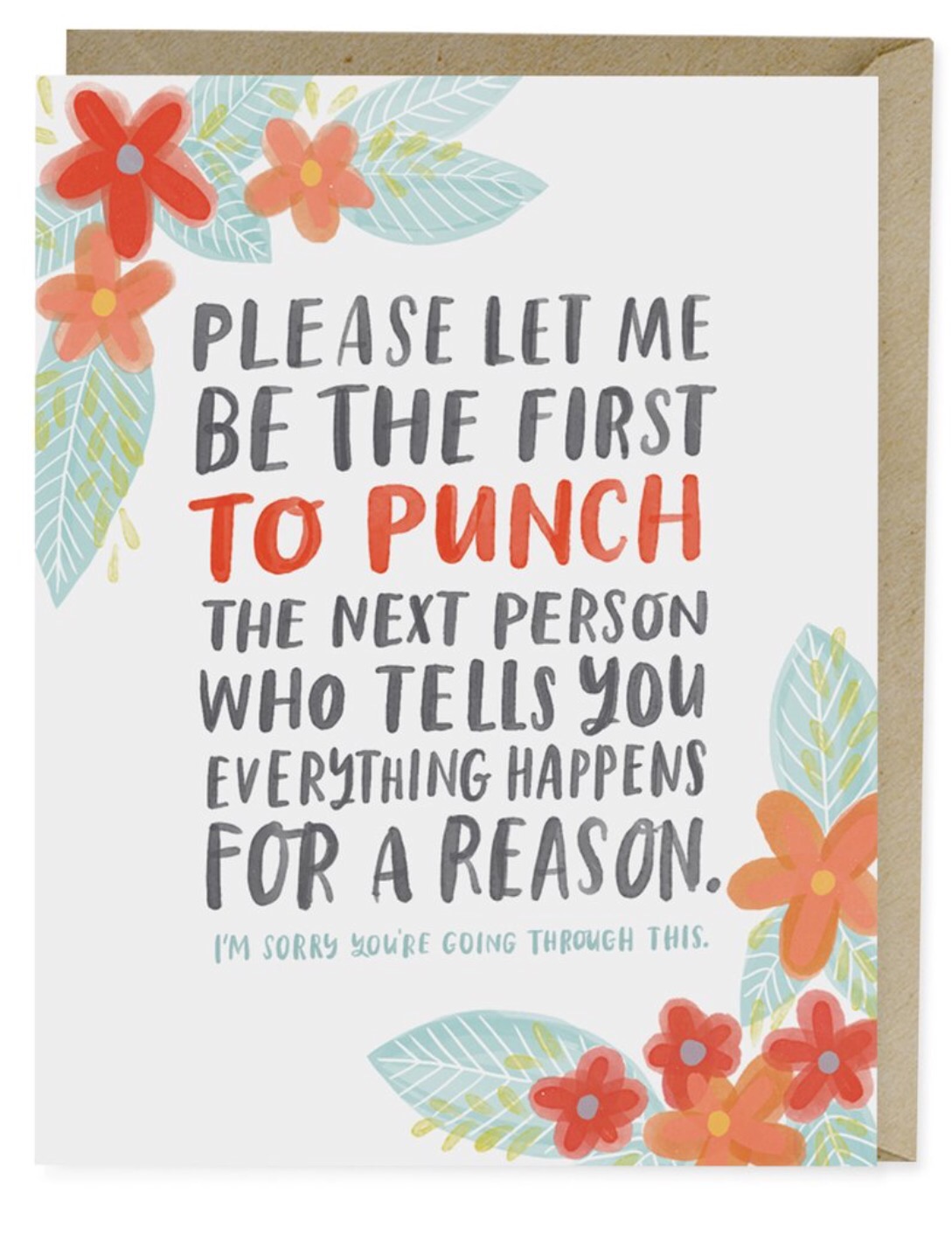
How many times have you struggled to find the words to support and encourage others in the midst of life’s trials? Help is available. Follow the links below to check out the book and a selection of empathy cards.
There Is No Good Card For This
How many times have you struggled to find the words to support and encourage others in the midst of life’s trials? Help is available. Follow the links below to check out the book and a selection of empathy cards.
There Is No Good Card For This

I’m far more verbal than my husband, David. Should you meet him you will find that he has a dry wit, an interest in politics (shudder), and for some strange reason knows someone everywhere we go. His current boss picked up on that last fact one day when they were out and about on some job related task and turned to him and said, “Are you the Mayor or something?” She now refers to him as “The Mayor”. He has also been dubbed the “Dos Equis Man” based upon the “Most Interesting Man in the World” ad campaign for the Mexican beer brand. (That moniker is my personal favorite).
In public David blends in until one-liners and witticisms pop out and others take note. He is known for his sense of humor and fun and he’s well-liked for that reason among others. Aside from his interest in politics you might think he’s just an easy going guy who floats merrily through life not taking a whole lot seriously along the way.
Yet, unbeknownst to most, even close friends and family, he is surprisingly deep. It’s rare that one gets a glimpse of the man beneath the still waters, but on occasion he makes an appearance and the quiet man of faith is revealed. At heart, David is a servant leader. He loiters in the periphery as those with more gregarious personalities and outspoken tendencies take center stage. The depths of his faith are vastly underestimated and definitely under appreciated. He’s unobtrusive, ministering in quiet corners and as a result his thoughts and opinions are not frequently requested.
In the last couple of years we have gathered with two other couples for weekend getaways. We catch up and laugh and at some point settle in for a discussion of real life issues seeking solutions and encouragement from a spiritual perspective. That focus on the spiritual perspective is what makes those conversions unique because everyone involved has somehow had their world shaped by a need for faith.
We are, by unspoken agreement, searching for more than worldly advice and solutions to the challenges of our lives. David is an active listener for the most part. I have this memory of David doing dishes and quietly talking with one of the other wives following one such conversation. This is the setting in which David is most likely to surprise another with unexpected insight.
However, every once in a blue moon, David just puts it out there. Clink on the link below to see one such example:
Daily Battle was originally published on 6/22/16, one day after the 24th anniversary of the day our son, Cole, was stillborn. And David’s words . . . they are Cole’s legacy.

In twenty-five years I have yet to find a satisfactory way to celebrate the birth of my stillborn son. It’s not a day on which I can look back and remember smiles and laughter from days gone by. There are no photos to flip through with nostalgic pleasure. My son Cole, 25 years later, remains a mystery to me.
I used to think that maybe I might be able to discern at least a core personality trait simply from the way Cole moved within my womb . . . but that, of course, that was simply the musings of a mother who desperately longed for the child she never knew. I dare say I am not the only mother who has entertained such flights of fancy. And in the three years since Bethany and Katie joined Cole in their eternal home, the unknowns have been magnified.
When I cross that great divide will I meet my son as a babe in arms or will a full grown man, standing tall, shoulders back appear before me? Will Bethany and Katie be forever 20 and 16? Will I be an old woman, grey of hair and stooped of shoulder in their eyes or the woman I was when each one left me behind? Will Cole meet me as a woman not yet 30 and Bethany and Katie with the fifty year old mother they last saw?
I don’t know the answers to the simplest of questions in regards to my children. It is a fruitless pursuit to wonder who they would be today had the events that took each one from me not transpired. But there is one thing I do know. We will know (have memory of) and visually recognize one another. There will be no need for introductions.*
And so, as I find myself once again at a loss, restless and a bit frustrated by the unfulfilled longings of my heart, I also live in anticipation of the day when the waiting is over. When all my questions will be answered and all my longings satisfied.
Then my thoughts circle back to the more practical matters at hand. What to do in recognition of the child who is so much a part of my being . . .
Will there be cake?
Should there be?
Balloons released into the air?
Could we, the three of us who remain, enjoy either or would they just magnify the emptiness of the occasion?
And why can’t I answer this question after 25 years?
*See Luke 16:19-31 – The story of the rich man and Lazarus. The rich man clearly recognized both Abraham the Patriarch (whom he had never met as Abraham died before the rich man’s birth) and Lazarus remembering that he sat at his gate covered in sores hoping for scraps from the rich man’s table.
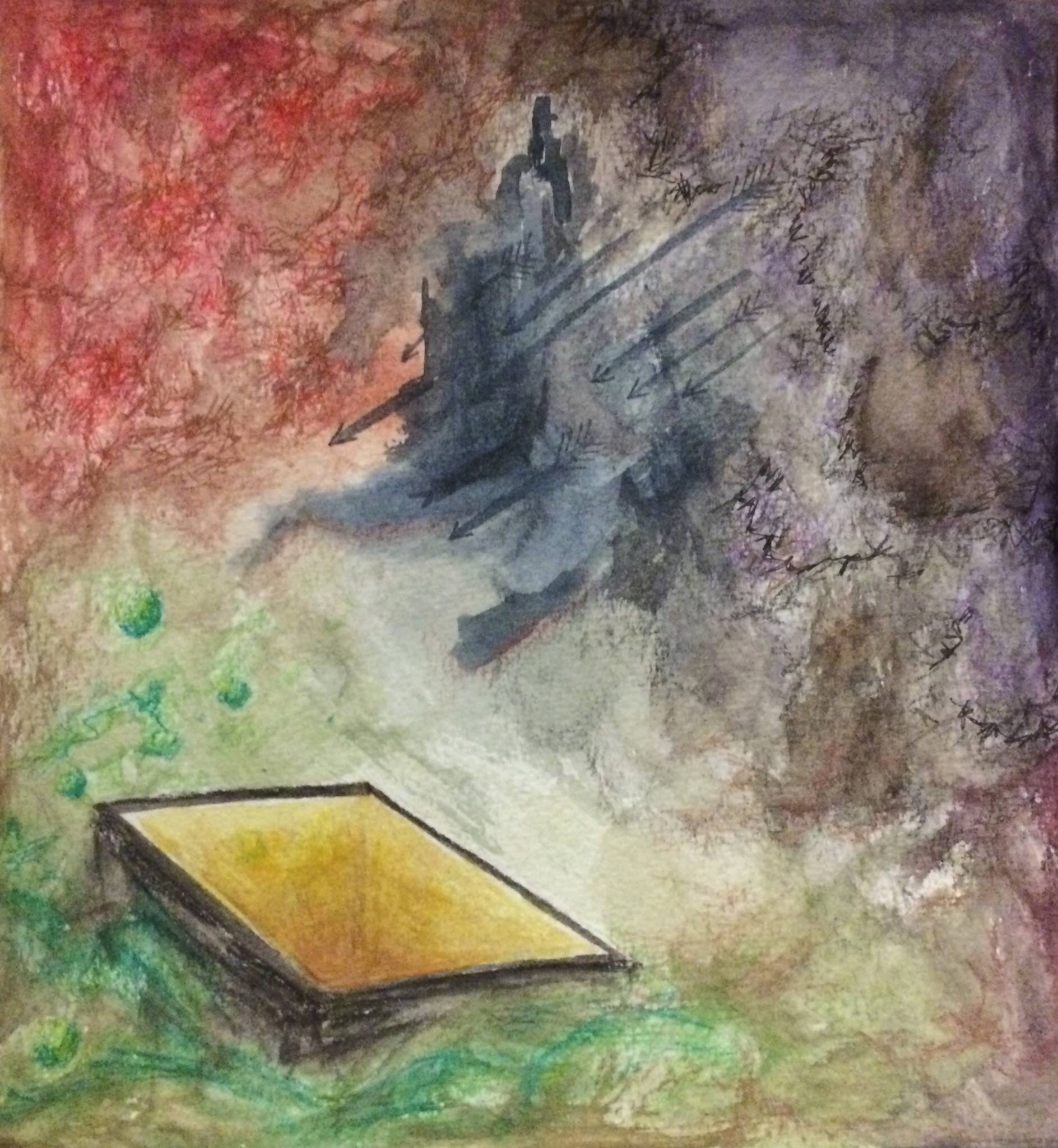
Psalm 91 is a mixed-media work of art including the use of watercolor, colored pencil and marker by Sarah Marie
Grief is far more complicated than missing your loved one and fearing they will be forgotten. Please take a minute to absorb the message Sarah shares below.
“This month marks one year since we lost our daughter. If I’m open about my pain, well-meaning people say things like, “She’ll never be forgotten,” or “Thinking of you as you miss your precious Christina.” I know they mean well, but their responses show how little they understand of what we experience.
Yes, I miss her. And if she was here, I wouldn’t have this particular pain and I’m thankful she’s remembered. BUT simply missing her isn’t what creates this emotional (and sometimes mental and physical!) paralysis.
It’s the scars of trauma. The anxiety. The loneliness of grief. The shallowness of petty people. The exhaustion that comes from insomnia, nightmares, and the exertion of conversation. The racking sobs I cannot control when I just want to be alone but the laundry pile is daunting and dinner needs made. The ever greater, experiential understanding that I have zero control and the way that changes… everything.
. . .
Come, Lord Jesus. Come!”

This morning I opened the Facebook app on my iPad and started scrolling through my news feed. A post from a grief site caught my attention so I ducked over to the loss of a child FB page and started scrolling. . .
And my heart broke all over again.
As I scrolled through the posts I read such raw anguish. . .
I heard my own thoughts echo back through the words of others.
Despair.
Discouragement.
Defeat.
How did this happen?
How could this have happened?
Why did this happen?
Who am I now?
What am I doing?
Why can’t I get it together?
How do I go on? . . . Do I even want to?
I’m so angry!
I feel numb. . . detached . . . lonely.
I have no friends left.
If I’m not happy others don’t want to be around me.
And so it goes. . . so many pain filled thoughts and feelings.
And I’ve put my emotional armor on.
I read these things and give a knowing intellectual nod to each one . . .
But I refuse to draw any closer.
I refuse to engage my emotions.
I can’t shoulder their pain along with my own.
Today,
I have nothing to give.
My arms are so weighted that I cannot reach back for the one who so desperately needs a hand to hold.
I’m still broken.
And yet,
I feel guilty and ashamed that I can’t formulate words of hope, support and encouragement for another hurting parent.
Not today.
The words just won’t come.
Maybe tomorrow. . .
But what of all those hurting souls that need a word today?
I am so thankful for the many bereaved parents who step up and in on the days I can’t. Those who are there for me and others with understanding, encouragement and sometimes righteous indignation.
I’d never wish another parent into the child loss community, but I am so very thankful that I’m not alone.
And on the days when I am weak – when the well is dry, others are stronger and extend the hand of courage to the weak and the wounded.
I need the Holy Spirit to fill me before I can be poured out once again for another.
We need each other.
How we need each other!

“It doesn’t matter how much I heal or how much emotional processing I go through or how much I pray or go to therapy, whatever, he’s still gone.” Said the young man whose older brother died eight years ago.
I can relate to those words on so many levels. They’re pretty straightforward, but I’ve found myself meditating on them. In some corner of my mind I recognize there is a nuance that is not so straightforward but is profoundly important.
And here it is hiding within these three words, “. . . he’s still gone.”
“He’s still gone.”
I have spent the last three years processing my emotions in the aftermath of the collision that killed two of my daughters. Those losses piggybacked onto the loss of my son almost 25 years ago. And then they were interwoven with the knowledge that my 21 year old daughter, my only surviving child, was born with a rare genetic degenerative neuromuscular disease. Believe me when I say that I’ve processed emotions.
Relentlessly.
I’ve prayed. Prayers of anger and despair. Questing prayers. Begging entreaties. Oh yes, I’ve prayed.
I’ve even tried trauma therapy and grief counseling.
I’ve tried finding meaning in some global purpose. Painted on a positive outlook. Whatever.
And they’re still gone.
Do we somehow, unconsciously assume that emotional processing, therapy, and prayer will change that unacceptable truth? Do we think it will fill the gaping holes left in our hearts when our children die? Do we think that grieving will make the loss of our loved ones okay in time?
And maybe that’s why “they’re still gone” echoes so hollowly through my heart and mind. Maybe I am living with the unrealistic expectation that at some point “they’re still gone” won’t hurt anymore. Is that the goal of grieving?
What expectation should I have? What will healing look like? Feel like? Is it even possible? And maybe that’s why his words, “he’s still gone” communicate a straightforward fact but if you really let them sink into your soul they communicate so much more. Resignation, sorrow, despair, and feelings far to deep to articulate.
He’s still gone.
She’s still gone.
They’re still gone.
And maybe that’s why I’m stuck. Why I can’t move forward or get better – whatever it is that society expects of me.
No matter what I do, my personal reality is that they’re still gone. Until the end of my days they will be missing from me. Maybe there are some wounds that sink so deep into an individual that they can never be healed this side of heaven. And unless I make peace with the immeasurable worth of an eternal future (not just acknowledge it-not just understand it-not just hope for it) and even if I do make peace with eternity, the wounds I have sustained will never fully heal. They will always hurt because they’re still gone.
Never will I be whole again.
Never will it stop hurting.
Never will I be okay with their absence.
Still gone.
Still gone.
Still gone.
It echoes and echoes and echoes through me. Those words hold an unquantifiable depth of meaning and they leave my heart torn and bleeding.
Still gone.
“I don’t need any more accidents in my life.” (From the video above).
That just resonates within.
I really don’t need any more accidents—any more tragedies in this life.
And the partial lyrics below resonate as well in the aftermath of death and this pilgrimage we are taking through degenerative disease.
IS THERE LIFE OUT THERE - Reba McEntire

". . .
But now she's wonderin'
What she's living for
. . .
She's dyin' to try something foolish
Do something crazy
Or just get away
. . .
There's a place in the sun that she's never been
Where life is fair and time is a friend
Would she do it the same as she did back then
She looks out the window and wonders again

Chorus

Is there life out there
So much she hasn't done
Is there life beyond Her family and her home
She's done what she should
Should she do what she dares
She doesn't want to leave
She just wonders
if there's life out there
I’m still wondering what my purpose is.
And doing something foolish or crazy or getting away from all that’s gone before—all that’s yet to come? I can’t even imagine what that would feel like.
I would do the same as I did before, and I don’t want to leave.
I just wonder if there really is a place in the sun—if there is something more in THIS world—something that doesn’t hurt out there. . .
For me.
And I wonder if other bereaved parents, other special needs parents, want to know that too.
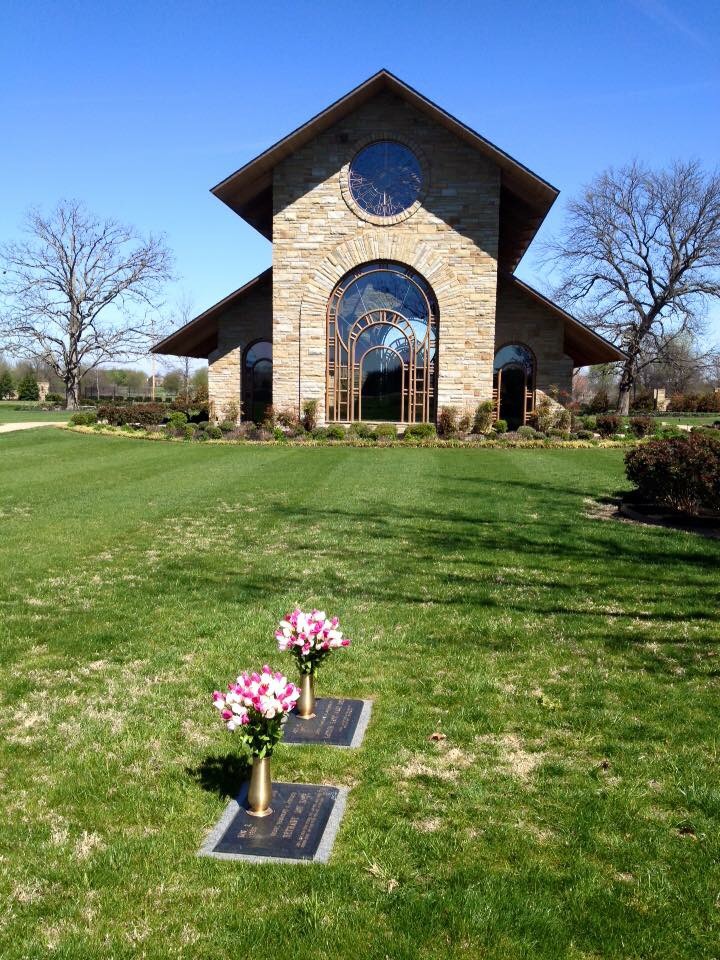
“It gets worse before it gets better.”
Those were the words the pastor offered to a newly bereaved couple whose daughter had died unexpectedly.
And you should know that he is right.
Bereaved parents are stunned when four months, six month, nine months down the road they find their grief remains overwhelmingly raw.
The shock has worn off.
Their hearts have been flayed open and the wound is still bleeding.
It doesn’t help that those outside the loss community expect healing to be happening when the magnitude of the loss is still seeping into the soul.
The depth of loss has not been fully realized when the funeral is over. No, in the weeks and months and years ahead bereaved parents are confronted with the realization that they didn’t just lose their child but that they lost the hope, dreams and expectations they held for that child as well. They lost their child’s future, but they also lost their own future expectations (marriages and grand babies, to name a few) and they grieve for both what their child will never experience and what they themselves will miss out on.
Frequently, bereaved parents squelch their grief as they try to remain strong for their surviving children. They can’t fall apart because they are so desperately needed by those too young to understand or to express their grief in healthy ways. That’s one reason why the average length of time it takes for parents to work through the grief process averages five years or more – the longest bereavement period of any loss known to man.
My daughter’s grief counselor told her that many teens don’t grieve over lost siblings for four or five years. They experience delayed grief which I think results from trying to be strong for their parents.
The entire home is in upheaval. The sense of security that was taken for granted has been exposed for the fallacy that it is. Gone is the naïveté that we can protect those we love from harm. It’s a frightening experience.
It’s truly terrifying.
And parents and siblings are often left dealing with problems that arise in the wake of the death. Financial pressure, legal issues, spiritual, emotional and health problems assault the family. Marriages and family relationships quake in the aftermath.
While the outside world expects healing to begin, bereaved families are often sorting through compounding problems. They are reeling from the fallout and haven’t really begun the healing process.
Grieving parents and the outside world need to know and understand that grieving the loss of a son or daughter – regardless of their age – is the most devastating and destructive loss experience. Both the bereaved and those who care for them need to anticipate and make accommodations for a long and drawn out grieving process, because it definitely gets exponentially worse before it gets better.
For those who care about the bereaved, grieve with those who grieve. Let go of the expected length of bereavement. Don’t reduce grief to a simple bid for sympathy or pity. And be ever aware that for the grief-stricken feeling bad feels bad, but feeling better feels bad too. It’s a psychological hurdle grieving families frequently face. There is a battle raging within the hearts and minds of loss parents. What they know to be true doesn’t “feel” true and they struggle to reconcile the conflicting messages received from the heart and mind. The solution is not as simple as mind over matter.
People often ask me what to say or do for someone who is grieving. So many times I’ve heard others advise just be present and listen. Both those things are helpful but not necessarily healing. In my experience validating feelings is the single most healing thing you can provide the bereaved.
Grief, for a bereaved parent can be likened to a pressure sore, more commonly known as a bedsore. Pressure sores develop when an individual stays in one position for too long. Unlike other wounds, a pressure sore grows deeper instead of spreading wider. They can be deceptively dangerous because they rapidly eat through layers of flesh below the affected skin to the tendons and the bones beneath if not treated promptly. Treatment involves the painful scraping away of the dead tissue to reach the healthy tissue below. Ointments is applied, the wound is packed and covered and daily cleaning is required to prevent the wound from getting deeper.
Likewise, grief gets worse and deeper when exposed to the pressure of society to project a positive outlook or to work through their grief in the timeframe others deem appropriate. Shaming and silencing the bereaved for failing to heal, wallowing in grief, or throwing a pity party deepens the wound by invalidating the lost loved one’s worth. Venting the negative feelings helps to clear away the infection but refusing to validate those feelings is tantamount to leaving the wound exposed to the dirt and debris floating in the air. The wound gets worse and healing takes longer as the grief-stricken seek the understanding of others.
Validation is the antibiotic ointment applied to promote healing. The presence of “safe friends” (those who don’t criticize or try to fix the broken) is the packing and covering which provides a barrier between the open wound and the influences of the outside world. Frequent validation and affirmation keep the emotional wound clean providing an environment that encourages healing. The bad must be flushed out before the good can replace it.
Unfinished grief occurs when we slap a bandaid on without cleaning and disinfecting the wound. The wound may no longer be visible to the outside world but is quietly festering beneath the bandaid that it covers.
For the bereaved, be gentle and patient with yourself. You’ve been deeply wounded and deep wounds heal slowly. As the old song says, “The road is long with many a winding curve.” Grief isn’t supposed to feel good.
It gets worse before it gets better; but it can and does get better as the grieving struggle their way through the intimately painful thoughts and emotions that arise after the death of a loved one. That’s not to say it will never hurt again at some point down the road. Instead it means the bereaved will no longer be consumed by and actively working through their loss.

This is my contribution to The Mighty. Maybe you should share your story too!
Fears of a Loss Parent – themighty.com
 Why is that important to anyone outside the special needs community? It’s important because one day rare disease may impact you or someone you love.
No one thinks it will happen to them . . .
but it happens to someone . . .
to multiple someones, every single day in this world.
And fear and frustration follow in the wake of diagnosis every time.
Every time.
Sometimes determination and tenacity are birthed . . .
Sometimes crippling despair and anxiety.
Welcome to the world of rare disease!
 Two of my daughters were born with a rare genetic disease known as ARSACS. For 15 years their disease went undiagnosed. In fact, only two labs in the US were testing for ARSACS at the time of Gracen and Katie’s diagnosis. World Rare Disease Day seeks to raise awareness and promote research for diseases that are far less likely to receive research funding than common diseases do. That’s why I support Rare Disease Day.
 I’ve learned much about the medical community in my sojourn through rare disease. I’ve met warriors and wimps, fighters and folders, the courageous and the weak-kneed and have discovered that some emotionally separate themselves, and some, the bravest of the brave, count the cost and invest their hearts and souls with little regard for their own mental health. Many ride the tide between the positive and negative—between hope and hurt—just as parents, friends, and family do. They paint on brave faces then hide in the supply closet as tears flow unchecked down their faces. They smile encouragement and swallow back the fear of failure to cure, treat, and simply to help. And they carry the weight of the dashed hopes and expectations that loved one’s pile on their shoulders as they reach, ache, and long for a cure—a treatment—a miracle. They see victory . . . they experience defeat . . . all with the frailest of hope that one day, one day, disease will be vanquished and hope will reign supreme. And the wimps and folders, the weak-kneed and the emotionally distant are far too frequently former warriors and fighters, the courageously tenacious and the bravest of the brave who have stood in the gap for so many and for so long that they have paid a high personal price in the form of compromised mental and emotional health.
Did you know health care professionals, as well as family caregivers, are at risk of PTSD? It’s due to the repetitive trauma of treating and viewing horrors we’d all rather be ignorant of.
 Today, World Rare Disease Day 2017, I’d like to take a minute to appreciate and thank the dedicated medical researchers and practitioners that invest so much time and effort searching for cures, prescribing medications and treatments, holding the hands and hearts of those desperate for answers and hope.
Thank you to the nurses, doctors, technicians, researchers for the kindness you offer. Thank you for treating the families with respect and dignity in the face of brokenness. Thank you for answering questions, returning phone calls and emails, and telling loved ones hard truths. Thank you for gaining knowledge and for just showing up, encouraging, and extending support along this difficult path.
And thank you to the clinic staff that handle everything from making appointments, ensuring calls get returned, and even for haggling with insurance companies and making sense of the numerous bills that lick at the heels of world-weary parents and spouses.
Thank you for caring and for doing your jobs to the best of your abilities.
I see you.
I appreciate you.
 Boxx Banter