 I reiterated to my grief counselor last week that I trust God for my eternal future and I trust that God will walk me through anything He allows to transpire in my life but that I don’t currently trust Him with my heart.
Ruth responded, “But is that really trust at all?”
I cocked my head to the right and looked her in the eye and proceeded to relate a very poor analogy in support of my position. You see, I knew I believed that trust, like faith, grows over time in every personal relationship, but I wasn’t really prepared with an answer to support my conclusion.
When my daughters were young, on occasion they would be afraid to go to bed fearing that they would have a nightmare. My husband, David, is pretty much a creative genius. He thinks fast on his feet (unlike myself). His immediate response the first time our oldest daughter told him of her fear was to tell her that it would be impossible for her to have a bad dream that night because it was “Free Dream Night”. I stared at him incredulously thinking, ‘What’s going to happen if she actually has a nightmare tonight?’
Free Dream Night was a security blanket of sorts for my trusting young daughters and the entire concept bloomed over time as questions began to surface such as, ‘How do you know it’s Free Dream Night?’ (Stupid they were not, but gullible . . . well, they wanted to believe in Free Dream Nights). My very creative husband bamboozled his way into a highly complicated and mysterious formula regulating Free Dream Nights by the common calendar. This concept was obviously way over the tops of my young daughters’ heads, but then it was nothing more than a fictional tale woven by a master storyteller; or more accurately by a desperate and misguided dad.
 You have to know the day eventually came where David was confronted by one of his daughters who’d actually had a nightmare on Free Dream Night. David managed to successfully pass it off as an error reading that very complicated calendar. Fortunately, none of our three daughters were plagued by nightmares, but had that happened, their trust in their dad would have been damaged.
All of us trust in people and things to a certain degree. Sometimes we are not even aware of the trust we automatically offer others until it has been breached. Anyone who has lived for any length of time quickly learns that not everyone is trustworthy, and it’s devastating when we find the people we trust most have let us down.
A parent spends countless hours nurturing, caring and providing for their children – all normal everyday activities that build trust within our children unintentionally. We don’t feed them when they are hungry to teach them to trust us. We feed them because we love them, because they are hungry and we know nutrition is important for their health. And our children inadvertently learn that they can trust their parent to feed them when they are hungry.
Yet, the best cared for child still doesn’t fully trust their parents when fear is along for the ride. Picture if you will a young child standing on the edge of a swimming pool, his dad in front of him in the water encouraging the child to jump. For the young dare devil, this is no big deal, but for the timid child, it’s not hard to see the child doesn’t quite trust that their dad will catch them.
 And sometimes, we break trust intentionally. We need that young child to be safe around water. We need them to learn to hold their breath, to kick and paddle their way to safety should they fall into a pool. So dad, after catching the child multiple times without letting their face go under water eventually lets his child’s head fall below the surface immediately pulling them back above water. The child learns that dad will still catch him, but he also learns he’s not as safe as he previously thought he was. Has the child lost all trust in his dad? No, he still knows his dad will feed him when he’s hungry but he isn’t as trusting the next time he stands on the edge of the pool and his dad beckons him to jump.
This is the nature of trust. We trust in degrees. We trust but verify either by asking questions or by taking risks. We start out small and take increasingly more daring risks as any given relationship grows. But we really don’t trust anyone completely – not even the Lord.

Trust in the Lord with all thine heart is an encouragement as much as it is a command. But that “with all thine heart” part trips me up a bit. I concluded on my own that it meant to the full degree of trust you have within you, but I imagine the more literal interpretation would imply that if you don’t trust fully, completely, 100% in the Lord, you will forfeit the blessing of having God direct all your steps. So, I turned to a John Gill’s Exposition of the Bible for clarification on that portion of Proverbs 3:5. After fully expounding upon what it means to trust in the Lord, Gill turned his attention to that one small but important phrase, “with all thine heart”, and this is what Gill concluded:
” . . . this trust in Father, Son, and Spirit, should be “with all the heart”, cordial and sincere. The phrase denotes not so much the strength of faith as the sincerity of it; it signifies a faith unfeigned. . . “
High five! Gill and I agree; he just said it better.
So yadda, yadda, yadda, after reading my analogies and checking in with Gill, I have to say, trust is not an all or nothing proposition. We trust with all the sincere faith we have within and the Holy Spirit fills in the gaps and directs our steps.
What say you in regards to trust?
 I was recently shocked to hear a fellow grieving mother express that she had to explain to someone that the pain she was suffering was not treatable by the ingestion of a Tylenol or Advil. And that one comment flipped a switch in my mind.
 It’s not unreasonable or hard to imagine that God the Father is also no stranger to suffering. Can you imagine the mental and emotional anguish God suffered as He denied His son’s request to have the cup of suffering pass from Him? How must He have felt knowing that His sinless, perfect son would take on the sins of the world and be separated from their intimate fellowship for the first time ever? How must He have felt knowing the excruciating pain that awaited His beloved son? He surely suffered as He watched as His son was arrested then abandoned and betrayed by His closest friends. It must have hurt to watch His son hit, spit on, taunted and mocked as He was passed from trial to trial throughout that long night.
 Can you imagine the torment as He watched as His son was whipped and struggle to carry His cross to Golgotha-His anguish as He looked on in horror as nails were driven through His son’s hands and feet, as He struggled to breathe hanging on that cross for hours and finally-finally hearing His one and only son cry out begging to know why He’d been forsaken by His father? Can you imagine the suffering? Could you willingly go through any of that with your child? God the Father was not Himself experiencing physical pain, but He was surely overwhelmed and tormented by suffocating anguish.
 Neither God the Father, nor Jesus Christ discount or belittle the anguish and torment that results from mental and emotional pain. They both experienced it. They both understand it at the most intimate level possible.
 I think healthy grieving involves wrestling with God. As much as it is in your power to do so, ignore those who are blessedly ignorant and foolishly judgmental. Wrestle well with God. Don’t exclude Him from the process. Contend with Him! He is strong and loving and faithful and He grieves with us and for our broken hearts. He doesn’t condemn us for our anger and sorrow, instead He pulls up a chair and sits with us through it longing to draw us into His arms to comfort us. One day, I hope every broken believer finds themselves there, in His waiting arms, sobbing out their anguish and frustration and when the tears and shuddering gasps of sorrow release then I hope they will find their hearts to be safe in His care. That’s my hope for myself, for every bereaved parent, for every hurting Christian, for every lost soul struggling to put one foot in front of the other day in and day out after their cherished plans have been swept away.


 My heart is anchored here but I long to flee — from what happened — from what is yet to come — to fly far, far away. To flee this unwelcome reality — oh, to be able to pretend it never happened! To be able to board a time machine and travel back, back before the collision, back before diagnosis, back before Katie, before Gracen, before Bethany and Cole. Back before marriage, back before love, back before David, back before my very existence, erasing every footprint, every memory of me. Back before every bit of my existence tainted the lives of the people I love far more than life. Just to have the opportunity to un-hurt others by erasing me.
 Ring, ring . . . Oh, crap, David’s calling back and Gracen’s right here! I can’t talk in front of her.

 traumatic responses. What may be a minor problem produces anxiety on steroids. Pray them through, sit with them, validate their fears.
 There are days and moments and very long nights when I think, I can’t do this anymore. Come to find out, that simple thought is a trigger for tears.
 continue to put on a brave face and hide the true depths of the pain and sorrow from each other so as not to increase their individual burden in this bizarrely intertwined protection dance we unconsciously perform. And as all this plays out within our home and personal relationships, the current culture demands that we have a positive attitude and recognize our blessings. It’s exhausting. It’s overwhelming. It’s frustrating. It’s impossible.
 2. Avoid the use of platitudes and trite phrases. They serve to frustrate and unconsciously communicate unintended messages. (i.e., faith and trust in God mean things hurt less, our hope for eternity exchanges grief for joy, joy and happiness are the same thing, the salvation of the lost justifies the death of a loved one).
 5. Validate feelings. A grieving father who feels like beating the crap out of the person responsible for their child’s death is normal. It’s okay; it’s helpful actually to say, “I’d feel the same way if I were you.” Validating feelings in no way condones sinful actions. Feel free to tack on, “You’re not planning to act on that, are you?”, if in doubt.
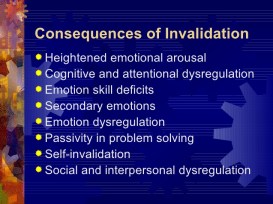 mourning mother recently told me, “Emotions are for emoting.” How an individual responds to their emotions can be right or wrong but never simply expressing them. Do NOT tell the grief-stricken that they can’t or shouldn’t feel any given way or that their feelings are sinful!
 8. Before you offer any advice, imagine yourself in that individual’s shoes; then personalize the advice. You are now the parent whose child just committed suicide. Consider how you might feel should someone tell you to count it all joy, or that God is good all the time, etc., before you offer any advice to the bereaved. Perspective changes when things get personal.
 Boxx Banter