RSS

Category Archives: Adversity

God of the Day and God of the Night

This article was originally published on The Life I Didn’t Choose. Everyone will eventually experience times of darkness in life. Regardless of the cause, this post has value for every believer.

I was afraid of the dark until I was almost forty years old. My fear was rooted in scary childhood moments and even years of adult experience could not rip it from the soil of my psyche. I never co…

(Link highlighted in red below.)

Source: God of the Day and God of the Night

 
Comments Off on God of the Day and God of the Night

Posted by on March 3, 2016 in Adversity, Faith, Links


Tags: , , , , , ,

one key to walking through suffering | A Holy Experience

Originally published on Ann Voskamp’s blog,  A Holy Experience, “One Key to Walking Through Suffering” was written by Bethany Hoang.  Bethany co-authored The Justice Calling: Where Passion Meets Perseverance with Kristen Deede Johnson.  She asks how we continue to believe that God is good, that He loves us, is a God of justice who heals and restores in the face of the extreme suffering we see in our world today.  Follow the link below highlighted in red to read the article and soak up the beauty and freedom of restorative lament.

God invites our questions and pleadings rather than our despair and silence.

Source: one key to walking through suffering | A Holy Experience

 
Leave a comment

Posted by on February 29, 2016 in Adversity, Faith, Grief, Links


Tags: , , , , , , , , , , , , , , , , , ,

I Can’t Do This Anymore!

Small_Red_and_Gold_Banner_PNG_Clipart_Picture

Why a glimpse behind the curtain to the deeply personal and hidden grief of a bereaved parent? Not to inspire your pity; of that, I can assure you.  Instead to inspire others to look beyond the surface of a grieving friend or family member. To consider how families are affected by a loss, emotionally, psychologically and spiritually, as well as the unique family dynamics that result; which might help you comfort, support and encourage them. The bereaved desperately want to be understood, to have their feelings validated, to break free of the isolation, to mourn unrushed, to have another share their sorrow (not attempt to fix it). This post was written months ago and is not reflective of my current state of mind.


IMG_4850

I Can’t Do This Anymore!

deep-sorrowThere are days and moments and very long nights when I think, I can’t do this anymore. Come to find out, that simple thought is a trigger for tears.

Intellectually, I know I can.  Physically, I know I can.  Emotionally, well there’s where the breakdown happens.

I don’t know if my impending empty nest is permanent or temporary.  I know who I am for the next three months but not who I will be after that.  I’m really afraid of that answer.

Emotionally I am weak, very weak.  Within the borders of my emotions I fear failure — to prepare Gracen for what’s ahead for her physically — to be there for her in an effective way — to watch her experience the devastation wrecked by progressive disease — to experience it for myself alongside her — to watch David experiencing it alongside her, alongside me. To see the toll it takes on each one of us individually as we somehow images (42)continue to put on a brave face and hide the true depths of the pain and sorrow from each other so as not to increase their individual burden in this bizarrely intertwined protection dance we unconsciously perform.  And as all this plays out within our home and personal relationships, the current culture demands that we have a positive attitude and recognize our blessings. It’s exhausting. It’s overwhelming.  It’s frustrating. It’s impossible.

Moments such as this one, Progressive Disease – A Moment of Triumph, are rare and bittersweet.  (At the beginning of the clip, keep your eyes on the right side of the screen so you don’t miss Gracen’s appearance.)

“Don’t be afraid — trust God”, we are told in the midst of situations where there are very real things to fear.  Sorry, those commands, biblical or not, are not helpful.  I’m not saying they are wrong, just that they aren’t comforting and encouraging. It’s almost impossible to talk yourself out of fear — especially after your worst fear has already been realized. Those words, “Don’t be afraid — trust God”, heap indictment of failure on already emotionally overburdened believers who interpret those words as an accusation — “You aren’t trusting God”, instead of as the encouragement they are intended to be. At the same time, the searing pain within testifies to the truth that what we are trusting God for is eternal in nature. We are terrorized by the knowledge that our desires, for ourselves and those we hold dear in this temporary world, play second fiddle to God’s purposes.  This, of course, I can attest to from all too much personal experience. God’s will serves our ultimate eternal good but the rub is that we reside in the here and now. And while from an eternal perspective our lives are no longer than a blip on a radar screen, in the here and now that blip lasts ten, twenty even thirty years or more.  Our afflictions are light and momentary from an eternal perspective but they don’t feel that way in the day to day.

armor-of-god

Yes, I need to cultivate an eternal perspective, lay up eternal treasures, yadda, yadda, yadda.  But frankly, there are days, moments and very long nights during which I’m too emotionally frightened and exhausted to exercise my spiritual muscles.


Helping the Bereaved Bear their Burdens

1.  Pray that the bereaved will put on the full armor of God.  Their faith is under attack and they are exhausted and deeply vulnerable.
disenfranchised-grief-52.  Avoid the use of platitudes and trite phrases. They serve to frustrate and unconsciously communicate unintended messages.  (i.e., faith and trust in God mean things hurt less, our hope for eternity exchanges grief for joy, joy and happiness are the same thing, the salvation of the lost justifies the death of a loved one).

3.  Be extremely careful in the use of Romans 8:28,  “And we know that all things work together for good to them that love God, to them who are the called according to His purpose.” (KJV)  There are a time and place for every season under heaven.  There are a time and place for this verse. I personally think it’s more harmful than helpful in the face of raw grief and more appropriate a year or two down the road when the bereaved can look back and hopefully recognize the fulfillment of this promise.

4.  Be cognizant of the fact that believing God has filtered everything through His hands before allowing it to happen can lead a believer to blame God for the tragedies that befall them.  In truth, spiritual warfare, an individual’s exercise of free will or the fall of man that affected all of nature are responsible for the death of their loved one. The fact that God allows bad things to happen to His children is not the same as causing bad things to happen. For all we know, Satan was tempting while God was pleading when another’s actions lead to the death of a loved one. “For ours is not a conflict with mere flesh and blood, but with the despotisms, the empires, the forces that control and govern this dark world–the spiritual hosts of evil arrayed against us in the heavenly warfare.”  (Ephesians 6:12 ~ Weymouth New Testament).

0372730254f966f20889e1599ae7c79d5.  Validate feelings.  A grieving father who feels like beating the crap out of the person responsible for their child’s death is normal.  It’s okay; it’s helpful actually to say, “I’d feel the same way if I were you.” Validating feelings in no way condones sinful actions. Feel free to tack on, “You’re not planning to act on that, are you?”, if in doubt.

6.  Do NOT correct the emotions of the bereaved. Emotions are not right or wrong; they were designed by God and serve a purpose.  A fellow new-perspectives-in-borderline-personality-disorder-73-728mourning mother recently told me, “Emotions are for emoting.” How an individual responds to their emotions can be right or wrong but never simply expressing them.  Do NOT tell the grief-stricken that they can’t or shouldn’t feel any given way or that their feelings are sinful!
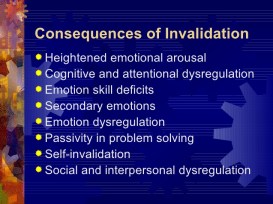
7.  Affirm the bereaved’s ability to continue on.  Be there for them through cards, text messages, phone calls and lunch or dinner dates.  Don’t take it personally if your call and invitations go unanswered. Simply try again another time.

download178.  Before you offer any advice, imagine yourself in that individual’s shoes; then personalize the advice.  You are now the parent whose child just committed suicide. Consider how you might feel should someone tell you to count it all joy, or that God is good all the time, etc., before you offer any advice to the bereaved. Perspective changes when things get personal.

9.  It is indeed rare for a bereaved person to continue in deep grief for an extended period of time (more than two years).  There are always a few who never recover, however, Christians need to trust that God will heal the hearts of the bereaved as His word promises, in His time. There is a time to mourn and a time to dance (Ecclesiastes 3:4b KJV). When you encourage a fellow believer to move on, choose joy and be thankful for what they still have, you are, in effect, expressing that you yourself don’t trust God to heal their grief, but instead believe that the grief-stricken Christian must work to heal themselves.

 
4 Comments

Posted by on February 24, 2016 in Adversity, Faith, Grief


Tags: , , , , , , , , , , , , , , , , ,

Satan Hunts Among the Hurting | Desiring God

“Mountain lions detect vulnerabilities in their prey and attack the weakest — the young, the sick, the injured. Studies have confirmed this instinctive cruelty. It’s how the mountain lion lives, following the scent of suffering and feasting on whatever he finds.The enemy of your hope and happiness hunts with that same instinct, with a cold-hearted and ruthless hunger for the weak or hurting. Satan prowls like a roaring lion, seeking someone to devour (1 Peter 5:8). And because he’s clever . . .”

Click See more to red the entire article.

Source: Satan Hunts Among the Hurting | Desiring God

 
2 Comments

Posted by on February 21, 2016 in Adversity, Faith, Grief, Links


Insights on Suicide

images (28)

Last October I came across this article (highlighted in red below) on the suicide of Patti Stevens by Rudolph Bush on the Opinion Page of The Dallas Morning News:

No, Patti Stevens wasn’t selfish. She was hurt.

As a member of the bereaved parent’s group, While We’re Waiting, I’ve encountered several parents of children who’ve committed suicide.  It’s heartbreaking!  It’s disturbing to read of children as young as 11 years of age, taking their own lives.  I can only imagine the agony, the second guessing and the questions the grief stricken families are left struggling with.  The impact on the entire family when a child dies (regardless of the means of death) is staggering (but that’s an article for another day).

Journalist, Rudolph Bush covered this topic well and he certainly got it right when he said of Patti Stevens, “She was trying, in a desperate, mistaken, terrible way, to stop hurting.” Bush’s comments were made in response to critics who contend that those who commit suicide are selfish. I also appreciate that he points out, “. . . the suicidal have fallen into a place where their sadness, fear and desperation have stripped away the ability to think and act rationally.”

Still, I think it’s a serious mistake when we assume, “Things would have gotten better.” That was probably true for Patti Stevens and a multitude of others who contemplate suicide, but it’s certainly not true in every situation which is why organizations such as Death with Dignity exist. It’s why assisted suicide is a hot button issue of our day. Don’t get me wrong, I am not a proponent of suicide at all, but we are naive if we fail to recognize that, in some situations, things will get worse.**  Families coping with terminal illness, with addiction, and a number of other issues know, without doubt, that their circumstances will indeed get worse.  They know more pain is on the horizon and they are afraid and desperately want to escape the pending heartbreak. When it’s true that things will get worse, we have to find a way to help people cope with that truth; to find purpose and meaning in life.

We’ve all heard the popular phrase, “everything happens for a reason” at some point in time; usually when something unpleasant transpires. Tim Lawrence wrote an article on that very topic. Mr. Lawrence used his article to strike out against the culturally common advice passed to people coping with trauma and grief – advice he refers to as “the debasing of the grieving”.  In the piece published on his blog entitled, “The Adversity Within”, he shares this quote from Megan Devine, “Some things in life cannot be fixed. They can only be carried.” Of Ms. Devine’s quote he says,

“These words are so poignant because they aim right at the pathetic platitudes our culture has come to embody on a increasingly hopeless level. Losing a child cannot be fixed. Being diagnosed with a debilitating illness cannot be fixed. . . They can only be carried.”

We live in a culture that demands positivity. Obstacles are opportunities in disguise.  If we can’t go around said obstacle, we must find a way over, through or under it.  Nothing is impossible.  We will overcome. We will conquer; by sheer force of will if necessary. And the underlying message is that, should we fail, we are incompetent or didn’t try hard enough.

img_0428We’ve been indoctrinated with the message that we must be able to turn every negative into a positive. Our culture as a whole no longer helps people work through their grief, instead we demand that they set it aside, suppress it, or spin it into an uplifting message – all the better if they can tie it up with a Biblical bow. As a result, we leave hurting people enmeshed in an internal battle pitting their normal need to express and work through their pain and sorrow against societies demand to find the silver lining and move forward.


If we sincerely want to reduce the suicide rate, we all have to learn to become comfortable with the bad and ugly aspects of life instead of pretending they don’t exist or glossing over them. We need to learn to acknowledge pain, validate feelings, and affirm the broken before they lose the ability to think and act rationally. In my experience, people want to be seen, to be understood and to feel as if they are not alone when their days turn dark. People can survive almost anything – they can learn to carry that which cannot be fixed – if we provide them with those things.

** The comments in this post in no way serve as permission to take one’s own life.

SuicidePrevention


Print a copy of this National Suicide Prevention Lifeline image and stick it on your refrigerator.

It may save the life of someone you love.


6 Comments

Posted by on February 16, 2016 in Adversity, Chronic Illness, Grief, Links, Uncategorized


Tags: , , , , , , , , , , ,

An inside look at Muscular Dystrophy. . .

10420294_1036478713048456_6301817531282454318_n

I too see and appreciate the tender mercies yet have not made peace with what might lie ahead as we live with ARSACS, a different form of Muscular Dystrophy than Mitchell’s family endured.

I am not simply grieving what has been lost already, but what is yet to come. Maybe, this video will help others to understand why I am so resistant to moving forward. I’m still coming to terms with the fact that everyday following December 26, 2013, has been and will be the best of times for our family, in spite of what physical skill may be surrendered to ARSACS on any given day.

Please, take a minute and watch this short video by clicking on the link below highlighted in red.

WHEN THE LIGHTS GO OUT, AS THEY SURELY WILL

So, I try to live in the present. Sometimes life demands that I look further down the road, and sometimes I’m unable to prevent my mind from floating forward to the new eventualities, but I desperately try to control my thoughts, to avoid “kicking at the pricks” as Christ informed Paul he was doing on the road to Damascus.

10176056_866110320085297_2882709226621647193_n

Please try to understand that my hope lies in eternal things and avoid trying to help me have hope for things of this world. I’m not trying to be negative, I’m just grieving what’s been lost while simultaneously grieving what’s yet to come.  It’s known as Anticipatory Grief.

I know there are not a lot of people who have walked in my shoes and have no idea what it’s like to live in a continuous grief cycle and therefore, don’t have any concept of how I think. I know that experience is the most effective way to develop empathy but before you try to remind me of my blessings please imagine living with my everyday reality.

1908247_836591986370464_1217962212_nI didn’t lose a son and two daughters and begin picking up the pieces to move into a hopeful future. I live with the knowledge that I will always be picking up broken pieces and there is no way to repair the pieces that have been falling since MD entered our lives.

Happiness may be fleeting and driven by circumstances, but joy and happiness are not equivalent. Joy is the light of the Holy Spirit’s indwelling. Unless we are consciously trying to hide it, joy seeps to the surface. It’s intangible – a silent, more subtle and substantial quality than happiness which flaunts it’s presence in spontaneous and short-lived smiles, laughter and excitement. Joy lingers, in fact it resides, within even the most wounded heart because it is the fruit of the Spirit.

1959377_862709323758730_2781967411220218258_n

Do not jump to the conclusion that families who cope with special needs, life-threatening or progressive disease live without joy and are unaware of their blessings. You might be surprised to hear them voice their deep gratitude over the smallest of accomplishments and simplest of kindnesses.

Living with great needs has a way of opening your eyes to the smallest of blessings, but it doesn’t anesthetize the painful realities of life. It’s like a downpour abating just long enough to load your daughter into the car and her wheelchair into the trunk. You are grateful, thrilled even, that you aren’t soaking wet even knowing you will still have to place the daughter of your heart back into that wheelchair when you arrive at your destination. You also know the rain might not abate when you arrive and you may still end up soaking wet. In spite of that you are still thankful that you stayed dry for the time being.

10255840_868325463197116_8875675070898379913_n

I want others to understand that none of this is easy, there are no simple answers, and I will not always be able to tie up my messy life and emotions with a Biblical bow that makes everyone, myself included, feel better.

If you haven’t already; watch the video, read Mitchell’s father’s Facebook posts. You will find a godly man who, two plus years later continues to deal with sorrow. He’s also aware there will be more darkness to navigate down the road. He ties things up with a Biblical bow better than I do; so you will appreciate his lessons and feel comfortable hearing them too. He has much of worth to share.

11330028_1121438231219170_1171381216622681065_n


Tags: , , , , , , , , , , , , ,

Conversations with Melanie – Part 3


images (16)A fellow bereaved parent and blogger, Melanie, recently asked me if I still struggle with feeling God’s love. The question came in response to a post I published several months ago entitled, “Uncovering Unknown Issues of the Heart”. Yesterday I posted Melanie’s response assuming our conversation had ended. But Melanie and I have bonded over our desire to process our grief while simultaneously making sense of the faith that has come to sustain and define us. The foundations of our faith have not been shaken, but we still wrestle with elements of our faith. And so, our conversation continued. I’ve pretty much cut it down to the parts of theological significance. I hope our struggle to understand the God we love, the One True God, might help someone else who is struggling to make sense of their faith in light of circumstances that cast doubt on what they’ve always believed to be true about the God of Abraham, Jacob and Issac. So, here we go again . . .

Melanie:  I don’t remember if I replied again to you in that conversation, but I need to tell you that your words really touched a deep place in need of healing in my spirit. I think that I have continued to feel that I am somehow responsible for my son’s death. Isn’t that ridiculous? Maybe it’s easier to blame myself than to keep wrestling with the intersection of God’s will, human choice and the goodness and love of the Father.

Job had not sinned when Satan targeted him. And God’s purpose was not to teach Job a lesson but to show Satan that His servants would continue to serve Him in spite of suffering and loss.

Janet:  Melanie, thanks as always for your kind words as they encourage me as I wrestle with my own demons (so to speak) in this process of refinement. And while it’s patently untrue than you are responsible for Dominic’s death it’s not “ridiculous” that you might feel as if you are – it’s just one of those bizarre and entirely normal ways the human mind wrestles with the unacceptable in life.

Maybe this sounds a bit crazy, but I think it’s one of the ways believer’s cope with anger with God. We are afraid to be mad at Him and yet buried beneath our beliefs about His love and good plans lurks this anger we are either unaware of or we are too afraid to address. It’s easier – less frightening – to assume responsibility (or blame) ourselves than it is to open that locked box in our hearts that hides our deepest fears about God and confront those fears.

It’s transference, plain and simple (in my completely uneducated opinion). But listen to what C.S. Lewis said in “A Grief Observed”,

“Not that I am (I think) in much danger of ceasing to believe in God. The real danger is of coming to believe such dreadful things about Him. The conclusion I dread is not ‘So there’s no God after all,’ but ‘So this is what God’s really like. Deceive yourself no longer.”

So this is what God’s really like – yikes! But God not only is capable of dealing with those frightening fears about His character and the way He works, He is forcing the lid on that locked box open and demanding that we confront those fears so that He can dispel our faulty misconceptions. Those misconceptions hold us at arms length from Him and hinder the spread of the gospel to the lost because they besmirch His character and His innate holiness.

Melanie:  I often refer back to Lewis’ book because it is so honest and challenging.

Something we have discussed around our table is the fact that we humans are not equipped or even capable of comprehending God in His fullness and majesty. “My thoughts are higher than your thoughts”… So we create shortcuts, paradigms and analogies that serve pretty well when things are going OK but fail miserably when they aren’t.

And often our faith communities are uncomfortable with questions or simply don’t provide space and time to ask them. (When teaching a SS lesson-how many teachers invite real questions?) I get it–who wants to stand in front of a classroom and admit you just don’t know?

But we who have experienced great pain must confront and decide. Who is this God we claim to serve and follow? What does love really look like? Can we learn to live with unanswered questions?

Janet:  Exactly! It’s not disrespectful and it’s not heretical. “Come let us reason together!” It’s required if we wish to have a relationship with the Lord that has deep roots and bears fruit. I don’t want to be the cursed fig tree.

Jesus Curses the Fig Tree – Mark 11:12-14

12 On the following day, when they came from Bethany, he was hungry. 13 And seeing in the distance a fig tree in leaf, he went to see if he could find anything on it. When he came to it, he found nothing but leaves, for it was not the season for figs. 14 And he said to it, “May no one ever eat fruit from you again.” And his disciples heard it.

What on earth does it mean when I say that I don’t want to be the cursed fig tree?

The fig tree is a symbolic reference to the nation of Israel.  The story of the cursed fig tree is told in both the gospel of Matthew and Mark and according to the Biblical accounts occurred the week before Christ’s death on the cross.  Christ is welcomed to Jerusalem on Palm Sunday and hailed as Messiah in an event known as The Triumphal Entry. Jerusalem is overrun by worshipers coming to celebrate Passover. By comparing the accounts in Matthew and Mark we find Jesus returning to Jerusalem the next day when He encounters the fig tree. The fruit on fig trees appear before the leaves. So, it was a reasonable expectation that a fig tree with leaves would also have fruit; regardless of the season. Even so, why curse a fruitless tree? Matthew and Mark also tell us that after cursing the fig tree Jesus continued on to Jerusalem where he proceeded to cleanse the Temple of the money changers. The next day, as Jesus and the disciples again return to Jerusalem, they pass the cursed fig tree and find it withered.

Still confused?  Gotquestions.org explains the significance of both the cursed fig tree and the cleansing of the Temple as follows:

“Jesus had just arrived at Jerusalem amid great fanfare and great expectations, but then proceeds to cleanse the Temple and curse the barren fig tree. Both had significance as to the spiritual condition of Israel. With His cleansing of the Temple and His criticism of the worship that was going on there (Matthew 21:13; Mark 11:17), Jesus was effectively denouncing Israel’s worship of God. With the cursing of the fig tree, He was symbolically denouncing Israel as a nation and, in a sense, even denouncing unfruitful “Christians” (that is, people who profess to be Christian but have no evidence of a relationship with Christ).”

“The presence of a fruitful fig tree was considered to be a symbol of blessing and prosperity for the nation of Israel. Likewise, the absence or death of a fig tree would symbolize judgment and rejection. Symbolically, the fig tree represented the spiritual deadness of Israel, who while very religious outwardly with all the sacrifices and ceremonies, were spiritually barren because of their sins. By cleansing the Temple and cursing the fig tree, causing it to whither and die, Jesus was pronouncing His coming judgment of Israel and demonstrating His power to carry it out. It also teaches the principle that religious profession and observance are not enough to guarantee salvation, unless there is the fruit of genuine salvation evidenced in the life of the person. James would later echo this truth when he wrote that “faith without works is dead” (James 2:26). The lesson of the fig tree is that we should bear spiritual fruit (Galatians 5:22-23), not just give an appearance of religiosity. God judges fruitlessness, and expects that those who have a relationship with Him will “bear much fruit” (John 15:5-8).”

I don’t want to be an unfruitful Christian.  I will wrestle, I will struggle, I will confront, and I may pout and complain and whine and moan along the way, but I’ve come too far, been through too much to quit now!  I hope you feel the same way.

 
Leave a comment

Posted by on February 10, 2016 in Adversity, Faith, Grief, Links


Tags: , , , , , , , , , , , , , , , ,

Mercy, Forgiveness & Testimony

Mercy, Forgiveness & Testimony

I received the county 911 dispatch calls from our attorney’s office last year around this time.

That very day I listened to every recorded call.  Two calls featured my shrill, hysterical, voice in the background, which was surprising only in that I was completely unaware of the people who were placing those calls at the time.  They had to have been close at hand but their presence did not register in my mind.

The call Onstar placed for the owner of the speeding silver pickup was interesting in that they only seemed concerned with possible injuries to their driver.  I guess that’s the guy paying them and yet you’d think the Onstar operator, after discerning the wellbeing of his client, would inquire about other injuries as well.  What if the accident occurred when the road was deserted and their call was the only one placed to 911?


10403417_816648245063764_3713033303821133814_n - Edited

Following my foray into the past, into bystanders reactions to the devastation of my life; immeasurably sad, I sprinkled burial-scented bath salts (Frankincense & myrrh) into my tub (not out of morbidity but because I love the fragrance) and sank into the warm water neck deep to process the emotions weighing so heavily on my heart.

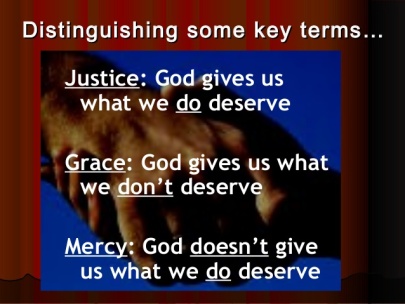
And like so many nights before, my thoughts circled.  But this time the conclusions drawn seemed to contradict each other.  I found myself still firmly rooted in the belief that God will ensure justice is served since the legal system failed us to such a colossal degree, and then another, more sobering thought took center stage.  I faced the thoroughly discouraging knowledge that in truth, justice may never be served for my daughters because of God’s grace and mercy.  All that’s required for any one of us to receive forgiveness is that we seek God with a repentant heart and Poof! – our sins are forgiven – covered by the blood of the lamb, who so graciously covered my sins as well.

distinguishing-some-key-terms-justice-grace-mercy-2-638

For the irrevocably injured this is a hard truth – an unpalatable truth, a bitter pill – and I found myself sobbing out my outrage, bath towel pressed to my mouth to muffle the sound from David and Gracen watching TV in the other room.

I found myself truly angry – enraged really – to consider that God will grant these men forgiveness full and free.  FREE!

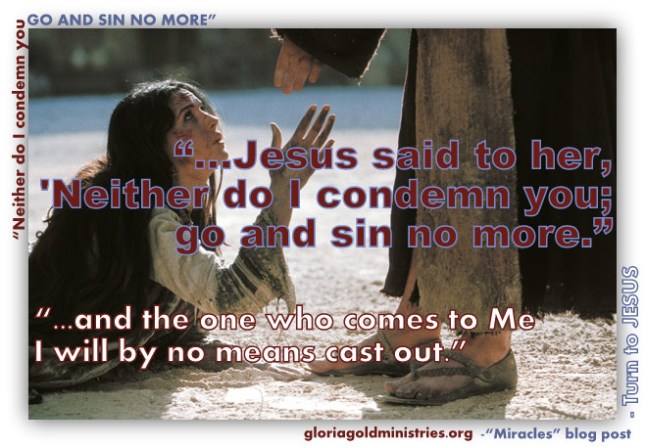
Jesus-forgives-the-adulteress-001

I realize the key here is that the drivers, the prosecutor and the judge, each will first have to acknowledge and repent of their sin.  However, do they get to repent of a sinful lifestyle without specifically confessing the sins that led to the deaths of my daughters, the destruction of life as we knew it?  I know I never confessed each and every sin I’d committed when seeking salvation.

The possibility that mercy may be extended at such a great personal cost, without my consent or permission, is completely repulsive to me.  I’m not unaware of the irony of that statement in that that same grace and mercy was extended to me (although it should be noted that God, Himself did in fact grant permission).  This is not only an emotional battle but one I struggle with intellectually as well.

images (7)

Surprisingly, the idea of spending eternity with these men is not a such a difficult pill to swallow – only because the logical part of my mind is assured that is not a possibility. The Bible says at the point of salvation we become a new creature.  They may enter heaven with the same name but not the same nature and by golly, I will be made like Christ which will allow me to walk the streets of gold without stalking them and plotting to do them harm! For that I can be grateful as what kind of paradise would heaven be for me in I continued to harbor animosity toward any of these men and had to live eternally in their presence?

I hate this!  To forever and for all eternity be denied justice is a truth not easily accepted and one I know will require a considerable amount of excruciating personal struggle.  I have no desire to even contemplate the process.

Yet months and months later, that’s exactly where I found myself – contemplating a lack of justice and prayerfully forgiving these men – not for their benefit but for mine.  I highly doubt I can ever look upon the unlicensed driver, the prosecutor or the judge with anything but contempt, but my hope is their power to hurt me has been forever laid to rest.  The speeding driver, I think I can actually look at with pity – unless I find he too lacks remorse and that he assumes no responsibility for his own actions.  But, for now, I know no such thing and I will deal with forgiveness again should the need arise – for myself and because it’s commanded of me by my Savior.  But mostly for my selfish self so I can find a way to live free – without nausea – to lay down the burdens I’ve chosen to carry and those thrust upon me.

Someday, I hope to find my life no longer defined by the accident that forever altered it.  I hope there comes a day where following the introduction to someone new, the aside “That’s the woman whose children were killed in that car accident and . . .”  is no longer is tacked on either in my presence or behind my back as if I’m a novelty in a circus sideshow.

I hope the day comes where there are more notable things to define me than the losses I’ve suffered and the disappointments I’ve endured.

Words like “Bright, Passionate & Generous”“Joyful, Imaginative & Compassionate”, or “Courageous, Sassy & Tenacious” – the words found on Bethany and Katie’s headstones and reserved for Gracen’s.  I told her she’s the only one to be gifted with veto power.

Words that proudly proclaim the content of their character and personality more than the circumstance of their lives.  Words that speak of their true essence. Words that reflect the supernatural work of their Creator, their Savior and the Holy Spirit at work within.  Words that glorify God and forever testify to the immeasurable value of their lives, in spite of their far too soon departure from this world.  And yes, I hope David and Gracen can easily distill my character and personality down to three simple words on a headstone the only testimony of a life lived, choices made, and relevance assigned/ordained – by my Creator. I’m hoping for something more impressive than “Total book nerd”!

 
7 Comments

Posted by on February 5, 2016 in Adversity, Faith, Grief


Tags: , , , , , , , , , , , ,

Warrior Mother or Warrior God?

Warrior Mother or Warrior God?

This is the mother I have always wanted to be.  A warrior mother, fiercely protective, defender, and advocate who allows no one to hurt my children without consequence.  But I am so not that mother and I’m left feeling as if I’ve failed my children and myself – disappointed that I am not the mother I so much want to be.

There are a number of reasons why I am not that Mom. First and foremost, there are simply battles that you cannot fight for your children. Second, and I never imagined that I would be in a position to say this, but I am constrained by the law. Regardless of the fact that the justice system failed to uphold the law in our case, I am ironically bound by it. And finally, and most importantly, God would not be pleased if I were to become the warrior mother I wish I could be.

Exodus 14:14, tells me, “The Lord will fight for you, you need only to be still.” But, in my humanness I find myself frustrated by this verse instead of comforted. While I know from an intellectual standpoint that I can indeed trust that God will fight for me, I am often impatient to see God’s victory on my behalf. On the other hand, the image of our powerful God is watered down when we see His words displayed amid beautiful and serene backdrops like the following images portray.

Those images are beautiful, touchy, feely images I find comforting in times that I really don’t need God to be my avenging warrior or to fight a major battle for me. But when I desperately need my warrior God, they leave me feeling as if He might not be any more up to the battle than I am. The images are just too cheerful or peaceful and they affect my impression of God and His power.

I need to see this verse portrayed with the image of the ferocious Lion of Judah scripture assures me God is.  I don’t know about you but this scripture just screams to be depicted with a roaring lion mid-leap as he defends his pride. These pictures fill me with confidence that my God is able.

Why do we depict the verses that describe God as our powerful defender, or the one who has sovereign control over nature and every created being with calm and soothing images? Is it because we don’t want to acknowledge that there may come a time in our lives that we might be in real need of our all-powerful God? Are we just trying to cling to the naive idea that our world, our homes, and families are safe? Is it because we want to characterize God as a God of love and ignore or soften the truth that God is a God of justice as well – to make Him more palatable to the lost and less fearsome to ourselves when we rebelliously disobey His commands that we cannot claim ignorance of?

I’m not quite sure why we are inclined to portray every biblical passage in a peaceful setting, but I think we are doing both ourselves and God a disservice. The images we see combined with God’s word merge in our minds causing us to form inaccurate ideas about God’s true character. They cause us to esteem Him as less than completely capable and to approach Him with a far lower regard than He is entitled to. As if he is a common man instead of the King of kings. How insulting to Him! Not only that, but we impede our own spiritual maturity because it is impossible to fully trust and depend on God if we see Him as little more than a human king on a heavenly throne. God’s word tells us in no uncertain terms that he is far more than that, far more capable, far more powerful, far more just. He’s far more everything and I, personally need images that more accurately reflect God’s true nature than ones that make Him appear to be anything less than His Word tells us He is.

So bring on the pictures of our avenging King alongside our gentle shepherd. I need to associate my God with both aspects of His character because I need to be completely confident that He is both in order to trust and depend upon Him alone. Then I won’t need to be the warrior mother. I won’t feel either impotent or as if I am failing because I will be able to be still, to be at peace (not void of emotion but able to find that center of peace in spite of my emotions) in difficult circumstances, unassailed by doubts that my God both can and will fight for me. I will be confident and assured of both the power and the presence of the God who fights my battles for me.

 
4 Comments

Posted by on February 3, 2016 in Adversity, Faith


Tags: , , , , , , , ,

Vanessa Martir – Creative Nonfiction

Vanessa Martir – Creative Nonfiction

My heart broke with the very first line. Families, and the way they interact are so complicated . . . we are all, parents and children alike, trying to grow up at the same time. So often unprepared to know how to respond to events we never expected to encounter, could not even imagine in our wildest imaginations.

As a member of the Christian bereaved support group for parents, While We’re Waiting, I’ve encountered families who are deeply grieving the death of a child who struggled with addition. This post, struck a cord within, for a number of reasons, including the elements of faith and adiction. For example this line:

“. . . I finally saw my brother that day in my aunt’s house, a year and three months after his overdose, when he said, “I’m a sin, sis. The bible says I’m a sin,” I finally understood his addiction, and I knew I couldn’t leave him again. My mind goes to an article I read a while back, “Five Unexpected Things I Learned from Being a Heroin Addict”: “If you know someone who’s using or has used, you should know that this isn’t as simple as them making bad decisions. They’re running from something that, to them, seems a whole lot scarier than a needle.”

The idea that this man believed the Bible called him a sin. We are all sinners and maybe it’s a minute distinction but none of us are sin itself. No where does the Bible say that! My heart breaks for this man who seemed unaware that Christ was the answer for his sin. That he need not have carried this condemnation.

And then, the very last paragraph . . .

“He died on June 24th, 2013, but I will never stop saying his name: Juan Carlos Moncada. And, I will never stop telling our stories. My grandchildren will know about him, and their grandchildren will know him. They will know him as my daughter calls him, “Tio Tio”; my Superman, the man who taught me about me about love and heartbreak and the costs of silence.”

The costs of silence. Oh, to know when to speak and when to hold counsel!

**Strong language warning.

(Click on “view original post” in red below to access the complete article.)

 
Leave a comment

Posted by on February 1, 2016 in Adversity, Faith, Grief, Links