RSS

Author Archives: Janet Boxx

Unknown's avatar

About Janet Boxx

My name is Janet Boxx. I earned a Bachelor's of Science degree from Northwest Missouri State University before working at Mark Twain Bank and then Sprint. Following the birth of my fourth child, I left the business world to focus my attention on raising my family. In my lifetime, I've been inducted into two communities no one wishes to gain membership in; the special needs community and the bereaved parents society. I'm a wife, a mother and a follower of Jesus Christ. Like many of you, my life has not been a walk in the park. It's been challenging in a number of ways and has caused me to examine my beliefs, almost everything I thought I knew about God, with what His word actually says about Him. I'm comfortable with my struggle, but well, I'm afraid that other believers may not be comfortable with my confrontational approach as I question and search for understanding. I am in desperate need of real answers, real truth, and am a big believer in authenticity. Therefore, I'm not known to "drink the kool-aid" so to speak. I hate platitudes and simplistic answers to complicated issues. I believe the Bible is the inspired, infallible word of God, and that every word is "profitable for teaching, for reproof, for correction, for training in righteousness" just as 2 Timothy 3:16 proclaims. Heaven knows I don't always get it right, and at times I concede that I cannot find an answer, and choose to trust that the Holy Spirit will reveal it in time or that He will enable me to find peace in spite of my questions. As a result, I'm open to others questioning my conclusions, I just ask that they aren't worded as an attack but instead by pointing me to another scripture and asking me to consider it in light of the conclusions I've drawn. A little background may help you understand my blog posts, so here is my life in a nutshell. I married my husband, David, in 1987. Our son, Cole, was stillborn on Father's Day, June 21, 1992. We went on to have three beautiful daughters. Bethany was born in November of 1993, Gracen in December of 1995, and Katie arrived in October of 1997. We noticed some developmental concerns when Gracen was about a year of age. Katie developed similar issues around her first birthday as well. Their physical issues were minor and the pediatrician was not concerned. But as Gracen and Katie grew, the physical issues became more pronounced, affecting both their fine and gross motor functions which impacted daily life and learning. Fifteen years and multiple and doctors and tests later, in the spring of 2012, we finally received a diagnosis. Gracen and Katie had been born with a rare form of Muscular Dystrophy. ARSACS is a progressive neuromuscular disease. The prognosis was not pretty and we were devastated. I had so hoped a diagnosis would lead to a cure - a medication or treatment that would give the girls a normal life. During that fifteen year time span, Gracen also developed chronic daily migraine headaches. Life was challenging to say the least. The day after Christmas 2013, life got harder. As we returned home from celebrating Christmas with family, our van was involved in a three-vehicle collision. Bethany and Katie died that afternoon. My first blog post was written a few months later, in March of 2014. I've edited that post in order to correct minor details that I was unaware of when it was originally written and posted on Facebook. Otherwise, it remains as it was. My hope is that my posts will serve to validate the feelings of others who are struggling with difficult circumstances and trying to assimilate their feelings and beliefs, as they too, try to hold on, get through, and avoid bitterness. So welcome to our world. Join me as I continue to live life in the Refiner's fire. In and out I go as God allows the dross to rise and be swept away until He can see His reflection as He looks upon me. Please share your thoughts (speaking the truth in love) and let iron sharpen iron as we banter back and forth as we each struggle our way through this life until God calls us home. Janet

Impulsive Decisions

dsc_0078I did something I probably shouldn’t have today.

It was impulsive.

I certainly didn’t consult the Lord before I acted. People rarely do when they make impulsive decisions . . . But maybe, maybe, I just wanted what I wanted and didn’t want to be told no—even if it was in my best interest.


I’ve seen a lot of doors closed in my lifetime and sometimes I just want to bust in, take what I want and live with the consequences. It’s not as if I deceive myself into believing I won’t suffer any consequences. Oh no, my eyes are wide open.

What’s one more set of consequences in this life of mine? At least the consequences I face will be of my own making instead of suffering consequences for the choices of others.

My impulsive actions weren’t sinful, but just because something is lawful doesn’t mean you should do it.

I thought I made peace with this last year, but today it just rose up and I executed a short internal debate then bit the bullet and placed the call.

Right from the get go things didn’t go smoothly. I encountered a determined gatekeeper. I should have just hung up but by this point, I was all in.

And there was no getting past this gatekeeper without explaining the full nature of my call.

And so I spilled it. . .

In frustration I rambled off something that went like this: ‘I want to talk to Roger Wilson because he was involved in a car accident on December 26, 2013, in which two of my daughters were killed. I’m not calling to place blame, I just want him to answer a question or two.”

And there it was . . .

And the gatekeeper?

His wife—who was also in the truck that day.

So I asked her my question.

‘At what point on the road that day did you realize the red truck had moved into your lane? It’s a hill. Did you see the truck before or after you topped the hill?’

I’m not really sure I got the answer I wanted because I’m still not sure I know exactly where they were.
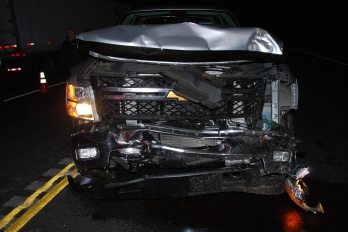
dsc_0062What I got instead was a recitation of the driver of the red truck’s actions. I gather they had been aware, even concerned, about the other drivers actions before he pulled in front of their vehicle, into the passing or fast lane if you will, moving at a rate of speed significantly below the speed limit and slowing further has he applied the brakes to gain access to the turn lane he was so hellbent on getting to.

She told me she hated what happened.

Hated what happened to us.

Had prayed for us.
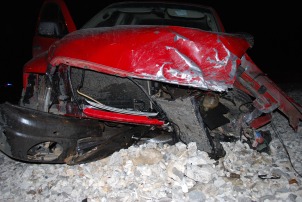
dsc_0079After I reiterated the question, I was told that there was no possible way they could have stopped, could have avoided the collision. That the officer who took their statement had said as much. She said the other driver was traveling about 35 miles and hour and people were passing him and that there was no way to stop when you are traveling at “65 miles an hour or whatever” and someone pulls in front of you going 35 miles per hour and braking.

She went on to say that the accident turned their lives upside down and more so for us.

She kept saying I hate it. What exactly does she hate? That it happened. That they were involved. That my daughters were killed.

I thanked her for speaking with me. Even thanked her for her prayers. Told her I appreciated it and said a hasty and awkward goodbye.

During the course of the call, a few things became apparent to me. Things that bothered me. Things which precipitated that awkward ending to the call.

She never acknowledged the fact that her husband was speeding at the time of the accident. It’s right there in the accident report and verified by the vehicle’s computer chip. In effect, she refused to accept any responsibility whatsoever, on her husband’s behalf, for the collision.

I’m not sure why.

There is no possibility of any further legal action against her husband, so it can’t be excused as an action to protect her husband or their assets.

Is she living in denial?

Maybe she’s actively trying to convince herself that her husband is in no way responsible for the deaths of my daughters. Maybe that allows her to sleep at night.

And because there was no admission of wrong doing, and because it became apparent that her goal was to advocate for her husband’s innocence, there was no offer of condolences. I never heard the words, “I’m sorry for your loss” let alone “I’m sorry for the role my husband played in the accident.”

Instead what I heard loud and clear was, ‘We were not at fault.’ That’s pretty much what I got out of her comments, but the unspoken message was, ‘We were victims too.’
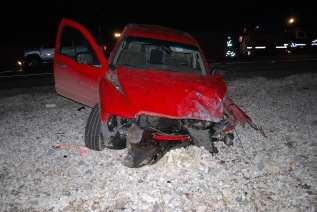
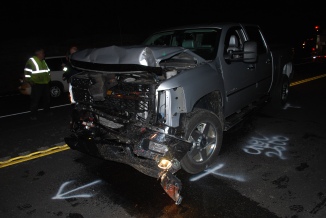
dsc_0056All I really wanted was to know when the driver of the red truck pulled into the fast lane. The best I could hope for was an apology for the law he broke that inadvertently put him in the path of the reckless driver who cut into his lane. An acknowledgment of his wrongdoing. Remorse over the consequences his individual choice made in our lives. An expression of sympathy. I guess it’s just too much to ask to have people take responsibility for their actions in this day and age.

One of the things that bothers me most about the collision is that because both drivers were at fault to varying degrees, they can each point a finger at the other and excuse their own behavior. The driver most at fault (95% at least) points his finger at the other driver and says, ‘I would not have hit that van, those girls would not have died, if the other driver wasn’t speeding which caused him to rear-end my truck’. And the driver least at fault says, ‘This accident wouldn’t have happened if the other guy wasn’t on the road because he had no legal right to be since he didn’t have a drivers license. It wouldn’t have happened if he hadn’t pulled out in front of my truck.’ And neither one has to look themselves in the mirror and admit that their actions contributed to the deaths of my daughters.

And that’s precisely why I probably shouldn’t have made that call.

I’m a floor mat.

I wanted so badly to say, ‘Your husband is not blameless. He was breaking the law too. He made fewer mistakes, but he is not innocent of the deaths of my daughters.’

But what would be the point?

Aside from saying it out loud, confronting her with the truth, I would have just initiated a defensive and defiant response further abdicating her husband’s responsibility and guilt.

FullSizeRender (8)

The Honorable Judge John LePage – McDonald County Missouri Circuit Court

I wonder if she realizes that because her husband was speeding there was no way to prosecute the other driver for the crime he was clearly guilty of: vehicular manslaughter.

I wonder if she realizes the rate of speed at which their vehicle was traveling determined the force and speed at which the red truck was pushed into oncoming traffic. Less speed equals less force.

I wonder if she realizes that because he was speeding justice was denied my daughters.

I wonder if she realizes that even the maximum sentence for the misdemeanor offense of careless driving was cut in half by the judge who excused the paltry $500 fine and six month suspended jail sentence because “the other driver was speeding”?

That in and of itself is all kinds of wrong as the defendant was being prosecuted for reckless driving. He should have been sentenced based upon his actions alone.

Her husband is responsible for much more than exceeding the speed limit. His actions resulted in the perversion of justice. His actions served to excuse everyone at fault.

Had he not been speeding the impact of the two trucks would have taken place seconds later and our van would have passed by that point of intersection unscathed. But no, this was the result of one unlicensed and reckless driver meeting up with one speeding driver . . .


This slideshow requires JavaScript.

My daughters died but in spite of the fact that two drivers broke multiple laws that day, no one, not one person is held responsible? Say it isn’t so! But it is . . . because it’s the other guys fault.

And Wow, just wow! Am I suppose to feel badly because the speeding driver’s life was upended? Am I suppose to consider him an innocent victim? Did his wife expect me to pardon his behavior?

Before I made that call I could have convinced myself that at least this one driver accepted responsibility for his actions, but now, I will pay the piper. I will have to live with the knowledge that both drivers consider themselves guilt free.

Is anyone else nauseated by that fact?

We sing about the day the music died, but who really cares? The day integrity died is far more disturbing. The drivers, the prosecutor and the judge each demonstrated an appalling lack of integrity.

And because I so desperately wanted every single piece of the accident puzzle, I will have to cycle through the process of forgiveness one more time. I will have to make peace with more anger. I will have swallow another serving of resignation. I will have to surrender my right to see justice meted out yet again. And that’s all on me. I didn’t consult the Lord. I didn’t want Him to tell me to let it lie, that He’d take care of it, that knowing would only hurt me more. I just wanted answers in spite of the fact that it would change nothing. Nothing. So I’ll suck it up and shoulder the consequences my insatiable need to know demanded. I’ll suck it up because those pictured below are worth it.
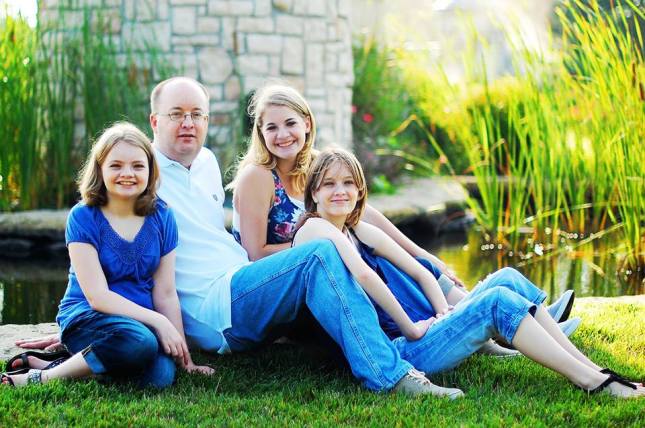
10451733_797124930349429_7292530056341311929_n

But this I know—of this I am confident—denial and excuses will not protect the guilty from the wrath of God. Grace is their only escape if their hearts aren’t already too hardened to receive it. Justice will be served; in God’s time, but it will be served.

And what I heard today can only be described as a deceptive half-truth. A sin of omission. It’s just one more sin to add to the cup of iniquity. One more sin adding to the cup of the wrath of God. One sin filling those cups drawing us ever closer to Christ’s return when God will proclaim the cup of iniquity full and the cup of the wrath of God will be poured out upon the wicked. It will be judgement day.

I’m in no way saying that the two drivers, the wife of this driver, the prosecutor or the judge are not saved. Only God knows the heart of man, but woe to the man who knows to do good and does it not, for that is sin. (James 4:17 paraphrased

 
15 Comments

Posted by on October 6, 2016 in Adversity, Faith, Grief


Tags: , , ,

When You Come Undone and Can’t Pull Yourself Together

I copied this article from incourage.me/blog instead of simply inserting a link to the site. It seems readers are less inclined to click on a link once they arrive at my home page and I really want people to read this article by Angela Nazworth. I love how she unfolded Hannah’s story. So, no link to follow today, just scroll down!


I have been pregnant three times. I have given birth twice.

Fragmented memories remain of the day I lost my first baby — the child whose heart thumped in my womb for only eight short weeks. I remember the horror I felt when I discovered the first scarlet spots alerting me that my baby was gone. I remember the weight of my husband’s hand resting heavy on my shoulder when my doctor confirmed our fears and tried to comfort us with statistics. I remember the coldness that swept through my chest when the nurse who assisted with the examination gave me a stern warning as I shakily made my way toward the exit.

“Now I know you’ve heard some unsettling news, but you need to pull yourself together,” she cautioned as I brushed tears off my cheeks and neck. “You’re young. You’ll get pregnant again in no time. There are women in that waiting room who are pregnant now, and they don’t need to be upset. So just get a hold of your emotions before you go out there.”

Then, with a pat on my back, she scurried away leaving me shamed by my grief.

My legs trembled as if I was walking a tight rope without a safety net. Through blurred vision, I forced a stoic expression, entwined my shaking fingers with those belonging to my husband and walked out of the building. With each step, one thought bounced around my mind.

Pull yourself together.

I’ve heard those words numerous times throughout my life in various situations. Sometimes they were spoken by well-meaning individuals. Other times, I whispered the phrase to myself.

A graveside vigil. Pull yourself together.

Job loss. Pull yourself together.

A loved one’s betrayal. Pull yourself together.

Saying goodbye to dear friends. Pull yourself together.

Overwhelmed by an infant’s colicky cries or a toddler’s 40-minute tantrum. Pull yourself together.

I’m sure that everyone who reads this post can add to the list above.

The expectation of pulling yourself together after life twists you undone is misguided.

Need biblical assurance that I’m sharing truth? Turn to the story of Hannah. Hannah, the mother of the prophet Samuel is a beautiful example from Scripture of a woman who mourned honestly before the Lord. Hannah didn’t pull herself together. You can read her story in the first chapter of 1 Samuel, but here is an excerpt from 1 Samuel 1:10-16:

“In her deep anguish Hannah prayed to the Lord, weeping bitterly. And she made a vow, saying, ‘Lord Almighty, if you will only look on your servant’s misery and remember me, and not forget your servant but give her a son, then I will give him to the Lord for all the days of his life, and no razor will ever be used on his head.’

As she kept on praying to the Lord, Eli observed her mouth. Hannah was praying in her heart, and her lips were moving but her voice was not heard. Eli thought she was drunk and said to her, ‘How long are you going to stay drunk? Put away your wine.’

‘Not so, my lord,’ Hannah replied, ‘I am a woman who is deeply troubled. I have not been drinking wine or beer; I was pouring out my soul to the Lord. Do not take your servant for a wicked woman; I have been praying here out of my great anguish and grief.’”

At that wall, Hannah unraveled the twisted, messy knots of her grieving heart before God. Passersby probably shook their heads. Eli mistook her agony for drunkenness. Hannah’s core was shaken. Her heart was broken. Her hope was nearly threadbare.

She wasn’t able to “pull herself together,” but she knew where to turn as her emotions were shred to bits.

The fiery pain of a personal loss is immeasurable. And each person’s threshold for heartache is different. There are times when we cannot keep going on our own. And God doesn’t expect us to pull it together and shine with glee when we’re busted up.

In the moments when torment throbs deep, God doesn’t bark “stiffen that upper lip, girl.” He instead whispers, “Come to Me dear one, come to Me.” He invites us to crumple into the comforting arms of Christ to pray or scream or to beg with abandon until we heal.

“For He has not despised or detested the torment of the afflicted. He did not hide His face from him, but listened when he cried to Him for help.” {Psalm 22:24}

 
2 Comments

Posted by on October 4, 2016 in Faith, Grief, Links


Tags: ,

Down the Damascus Road, Again . . .

damascusroadI have found there are points in my life where I find myself completely unable to accept God’s obvious plan. Maybe you’ve found yourself in a similar situation? It’s what I refer to as my “Road to Damascus” experience. By that point in time I’m filled with frustration and anxiety and doing everything I can in my own power to change the circumstances I find myself in only to have God pull me up short and shine a painful, blindingly bright light of truth down, revealing that I am not just kicking against the pricks but actively working against His greater plan.

It’s hard to describe how it feels to know that the thing you least want to accept in your life is an irrefutable part of God’s plan. Oh, to be a two-year-old again so that the temper tantrum I want more than anything to throw, while not tolerated, is at least understood.

Harder still and completely beyond my human capabilities, is the ability to change the desperate desire of my heart, let alone make any attempt to surrender and embrace God’s unacceptable plan.

I firmly believe changing the heart and embracing God’s plan only happens at the point where a believer’s brokenness is met by the active work of the Holy Spirit in that believer’s life. Surrender definitely comes before embracing the plan.

In fact, embracing the plan may never actually happen and it may not even be something God expects from me — from any believer. Maybe all God really expects is for us to quit actively working against Him — not because we have the power to prevent His plan from unfolding but because the fight — the anger, fear, frustration, anxiety and bitterness exhausts and destroys us from within.

Maybe simple resignation, surrender to the inevitable, is a victory in and of itself. Maybe surrender, resigned or not, allows one the energy to take the next step, endure the next blow, and the next, until only the sorrow and quiet emptiness remain leaving room for the Savior to fill you from the cup of consolation and enabling the broken believer to receive the only remaining hope worth clinging to — an eternal future promised to stand in stark contrast to every aching moment the present reality reflects. Maybe that’s sufficient until the day we are made like Him.

 
9 Comments

Posted by on October 1, 2016 in Adversity, Faith, Grief


Tags: , , , , , , , , ,

Feelings; The Bane of my Existence

Counseling-theories“How do you feel about that?”, Ruth, my grief counselor asked.
Tears filled my eyes and choked my throat as I desperately tried to prevent them from falling, to prevent a sob from escaping, while my mind grappled for words to define my feelings.

For such a wordy person I find it ironic how completely inadequate I find words to be.

“It makes me sad, incredibly sad”, I choked out.

Sad? What kind of word is that? It’s so shallow, so tame, so far from describing the intense wave of emotion that swells and rolls over my heart, that sucks the air from my lungs, pinches every muscle in my neck and shoulders, and shoots quaking tremors through my body as I struggle to maintain control.

I can’t speak without control.

I realized after I left my counselor’s office that I rarely cry. In the two and a half plus years since Bethany and Katie died, since Gracen’s health was irrevocably changed, I’ve not shed the ocean of tears I would have imagined had someone told me how things would unfold for our family that fateful day.

My therapy sessions are pretty much the only place I cry.

My counselors are the only people who ask me how I feel about anything. I’m not sure if everyone else assumes they know how I feel (based upon how they think they’d feel in my place) or if they are too afraid of the answer to ask.

And conversationally people in general use deflective phrases when we describe our feelings. “I feel like . . .” or “I feel as if . . .” are frequent precursors to deflective phrases.

“I feel as if I’ve lost everything.”

“I feel like hitting something.”

Where are the adjectives that describe the actual feelings in those sentences?

That’s how I talk to people. Those phrases distance me from the descriptive words for emotions we are often told are inappropriate or just plain wrong. They allow me to talk about facts instead of feelings. I can expound upon the events that occurred, the facts, all day long without shedding a tear. But don’t expect me to directly address my feelings because I can’t do that without breaking down.

Society seems to think it’s wrong to say,

“I feel betrayed,

abandoned,

unloved,

unworthy,

inadequate,

enraged,

sad,

despondent,

discouraged,

defeated,

diminished,

detached,

numb”

and so on.

Every one of those words deemed inappropriate and negative are really just replacements for this simple two word sentence:

“I hurt.”

We like to toss out the phrase, “No pain, no gain.” in relation to exercise, but that short sentence is equally applicable to emotional healing. It’s helpful to be able to put your feelings into words because we have an inherent desire to be understood and for our feelings to be validated. But understanding and validation are not enough. We have to experience our emotional pain in order to vent it, process it and find our way past it.

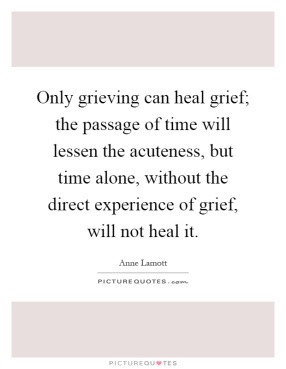
onlygrieving                    


We don’t heal—we aren’t restored to full emotional health—until we work our way through our painful emotions. We can’t ignore them, hide from them, bury them, rationalize them, or intellectualize them away. Those are all avoidance measures. Our hearts must heave and keen out our grief in order to heal.


Counting it all joy is fine, as long as we don’t expect the grieving to skip the passage from the onset of the trial to the spiritual maturity and inner peace developed as a believer’s faith is tested and proven. Read the verses below and it’s pretty clear that the benefits of having one’s faith tested requires passage through a process:


“Consider it nothing but joy, my brothers and sisters, whenever you fall into various trials. Be assured that the testing of your faith [through experience] produces endurance [leading to spiritual maturity, and inner peace]. And let endurance have its perfect result and do a thorough work, so that you may be perfect and completely developed [in your faith], lacking in nothing.” ~ James 1:2-4 (Amplified Bible)

I told Ruth recently, “You know how everyone wants you to find the silver lining around every dark cloud? Well I can’t even find the outside borders of the cloud. Have you ever looked at a dark and stormy sky and the clouds just stretch out before you covering every bit of sky your eye can see? You can make a 360 degree turn and still all you see are dark clouds stretching across the sky. That’s what it’s like. Looking at my losses and the prognosis for Gracen’s disease is like looking up and seeing a single sheet of dark, stormy, roiling clouds. I can’t get far enough away to see where the storm clouds begin and end. How am I suppose to draw a silver lining around the negative circumstances of my life when I can’t find the borders?”

experience.png


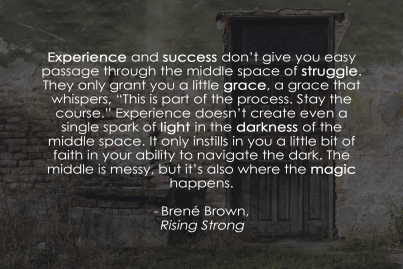
Regardless, the ability to find the positive in adverse situations doesn’t make difficult circumstances easier to endure or work through. Brené Brown, in her book Rising Strong said,


“Experience and success don’t give you easy passage through the middle space of struggle. They only grant you a little grace, a grace that whispers, “This is part of the process. Stay the course.” Experience doesn’t create even a single spark of light in the darkness of the middle space. It only instills in you a little bit of faith in your ability to navigate the dark. The middle is messy, but it’s also where the magic happens.”

Apparently, as a result of my most recent trials, I have become extremely adept at the art of numbing hurt. Distraction and avoidance maneuvers are ways people numb pain. To top off Brené Brown’s list of emotional numbing behaviors which include alcohol, drugs, food, sex, shopping, work and religion among others she adds:

“And just so we don’t miss it in this long list of all the ways we can numb ourselves, there’s always staying busy: living so hard and fast that the truths of our lives can’t catch up with us. We fill every ounce of white space with something so there’s no room or time for emotion to make itself known.”

I find it interesting that the practice of religion and staying busy are included in Brown’s list of numbing behaviors, because those are two things that I’m constantly encouraged to practice. Although to be fair, I do believe she is referring to over doing any of these things individually, or completely filling your days with a combination of these coping behaviors.

As she said above, “We fill every ounce of white space with something so there’s no room or time for emotion to make itself known.” This is what I do. I read. I sleep. I think. I even write about emotions in order to avoid actually experiencing them. This is what the late great C.S. Lewis said in A Grief Observed:

“Feelings, and feelings, and feelings. Let me try thinking instead. . . Do I hope that if feeling disguises itself as thought I shall feel less? . . . Aren’t all these notes the senseless writings of a man who won’t accept the fact that there is nothing we can do with suffering except to suffer it?”


Maybe he [Lewis] tried to think and write his way around experiencing the emotions of grief too. Maybe his work, A Grief Observed, is the physical manifestation of his own efforts at numbing the pain.

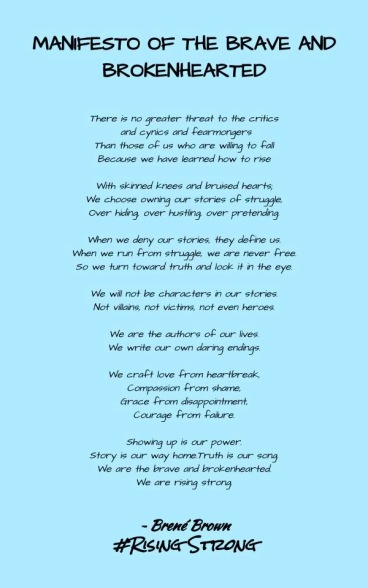
brave_brokenhearted


I’ve been struggling for two and a half years to find a way to cope with the pain of death and degenerative disease. But maybe I’m doing little more than intellectualizing my grief as opposed to experiencing or feeling it.  Maybe I’m deceiving myself by thinking I’m confronting my feelings and circumstances in relation to God’s Word when really I’m just making myself a character in my own story as opposed to writing my story (see the manifesto on your left). Maybe I’m not “crafting love from heartbreak, compassion from shame, grace from disappointment [or] courage from failure.” Maybe I’m just chasing my tail instead of becoming one of the brave and brokenhearted and rising strong.


How does that make you feel?

Confused,

Scared,

Sad,

Ashamed,

Weak,

Weary,

And very, very broken.

Lost.

I’m still lost.

All those emotions, and many more, are shoved down and shuttled aside as I continue to struggle to find the courage to process my emotions. I need to find a way to experience my feelings or healing will continue to elude me.

If anyone has any sage advice to help me through my magical mystery tour of life, please share it. Otherwise, I think the book of Jude contains the answer in verses 20 & 21:

” . . . you, dear friends, must build each other up in your most holy faith, pray in the power of the Holy Spirit, and await the mercy of our Lord Jesus Christ, who will bring you eternal life. In this way, you will keep yourselves safe in God’s love.”

And Jude tells us how we go about building each other up in verses 22 & 23:

“And you must show mercy to those whose faith is wavering. Rescue others by snatching them from the flames of judgment. Show mercy to still others, but do so with great caution, hating the sins that contaminate their lives.”


14 Comments

Posted by on September 28, 2016 in Faith, Grief


Tags: , , ,

A Life Deeply Mourned & Celebrated*

Stillbirths: How a New Openness Helps Parents Cope is an insightful article originally published in Newsweek Magazine January 30, 2009. Click on the link above to read the article. It reflects a much needed and long awaited trend toward ending the silence surrounding stillbirth. In fact, in recent years the term ‘stillborn’ has been replaced with ‘born still’. It’s a small but significant change as it demands acknowledgement of the existence and value of the deceased child.

The article is more than facts and statistics. It includes personal stories and introduces an organization dedicated to helping hurting families hold onto the children who have left their arms but not their hearts.

Never their hearts.

How I wish Now I Lay Me Down to Sleep existed in 1992. I’m so thankful it is available to families today. In 1992 David and I were encouraged to hold our newborn son and I’m glad I did. You just always wish for more. . . to know the color of their eyes, the sound of their voice, the feel of their tiny hand wrapped around your finger, wiggling toes . . . memories to hold onto.

Anticipation is making me wait for that moment promised in 1 Corinthians 13:12:

“For now we see through a glass, darkly; but then face to face: now I know in part; but then shall I know even as also I am known.”

When Cole was born, by all accounts healthy, just weeks before his due date; there weren’t many support groups available specifically for bereaved parents of infants. Fortunately, that is no longer the case**. The books on the market focused on miscarriage, a worthy subject and a far more common form of child loss, barely gave a nod to the subject of stillbirth.

I was rocked by the fact that my son was healthy . . . but dead. Healthy and dead. The two are simply incompatible; yet it was true. It never dawned on me when I prayed for a healthy baby that I needed to pray for a living, breathing baby at the same time. I never made that mistake again; I assure you.

I felt very much alone.

Those who had previously experienced early miscarriage expected me to quickly move past my grief. Nobody wanted to talk about my son. It felt as if people wanted me to pretend the previous nine months had never happened. And of course the obligatory comments designed to offer hope and comfort were extended. “You can have another baby.”, “This was God’s way of taking care of an unhealthy child.” I wonder if those who offered that last bit of wisdom recognize the irony of it in light of the fact that I later gave birth to two children with a rare form of Muscular Dystrophy? I doubt it. They probably don’t remember saying those words, although I certainly recall hearing them. That’s not meant to be snarky. For some it’s better if they don’t remember; their intention was good. For others, remembering may help them recognize it is untrue and better left unspoken.

Stillborn The Invisible Death was the only resource I found dedicated solely to the topic of stillbirth. It was a painful and cathartic read for me. I’d pick it up and read until my heart hurt so badly I had to cast it aside. But it kept drawing me back. It was one of the few places I heard the barest whisper of, “Yes, that’s it. That’s how I feel!” It was heartrending. It was validating and affirming. My experiences with friends & family, emotions, and subsequent pregnancies were clear reflections of those portrayed in the book. I was not nearly as alone as I felt. I wasn’t crazy, paranoid, or ultra-sensitive. I was very, very normal.

The book is a compilation of survey responses by bereaved parents. But this editorial review found in Library Journal gives a far better description of the book than I can relate 24 years after the fact:

“According to the National Center for Health Statistics, 33,000 babies are stillborn each year. For the parents who experience this traumatic event, and for familes, friends, and professionals, this book offers understanding, hope, and comfort. Drawing on the moving and eloquent testimony of 350 parents of stillborn babies, it explores such topics as blame, shock, and guilt; seeing, holding, and remembering the baby; the autopsy and funeral; effects on family relationships, including moving and divorce; thoughts of suicide; increased substance abuse; surviving children and subsequent pregnancies; returning to normal; and reaching out to others. An empathic and compassionate book that would have been enhanced by a list of support groups and resource organizations.Nevertheless recommended. Jodith Janes, University Hospitals of Cleveland Lib.”

These many years later, I’d still recommend this book to bereaved parents who’ve experienced the birth of a stillborn child.

Seriously, follow the link above and read the Newsweek article. You never know when stillbirth might touch your life or that of someone you love. You never know when you might be called upon to minister to, or encourage, an individual or family living in the deepest, darkest grief following the ninth hour loss of the child they’ve dreamed of and prepared for. You never know . . . maybe you should.


*Newsweek article paraphrase

**A multitude of support groups (both online and face to face) can be found via internet search. I’m partial to While We’re Waiting, an organization dedicated to ministering to bereaved parents. Please see whilewerewaiting.org to find out about the free services offered to grieving parents.

 
2 Comments

Posted by on September 26, 2016 in Grief, Muscular Dystrophy


Tags: , , , , , , ,

Hunger Strike!

According to New Health Advisor, the primary purpose of nutrition is to fuel the brain and subsequently the body’s cells, muscles and organs.

Starvation is the process whereby the body generates fuel by progressively more destructive means until every fuel store has been depleted. Normally fuel is derived from the conversion of glycogen to glucose during digestion. When glucose is no longer available from nutritional input the body takes it from fat stores. When the body’s glucose has been expended it creates fuel from ketones stored in the liver. Once the body’s ketones have been consumed the body shifts to robbing protein stores starting with the muscles and moving to organ tissues. At this point death occurs as a result of illness due to the lack of vitamins and minerals that feed the immune system or the systematic shutdown of bodily functions known as a vegetative state. Muscle loss and a lack of energy along with a bloated belly are the hallmarks of starvation. The entire process takes approximately 70 days.

unknown-3This morning I realized that I’ve been on a hunger strike of sorts. It wasn’t a conscious decision on my part; well not entirely anyway. But I’ve spent a great deal of time trying to reconcile my circumstances, and my feelings about them, with what I know and believe to be true about the God who loves me. The thing I haven’t done is regularly sit down in His presence and let Him speak to me.


The truth is that I don’t really want to taste, chew and swallow what God wants to feed me. It’s a bitter, mushy, unpalatable meal that He has set before me, and so I’ve turned away from the nourishment I so desperately need. I’ve repeatedly refused to lift the fork to my mouth to taste, chew and swallow the bitter lessons of love, discipleship and suffering. And as a result, I’m wasting away much in the way a body dies of starvation.

In the absence of a steady diet of the Bread of Life (nutrition for the soul and spirit), I find myself weak and weary and more than likely my mind has become bloated with illogical thinking. (It’s hard to make a definitive statement on the state of my metal processing as it all makes sense to me)! Regardless, my spirit has been fueled by biblical nutrition from days gone by which leaves me vulnerable to the misinterpretation of scripture and misunderstandings about God—His character, will and purposes. It’s resulted in atrophied spiritual muscles and strength. Hence, I’m spiritually weak, weary, vulnerable and probably a bit delusional or at the very least misguided. Everything within me has shifted into self-protection mode.

I trust God with my eternal future. I trust Him to walk me through everything He will allow in my life; but I don’t trust Him with my heart. I don’t trust that He will protect me from further emotional pain—because life has taught me that He won’t. It doesn’t matter that He has a good purpose for my pain—the old the end justifies the means philosophy. It doesn’t really matter that He has provided comfort and consolation in my grief.

I think I have spiritual PTSD.

unknown-3

But I know—I know I’m spiritually anorexic.

Renee Swope said,

“We can find the plans God has for us when we surrender our plans to him.”

Surrender—that’s the last thing I want to do! No, fear has left me grasping to hold on to the two people I hold most dear. I’m terrified to lose them too. I wish fear were as easy to conquer as simply reciting Bible verses. “Fear not for I am with you.” “When I am afraid I will trust in you.” “Be ye strong and courageous. . . ” I know these verses, and more. They are written upon the tablet of my heart. But it’s not enough for this wounded heart . . .

“Because God loves my kids more than I do, I must trust His plan for them.” ~ Lysa TerKeurst

unknownIf you search the Internet for articles about trusting God with your children you will find the majority of the articles revolve around things that, while not insignificant, are also not matters of life and death. A quote like Lysa’s can sound painfully trite, if not impossible, to parents of sick or special needs children; especially when death is dogging their every step, regardless of the truth of her words.


Spiritual maturity is a process that requires ever increasing trust in God. And trust is hard to come by when it’s been betrayed, or feels as if it’s been betrayed. Self-protection is the knee-jerk reaction. Resistance, cynicism and even rebellion often follow.


But there are things that can help overcome those common worldly responses.


unknown-4

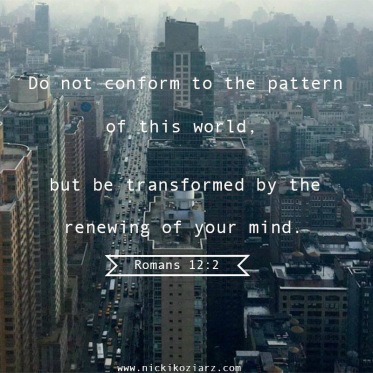
Romans 12:2 comes to mind:


“Do not conform to the pattern of this world, but be transformed by the renewing of your mind.”

And in this, I have failed.

Living on lessons learned in the past has limited ability to renew my mind let alone transform my heart.

unknown-1


Psalm 34:4 “I sought the Lord and He answered me and delivered me from all my fears.”

And I haven’t sought the Lord for deliverance from my fears, or my circumstances either. . .

Why you might ask.

Why would you deny yourself the bread of life?

Why deny the power of God to change your circumstances and deliver you from your fears?

God’s Word is filled with triggers that incite my fight, flight or freeze reflex. Verses that torment—that feel untrue. Verses about protection—about healing. Verses that reflect promises for the here and now—or maybe for eternity alone—or could they apply to both? God’s Word hurts!

Praise and worship music lifts me up then slaps me back down as it cycles through praise and thanksgiving followed by trials and victorious overcoming. But I don’t feel like an overcomer and I certainly don’t feel victorious.

Prayer—prayer is just plain emotional. Faith and fear, anger and resentment, trust and bitterness assault me. Prayer is an exercise in trust. It’s begging God to do that which I cannot do myself; which generates expectation—hope—within my heart. Prayer requires reaching for His hand, grasping it when it comes within reach, and trying desperately to cling to it as things continue to get worse—when it feels as if my prayers have gone unheard or worse yet—that my feelings have been disregarded.

I’m resigned to Gracen’s prognosis. Every request for the removal of the thorn in her flesh has been repeatedly answered in the negative (lest I dare hope His answer is ‘wait‘ instead of ‘no‘). Begging for a change in circumstance in the face of continued negative responses just sets me up for further disappointment. I don’t need my glasses to read the writing on the wall. Encouraging me to continue in prayer and have hope for healing leaves me feeling guilty and ashamed as if I’ve failed in my Christian duty—as if I’ve failed my daughter. However, even the Apostle Paul quit asking for his thorn to be removed after three seasons of prayer.

romans12_3And deliverance from my fears is beyond the scope of my faith . . . at this time.

My fears are all bound up in Gracen’s future, her prognosis, and deep spiritual wounds that remind me that I have trusted God for things in the past that He never promised. That’s not to say that He failed me, no, not at all, but I was still hurt by misunderstanding the promises He did make.

Sometimes I think it’s a cop-out to say I don’t currently have enough faith. Maybe you do to. But I ask you to return with me to Romans chapter 12. After Paul’s admonition to avoid being conformed to this world—after his encouragement to be transformed by the renewing of our minds—he went on to say this in verse three,

For I say, through the grace given unto me, to every man that is among you, not to think of himself more highly than he ought to think; but to think soberly, according as God hath dealt to every man the measure of faith.

In the majority of card games, cards are dealt by the dealer either upon request or as the rules dictate. If faith and trust are living and growing spiritual fruit, I think it’s highly likely that at times God deals me a bit more faith when I request it, and at other times He deals me more because His plan dictates that I will need it. The well of faith is always sufficient; but faith still needs drawn out of the well!

uninvitedI recognize that my unintended hunger strike needs to come to an end. I’ve devoured every last bit of spiritual knowledge stored up in my heart and mind. I need a regular diet of the meat of the word in order to renew my mind and transform my heart. I’m sure I’ll miss meals on occasion, but I’m making a conscious effort to be regularly fed.

Right now, my diet consists of a Proverbs 31 Online Bible Study by Lysa TerKeurst called Uninvited. It’s subtitled: Living Loved When You Feel Less Than, Left Out And Lonely.

It’s a start and it’s hard.

It’s hard because the foundation of the lessons are the love of God, as it should be. Yet, Lysa TerKeurst, points out that, “What we see will violate what we know unless what we know dictates what we see.” Did you get that? What we see undermines truths we absolutely believe about a God, and will continue to do so, until our hearts and minds are transformed. Then the truths we know will alter our spiritual perspective, thereby overcoming sight by faith.

Every time I look upon my daughter, I see disease reigning victorious over her physical body. Fear of losing her, fear of unbearable grief have created a living, breathing terror within my heart—terror of God almighty—of His plans—terror over how much His plans will hurt. And that terror undermines what I know to be true. God loves me. He loves me and I have nothing to fear from Him. But what I know to be true is not dictating what I see when I look upon my daughter. I don’t see her one step closer to complete healing. I don’t see her drawing ever closer to no more pain. I don’t see her through the eyes of eternity. The hope of eternity is obscured by the dimmest of mirrors reflecting and distorting what will be with the reality of what is right now.

And right now I feel less than—less important, less valuable, less loved than the believers who surround me with joyfully intact and healthy families. Right now I feel left out—left out of the blessings everyone around me takes for granted. Watching their children grow up, embark on careers, marry, have babies, and watching those babies grow. Right now I feel lonely—lonely for missing family members, lonely for friendship, lonely for the Lord because it’s so very hard to draw close to someone you know will hurt you, or allow you to be hurt, again—maybe even soon. Lonely because grieving is very much a solitary activity.

So I am trying with this online Bible study. My self-imposed hunger strike is over! And I’m hoping to find a way to live loved. To live in the full assurance of the height, width, and depth of God’s love for me so that I can be renewed and transformed—so that the image in my mind of the mastery of disease over Gracen’s body will be concealed—will be completely replaced—with a clear image of Gracen the way Christ will see her when she steps into His presence. That’s a pretty tall order; but I know that God is able. It won’t happen overnight; or quickly for that matter. But given time, it’s a possibility.

It’s a possibility.

 
6 Comments

Posted by on September 19, 2016 in Faith


Tags: , , , , , , ,

A Mourner’s Thoughts On Sickness, Sorrow, Pain And Death – Scott Sauls

Scott Sauls, Pastor of Christ Presbyterian Church in Nashville, a man well acquainted with ministering to the sick, sorrowful, those in pain and those grieving or living in anticipation of death, opens God’s Word and reveals important scriptural truths about suffering. This post has the power to equip the Saints as well as offering much needed validation to the suffering. Click on the link in red below to read Pastor Sauls’ article.

” Let all who have ears give heed to what the Spirit is saying to the Churches.” ~ Revelation 3:22 (Weymouth New Testament)

Source: A Mourner’s Thoughts On Sickness, Sorrow, Pain And Death – Scott Sauls

 
Comments Off on A Mourner’s Thoughts On Sickness, Sorrow, Pain And Death – Scott Sauls

Posted by on September 17, 2016 in Adversity, Faith, Grief, Links


Tags: , , , , , , , , , , ,

Thanks for Listening!

Thanks for Listening!

My virtual friend, Melanie, simply shares my heart, my brokenness, my faith, my struggle and my purpose for blogging. She has much to offer the bereaved and those who care for them, on a foundation of sound doctrine.

Melanie, has been such a blessing to me personally. Everything she writes echoes a chord within my soul. In this post, she touched on the one thing I have been too vulnerable – too afraid to share – that need – that craving, for ongoing support.

I hope you will read Melanie’s post and visit her blog at thelifeididntchoose.com. God is working and ministering to brokenhearted parents worldwide through her struggle.

Melanie's avatarthelifeididntchoose

One year ago today I began sharing my grief journey publicly on this blog.

IMG_1790

You can read that first post here.

It was (and still is) scary to expose my thoughts and feelings to a wider audience than just the pages of my personal journal.

I’m never certain that what is helpful for me is necessarily helpful for anyone else.  But in writing it down I find that I am able to sort through things better than when I leave it bouncing around in my own head space.

I decided upfront that I would be as honest as possible about what I felt and how I was coping.  I wasn’t sure if I would post only a few times or a lot, if it would turn into a day-by-day diary or a more sweeping revelation of deeper things.

I think it’s kind of been both at times.

And…

View original post 321 more words

 
Leave a comment

Posted by on September 16, 2016 in Faith, Grief


Tags: ,

Questions I Ask & Thoughts I Ponder

The Apostle Paul said in Philippians 1:21,

“For me, to live is Christ and to die is gain.”

I can in no way claim to be anything like the Apostle Paul, but I can relate to his statement – if not in whole, then in part.

For me, to live is to care for Gracen, and I desperately want to be there for Gracen, but to die . . . to die is gain.

In our day and age, no one wants to hear that sentiment expressed. Maybe it makes people fearful that I might harm myself, but I wonder if maybe it is more about an individual’s fear that at some point in their life, they might find they desire death over life.

I have an eternal hope.

Death is not something I personally fear.

And neither did the Apostle Paul.

And if . . . if God’s purpose for the latter part of my life is to care for Gracen . . . if that is my ministry and service for Christ, then am I not, in effect saying just as the Apostle Paul did, “For me, to live is Christ and to die is gain”?

Is it spiritual to laud his statement and rebuke mine?

If we as Christians are to be Heavenly minded, is it wrong to long for our eternal home?

Is it wrong to desire Heaven more than we desire this temporary world we currently reside in?

Do we unconsciously believe Paul’s ministry, the ministry of evangelism, is the pursuit of Christ and His desires, whereas ministry to the members of our family or the sick really doesn’t equate to living for Christ?

img_1412-1Is that why my longing for my eternal home is met with admonitions that I must have hope? That it is wrong for me to desire the rapture in order to escape these earthly sorrows?

Is that really wrong?

Does my motivation somehow make my desire impure?

Does God care why I desire Heaven or just that I do?

Does not a longing for my eternal home reflect the deepest trust that I, in fact, have an eternal home waiting for me?

Does it not reflect true faith?

And should I lose it all—should I lose both David & Gracen—what, if anything, would be capable of anchoring my broken heart to this earthly prison?

I know what the answer to that last question should be. I certainly don’t need anyone to educate me with the “correct” response. But what “should be” and “what is” are often two different things. I know that my mind and my emotions will not agree if my worst fears are realized. I know they won’t. They don’t now.

These are questions I ask myself.

Maybe that last question is the reason people so adamantly attempt to cram the necessity of hope down my throat.

Maybe that’s their secret fear too.

Maybe no one knows what would hold enough sway in their individual lives to anchor their souls to this world if they lost everything they value most in this world.

Maybe—God help us all—maybe there is nothing strong enough to do that for any of us.

img_1416Maybe that’s where the Holy Spirit steps in and performs a supernatural work in our hearts that enables us to receive God’s all sufficient grace instead of rejecting it in our agony . . . instead of taking action outside of the will of God due to complete despair and utter desperation.

These are thoughts I ponder.

I’d love to know how you answer these questions—if you think these same thoughts.

 
6 Comments

Posted by on September 10, 2016 in Faith


Tags: , , , , , , , , , ,

Thirty Minutes

hourglassI had a biopsy Tuesday. I was a bit surprised when the doctor told me that I had handled the news that the biopsy was necessary in an appropriate manner – in other words – he was glad I didn’t freak out. This is the fourth time I’ve had to have follow-up appointments when the initial tests revealed unexpected results ATA (after the accident).

I find that ATA I am no longer shocked or surprised by disconcerting news. I’ve just adopted a low-level of expectation mixed with a high-level of resignation.

The nurse told me prior to the procedure that they do a lot of these biopsies and that a cancer diagnosis is very rare. My tongue-in-cheek response was, “Please don’t use that word rare. I’ve found that if it’s rare it happens to me.” Stillbirth is rare. ARSACS is rare. Losing two children in a car accident, while not unusual, is also rather rare among the population.

The biopsy wasn’t as uncomfortable as I expected in spite of finding that the pre-procedure medication hadn’t quite done the job it was designed to do. An additional step was required, which the nurse assured me was NOT a rare occurrence. The three of us, the doctor, nurse and I actually found a host of things to laugh about throughout the process.

As I left the clinic Tuesday afternoon I found myself thinking, ‘This is the most normal I have felt ATA.’ It wasn’t that I escaped the awareness of Bethany and Katie’s deaths. Nor did I forget Gracen’s disease and her prognosis. Those things are simply deeply ingrained in my being. They are ever before me. They have shaped me in so many ways. They color my perception of everything I see, hear and experience.

I don’t really know what made the interaction with my doctor and nurse different than all the interaction I have had with others ATA. Maybe. . . hopefully. . .  it reflects that a measure of heart-healing has taken place. I am both hopeful and wary of finding out if that will prove to be true.

clocksIt was a period of time in which feeling good (in spite of the fact that I was having a biopsy and all that implies) didn’t feel bad – didn’t feel as if laughing or smiling or enjoying simple conversation diminished the inherent value of my daughters. There was no guilt – no shame – and believe me I found many a reason to feel both of those things!

It was thirty minutes, not of escape, but of the assurance that there could and maybe even would be more moments like this. Moments when each one of my children is a joyful part of me, not simply a bitter or wounded reminder that life is not what I hoped, expected or dreamed it would be.

I fear I’m not describing these moments well at all, but suffice it to say that it was the first time that I discovered that living another day might not be so bad. That I might eventually enjoy life again. Not the naive existence I walked before Cole was stillborn, before Gracen and Katie were diagnosed, before Bethany and Katie died, before Gracen survived even as her health continues to deteriorate. No, it was a glimpse of what might be possible in spite of all those other things.

For thirty minutes of my life Tuesday . . . I felt free.

I felt for the first time as if God just might have some good plan for me in the here and now; not just my eternal future. Believe me when I say that I have long known intellectually that God cares about my here and now as well as my eternity, but it’s the first time I actually felt as if that was true. Finding any single occurrence where my mind and my feelings agree is huge for me.

HUGE!

For two and a half long years I have struggled to find a way to make my mind and emotions agree . . . and I’ve failed miserably. I honestly don’t think it’s something I have any power over. I think that’s the Holy Spirit’s job, so I don’t believe I’m a failure. I do, however, think the Holy Spirit is meticulous and that takes time – more time than I have the patience for.

So for now . . . all I want to do is bask in the thirty minutes of freedom I experienced.

30-minutes-400x234-1_1Those thirty minutes were worth waking up Tuesday.

Worth getting showered and dressed.

Worth having a biopsy.

Those thirty minutes. . .

That feeling of freedom . . .

it’s priceless.

 
6 Comments

Posted by on September 7, 2016 in Adversity, Faith, Grief, Muscular Dystrophy


Tags: , , , , ,