
The last quarter of 2015 was particularly hard for me. Gracen had settled in well at JBU, David had changed responsibilities at work, which he was really excited about. I on the other hand, encountered, a big gaping void.
Preparing to send Gracen to college and living independently after I had spent the last year and a half helping with her personal care needs, left me anxious on a level I’d never experienced before. Her physical safety was my primary concern and following the deaths of three children, let’s just say I had little confidence that I would not lose Gracen too.

In addition, in April or May of last year I began fielding a new and distinctly different set of questions. With graduation on the horizon people began asking me what I intended to do with my time – with the upcoming “empty nest”. Not one person acknowledged that I was not supposed to have an empty nest. No one seemed to realize that fear for Gracen’s safety, a premature empty nest and an utter lack of purpose might be frightening and emotionally overwhelming. Then again, maybe people did understand but felt ill-equipped to address it so avoidance was deemed the most comfortable solution for everyone; myself included. Unfortunately, avoidance left me feeling alone, stranded in my grief, disappointment and fear. It also left me feeling as if Katie was unimportant in the eyes of the world and as if my fears for Gracen’s safety were unreasonable in spite of the fact that I knew Gracen was at high risk for injury on campus.

So, by the time graduation passed, I was a bit of a mess. I began taking an anti-depressant early in 2015 and by June I was unquestioningly aware that I needed more help. So an anti-anxiety medication was added to the mix and it made a significant difference. I had not realized just how much anxiety I’d been living with until the miracle of modern pharmaceuticals provided some much needed chemical relief.
Still, I was weary, frightened and at loose ends so once Gracen settled into school and dorm life, I settled into my bed. I found myself alone, overcome with the grief I had suppressed in Gracen’s presence, fighting to process it or push down to avoid the excruciating pain and rudderless. I also began sleeping later in the day which affected my medication schedule. One day I realized that I couldn’t recall when I’d last taken my prescriptions. Knowing I had an upcoming appointment with my PCP I decided to wait to see him so he could help me restart them safely. Looking back, that was not a good decision. A downward spiral took hold.

A typical day looked . . . okay, looks (present tense), because this is still a typical day in my world . . . something like this. I wake up, get a cappuccino or chai latte, return to bed to read. I read, write, browse Facebook and email and nap on and off throughout the day. David comes home, FOX news comes on and more often than not he makes dinner. After dinner, I read, he watches Fox and plays on the computer and finally, lights out. I toss and turn, mind whirling and when I can’t stand my thoughts and the inability to fall asleep any longer, I start reading again.
Unless I have an appointment with my grief counselor, my trauma counselor (for PTSD), or my PCP everyday is much like the day before. I’m comfortable with that. The silence and being alone is easier than being around people. People make me anxious – incredibly anxious. How does one answer all the oh so simple questions without making others uncomfortable? How do I answer them without feeling pitiful myself? “What have you been up to?”, “Will you get a job?”, “Any new hobbies?” A simple, “I’ve missed you” leaves me paralyzed and frantically searching for an appropriate response. “Me too” is what longs to escape but “Um, thank you” is generally what spills forth. And as to the what have you been up to question, not much is my reply. No new hobbies, no plans for a part-time job. The reasons for those brief responses go unspoken as the listener will either feel uncomfortable with my answer or will try to explain to me why a job or hobby would benefit me. Regardless, a simple “no” is awkward enough as it doesn’t open the door for further conversation.
Is my current daily activity healthy? Surprisingly, the answer is yes. . . and no.
All those churning thoughts and my writing are a means of working through my grief. The reading is also good for me. I read suspense, mysteries, thrillers, and romance. They engage the mind. If I was simply laying in bed, not working through my sorrow and not engaging my mind, that would be cause for concern.
Facebook and email allow me safe access to the outside world.
And the sleep; it’s good too. I’m trying to take my PCPs advice and get some much needed rest. He pointed out that should I fail to recharge spiritually, physically and emotionally, I will be running on empty when Gracen inevitably needs additional support. To say Gracen’s shift from walking to using a wheelchair was an enormous change is an understatement of vast proportions. Wheelchair use involves a mirad of complications I had never considered. Transfers into and out of the wheelchair, bathroom use with and without handicapped facilities, transporting the chair, finding safe and viable entrance and exit doors, dealing with weather – oh my, dealing with weather!, and a multitude of unforeseen considerations became the new norm. No one can estimate the demands the next transition in her health will require. Therefore, I need to be prepared, or be able to get up to speed quickly, in spite of the emotional impact those changes bring.
So I find myself withdrawing from the world around me, to rest, to grieve, to avoid assuming responsibility for making others comfortable with the realities of my life. I don’t have the motivation or the energy to continue to push myself. Gracen was my motivation. For her, I would, and still do, force myself forward, but in her absence . . . I lack the impetus to do much of anything. I’ve struggled with the blues in the past, but never before have I found myself fitting the defined parameters of the clinically depressed. Just hearing those words uttered by my grief counselor left me deeply ashamed and utterly humiliated.
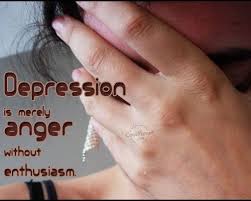
Why? Why would a diagnosis of clinical depression leave me ashamed and humiliated? I mean really, my counselors keep reiterating that I have suffered loss on a scale uncommon to the average individual, so depression is certainly not an uncommon or even an unexpected response. I think I felt ashamed because depression is a mental illness and in our society a stigma is still attached to mental illness. Secondly, I had higher, albeit, unrealistic expectations for myself and for my faith. Clinical depression represented, in my mind, both a personal failure to overcome and, far more painfully, a failure to avail myself of the power of God. It stank of insufficient faith; not an insufficient God.
At some point along the way I drank the kool-aid and ascribed to the cultural expectation that I was capable of conquering every obstacle by sheer force of will and tenacity. I should have realized, and in fact, from an intellectual perspective alone, I knew that was lie of epic proportions straight from the slithering serpent in garden of Eden. That far too prevalent belief system is nothing more than the heart and mind’s rebellious desire to proclaim the soul god. It’s the cunning and insidious whisper of the snake luring us into believing that with enough knowledge, with enough determination, with enough effort, we are in control.
 In truth, that idea is nothing but a craftily designed hologram. An idea without formative substance. It’s equivalent to the land of Oz and the impotent wizard hiding behind the castle doors and green drape.
How many times have you heard or used the analogy that if it walks like a duck and talks like a duck, it’s a duck? Therefore, a Christian can easily conclude in the deeply buried regions of their heart and mind, that if they fail to conquer the human emotions grief generates, from guilt to fear, sadness to anger, and so forth, they are failing to walk by faith. They are failing to apply the principles of their faith. They are not the Christian they believed themselves to be and often worse, they have failed to live up to the perceptions and expectation of fellow Christians to inspire saints and sinners alike, to give God glory and praise in the midst of their despair and to minister to others. In other words, God is not insufficient, their faith is insufficient. They have failed God’s test of their faith.
But is that really true? This duck analogy sounds good, but is it universally applicable? The truth is that in a paradoxical fashion, faith demands doubt. The very essence of faith is to fall short of fact. Jesus has always been the bridge that spans the gap between what we know to be fact and what we trust to be true. When my faith, when your faith, falls short of expectation are we then dismal Christian failures? I don’t think so. We have simply lived up to the limits of our personal faith at that point of time – and lived up to the very essence of faith in general.
The longer I live the more aware I am of exactly how dependent I am upon the Lord God Almighty. I am the instrument He forms at the potters wheel for His use. I am made in His image but I was not, nor was any human, created with His perfect power and holiness. As a result, I am vulnerable to temptation and a failure to differentiate between truth and lies and good and evil on occasion. And yes, I have fallen victim to Satan’s devices. I’ve both allowed Satan to cunningly communicate a stark untruth about a simple diagnosis and to lead me to question God’s love and kindness by contemplating the idea that He may have withheld the desires of my heart in spite of the fact that I did my best to delight myself in Him.
What exactly does it mean to delight yourself in the Lord you might ask? Gotquestions.org addressed that very question and their answer follows:
“Psalm 37:4 says, “Take delight in the Lord, and he will give you the desires of your heart.” Taking delight in the Lord means that our hearts truly find peace and fulfillment in Him. If we truly find satisfaction and worth in Christ, Scripture says He will give us the longings of our hearts. Does that mean, if we go to church every Sunday, God will give us a new Rolls Royce? No. The idea behind this verse and others like it is that, when we truly rejoice or “delight” in the eternal things of God, our desires will begin to parallel His and we will never go unfulfilled. Matthew 6:33 says, “But seek first his kingdom and his righteousness, and all these things [the necessities of life] will be given to you as well.”
Did God withhold the desires of my heart? No. Children were my heart’s desire and I’ve been blessed with four. I got to love and nurture each one for a finite amount of time.
Did God steal the desire of my heart from me? The answer to that is no as well. My children were on loan to me. They were always His creation and David and I the chosen stewards.
Were they taken from us because we proved to be unworthy stewards? I don’t believe that at all, in light of scripture. God predetermined the number of my childrens’ days and in the case of my daughters he allowed man’s free will to intersect with Bethany and Katie’s number of days. The Bible tells us that sin impacts all of creation and the cost of sin is death. So be it accident or illness, intent or natural event, all death can ultimately be traced back to sin.
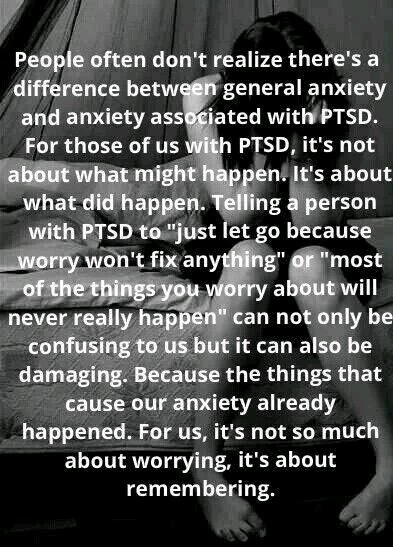 My grief recovery is complicated by the anticipation of more loss and the very real and reasonable fear of the destruction another loss will wreck within my heart. Even grieving families that aren’t dealing with progressive disease often struggle with the anticipation and fear of more loss. They’ve lost their naiveté – they know bad things can and will happen to them – not someone else – down the road. But for most it is a vague Spector on the periphery of their minds. For me it is a far more tangible presence and I must find a way to make peace with that and what it teaches me about the Lord.
Our family was living with progressive disease long before the collision that took Bethany and Katie’s lives. The difference between then and now is the loss of worldly hope. There is a popular saying, “Where there is hope, there is life.” I have lost the majority of my worldly hopes. I know just saying that out loud will cause a great many people to reflexively remind me of all the worldly hopes that still lie before me. What they don’t understand is that I no longer wish to have any worldly hope. Worldly hope leads to expectations. Expectations often lead to deferred hope and as we are told in Proverbs 13:12, “Hope that is deferred afflicteth the soul: desire when it cometh is a tree of life.” – Douay-Rheims Bible.
I prefer to invest my expectation in eternal hope alone; that of eternal life with my savior and fellow saints, because that hope is the only one guaranteed to come to fruition. I’m confident my hope of eternity will be fulfilled and not deferred.
However, I have yet to make peace with the role progressive disease will play in our lives, precisely because of all my prior losses. It feels unfair. It feels too much to ask of any one believer. If this is what God’s love looks like, my more cynical perspective leads me to beg Him to share the love (with someone else)! And yes, God can carry me through anything He allows to happen in my life, but before anyone reminds me of that truth (because I am well aware it’s true) put yourself in my shoes. Google ARSACS (a rare form of Muscular Dystrophy) and read about what it does to an individual and then imagine walking that path with your child. Imagine helping your child as their health declines. Imagine standing by helpless to change it or improve their quality of life. Imagine the things I’ve eluded to and left unspoken. Making peace with God’s plans, with His will, with His sufficient grace is far harder when it’s personal, when you find yourself “feeling” as if His grace might not be quite be sufficient for you after all you have endured already.
 I have reached the point of acknowledging that the best I may be able to hope for in regards to ARSACS, may consist of a cycle of repeated but temporary interludes of peace.
We live in a continuous grief cycle. Gracen loses a previously mastered skill and we mourn and despair it’s loss and the daily ramifications that ripple out in waves from that loss. Eventually, we adapt to her new normal and settle into a wary peace until the cycle restarts with a new loss. It’s just the way life works in our home. Every time the cycle begins anew, we hurt. Fear arises as does disappointment and sometimes even despair. I’m not sure if the Holy Spirit is actually doing a new work of trust and peace with each cycle or if each cycle simply forces me to acknowledge an as yet unconquered weakness (or doubt) in my faith. Maybe I just keep spinning my wheels without making any forward progress. Yet a person who is maturing rarely notices the subtle changes until enough growth has occurred and their pants are inch too short. I imagine spiritual maturity is as subtle a process as manifest in physical maturity. It’s only looking back far down the road that real progress is recognized.
 Today, I am doing well to say without shame, my name is Janet Boxx. I am clinically depressed. I have anxiety issues. I have PTSD. I self medicate my anxiety with food. (Ok, that I’m ashamed of – although I’m happy to report that while I may be a glutton, at least for now I’m not a suicidal, drug or alcohol addicted, glutton). I lack the motivation to return phone calls, emails and text messages; to clean my house, pay bills, shop for groceries, do laundry and sometimes even to shower. It is what it is and my response to my life’s circumstances is not abnormal in the bereaved parents community, even two years down the road.
Having said all that; do not drop by unannounced! I still have the capacity to feel great embarrassment and utter mortification. Just because I’m comfortable in my current state of sloth doesn’t mean I’m equally comfortable having friends and family witness it.
Before speculation germinates, let me just say that David has demonstrated the utmost patience and support. He has taken on the tasks I normally do without complaint, anger or resentment. He has a servants heart and demonstrates his love for Gracen and I in actions more than words. He guards my privacy. David is better at compartmentalizing his grief than I am. He has not, nor has ever, abandoned me to my grief and more importantly has never criticized or judged the way in which I am coping with the very same losses he, himself, is dealing with. Our experiences with trauma are different because we were exposed to different things and took on different roles at the scene of the accident, at various hospitals, at home caring for Gracen during her recovery, with the medical community and the legal system and we simply deal with trauma differently.
This is what my life looks like when the Potter decides the pot He previously formed has served its intended purpose. This is what my life looks like once I was fractured into minuscule pieces, returned to softened clay, and set to spinning on the Potter’s wheel while He molds me into a new shape with a new or more complicated purpose in mind (after all, I am still a wife and mother).

And you know what? As ugly as this lump of clay currently is, as uncomfortable as it is for me to find myself in this state, it’s okay to be a lump of clay in the Creator’s hands. There is no safer place to be and while others, myself included, may worry about who and what I’m becoming, I’m confident God is not. He sees beyond the here and now – past the dark tunnel I’m traveling through – clear to an eternal future where He will literally light my world.
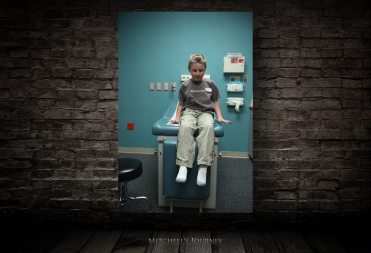

 I didn’t lose a son and two daughters and begin picking up the pieces to move into a hopeful future. I live with the knowledge that I will always be picking up broken pieces and there is no way to repair the pieces that have been falling since MD entered our lives.


 Boxx Banter