
Monthly Archives: October 2015
Suffering & Sanctification
(Facebook Post 9/8/15)
I recently read, FEARLESS, the story of Navy SEAL, Adam Brown, an Arkansas native. Adam wrote the following statement in his journal while deployed. In order to better understand the quote, you should know that Adam overcame an addiction to cocaine in order to become a SEAL.
“I’m not afraid of anything that might happen to me on this Earth because I know no matter what, nothing can take my spirit from me… How much it pains me…to think about not watching my boy excel in life, or giving my little baby girl away in marriage… Buddy, I’ll be there, you’ll feel me there when you steal your first base, smash someone on the football field, make all A’s. I’ll be there for all your achievements. But much more Buddy, I’ll be there for every failure. Remember, I know tears, I know pain and disappointment, and I will be there for you with every drop. You cannot disappoint me. I understand!”
What I like about this quote is not that he tells his son and daughter that he will be there for their big moments, but that he will be there for every failure. I think that’s what Jesus would tell us, “I’ll be there not just for the high points of your life but for every failure. (OK, I like to add in – “not to judge or criticize but to support and encourage”). I imagine Christ saying to us, just as Adam said to his children, “Remember, I know tears. I know pain and disappointment, and I will be there for you with every drop. YOU CANNOT DISAPPOINT ME. I UNDERSTAND!” (No shouting intended – just emphasizing the point).
I don’t know about the rest of you but I do a fair amount of self-criticizing for my failure to do this grieving thing, and every other misstep during life’s trials, well from a Christian perspective.
Today a good friend sent me the following excerpt from “Boundaries: When to Say Yes, How to Say No, to Take Control of Your Life” by Dr. Henry Cloud and Dr. John Townsend:
“God is free from us. When he does something for us, he does it out of choice. He is not “under compulsion” or guilt or manipulation. He does things, like dying for us, because he wants to. We can rest in his pure love; he has no hidden resentment in what he does. His freedom allows him to love.
Many Bible characters ran into God’s freedom and learned to embrace it. Embracing his freedom and respecting his boundaries, they always deepened their relationship with God. Job had to come to accept the freedom of God to not rescue him when he wanted. Job expressed his anger and dissatisfaction with God, and God rewarded his honesty. But Job did not “make God bad,” in his own mind. In all of his complaining, he did not end his relationship with God. He didn’t understand God, but he allowed God to be himself and did not withdraw his love from him, even when he was very angry with him. This is a real relationship.
In the same way, Paul accepted the boundaries of God. When he planned trips that didn’t work out, Paul accepted the sovereignty of God. He asked God repeatedly for a certain kind of healing that God would not give him. God said, “No, I do not choose to love you in the way that you want right now. I choose to love you with my presence.” Paul did not reject God for setting that boundary.
Jesus was perfected through his suffering (Heb. 5:7-10). In the Garden of Gethsemane, he asked that his cup of suffering pass from him, but God said no. Jesus accepted God’s wishes, submitted to them, and through that “became the source of eternal salvation for all who obey him” (Heb. 5:9). If Jesus had not respected God’s boundaries and God’s no. we would all be lost.”
I especially like the part where it describes Job’s response to God’s sovereign plan. It seems as if we equate the fact that Job did not sin or blame God in response to all his trials as saying that he did not struggle with his losses or with God’s sovereign plan – and I guess I expect myself to do the same. But it’s not true. Job did struggle and he desperately wanted an audience with God to plead his case.
And Paul obviously didn’t simply shrug off his request for healing either or he would not have continued to pray for it. He came to terms with God’s decision not to heal him over time. The Bible doesn’t tell us how much time that took but we might consider that Paul may have experienced three seasons of praying for the thorn in his flesh to be removed instead of three individual prayers expressing his request for healing.
We would also do well to bear in mind that Jesus was both fully God and fully human. Maybe his dual deity/humanity allowed him to pray, “Thy will not mine be done”, in one nights time, in spite of his obvious anguish, whereas, we are being made holy and need to allow ourselves more time to come to the same place instead of beating ourselves up for failing to be holy while we are still living out daily the process of sanctification.
“There is therefore now no condemnation to them which are in Christ Jesus, who walk not after the flesh, but after the Spirit.” (Romans 8:1) Jesus is not looking down from above, shaking his head and uttering sounds of dismay as we struggle our way through our trials. He feels our pain, hurts with us in the struggle, but is not surprised by it, alarmed by it, or disgusted by it. He knew we would respond this way – knew it would take us time to come to terms with his sovereign plan and is far more likely to be heard muttering, “You hang in there, Janet. You hang in there __________, (insert your name here), because you will overcome this through my power in time as the Holy Spirit continues the work of sanctification within you. Keep your eyes on me, and quit worrying about what others think and quit beating yourself up. You are right on track and you bring glory to my name in the midst of your struggle, not just when you come out on the other side of it.” (At least that’s what I think and hope is happening amid the great cloud of witnesses in heaven who are encouraging us to keep fighting the good fight for our faith). That’s my story and I’m sticking with it – today anyway!
Notes from the Author

“Behind the Pages” can be found at the end of Susan May Warren’s book “When I Fall in Love”:
“So often, in the Christian life, when things don’t turn out our as we hope or expect, we feel robbed. . . Frankly, God promises us challenges, so we shouldn’t be surprised when they happen. But how, then, do we cope? Psalm 84:5-7 offers answers:
“Blessed are those whose strength is in you, whose hearts are set on pilgrimage. As they pass through the Valley of Baka,they make it a place of springs; the autumn rains also cover it with pools. They go from strength to strength,till each appears before God in Zion.”
“Pilgrimage. The journey…through life, towards heaven. God offers us refreshment in the desert, and places of strength along the way. What if our happiness isn’t only in what is ahead of us…but in embracing the now? In enjoying the moments God has given us, even in the midst of suffering? What if we lived with a mindset of rejoicing in the strength, the springs of today…in order to bear the desert of tomorrow? Perhaps the annoying vices of our loved ones might not be so frustrating. Perhaps our faith wouldn’t seem so starved.”
A word about the cultural reference to the Valley of Baka:
Apparently, the Valley of Baka is likely a symbolic place meaning “a desert place”, “the valley of tears”, “the valley of weeping” or even “the valley of suffering”. So, for those whose strength is in the Lord, as they walk through this life and suffering and tears come their way, God promises they will be strengthened each time they pass through those valleys until they appear before God. I don’t know about you, but that concept encourages me. James said it this way in Chapter 1 verses 3-4, “. . . the testing of your faith produces endurance. And let endurance have its perfect result, so that you may be perfect (mature) and complete, lacking in nothing.” (NASB)
We may not “feel” strong, or even as if we are being strengthen. In fact, I daresay most of us feel pretty weak, pitiful and maybe completely shattered during the fiery trials of life. But miraculously we somehow find ourselves stronger after we’ve passed through the fire, because, of course, the Holy Spirit quietly went about His work within while our distracted and overwhelmed hearts and minds struggled to simply trust and obey.
Sunrise
(Facebook Post 9/6/15)
I recently met this beautiful Mother. She’s a gifted writer and this piece is breathtakingly poignant. Take a moment to read it (by clicking the link in red below), or watch the youtube video of the author reading this piece; you’ll be glad you did!
http://http://iamnotmyskin.blogspot.com/2015/07/sunrise.html
One Day; But Not Right Now
A friend recently shared this absolutely beautiful song with me. It certainly communicates well what I know is true in my heart: that one day we will rejoice because we know God’s plan will bear eternal fruit for His glory. Yet these days, while so thankful for the numerous ways God has blessed us following our accident, we can’t honestly claim to appreciate and embrace God’s plan in the here and now. One day; but NOT right now . . .
Reflections on Grief: The Rubik’s Cube & Heart to Heart with C.S. Lewis
(Facebook Post 8/31/15)


– The Rubik’s Cube –
I wish I could wrap my arms around all these facts and feelings. Enclose them in one space and then squish them together into a small square and sit them on a shelf so that I was not consumed by them all the time. If I could form them into a Rubik’s Cube I could take down and turn and examine each fact, each feeling individually, line them up in order, make some kind of sense out of them, control them. But I can’t and it leaves me feeling so frustrated, so antsy. I imagine it feels like a meth addict tweaking. It’s so relentless; so, so, so, I don’t even know.
 – Heart to Heart with C.S. Lewis –
I think I am struggling to voice what C.S. Lewis already said so very well in “A Grief Observed”. C.S. Lewis said some controversial things in that book. I guess because he was speaking of his own thoughts and feelings and comparing them to what he knew or thought he knew about God. Regardless, when a well-respected Christian says something we often embrace it without thought based on his reputation and standing alone. Yet if I say virtually the same thing, I feel as if eyebrows will go up and scripture will be quoted in order to correct my heretical thinking. Maybe my own inner eyebrow is rising, my own inner mind spouting well worn scriptures back to my heartbroken other half – my internal split personality alive and well and taking me to task.
So I’ve summarized, in my own words, some of Lewis’s quotes – it actually took me three summaries for the first quote alone. My thoughts are numbered and placed beneath the quote they reflect. Some of the summaries are things I’ve fleshed out in my own mind and was surprised to discover he had already said something very similar. Others are things I’ve not encountered and maybe never will, but I recognized the truth of them and put them in my own words as I understood them. All this is my attempt to fashion my own internal Rubic’s Cube of reason for my hearts unreasonable demand for control – for closure – for meaning and purpose – for peace.
“If a mother is mourning not for what she has lost but for what her dead child has lost, it is a comfort to believe that the child has not lost the end for which it was created. And it is a comfort to believe that she herself, in losing her chief or only natural happiness, has not lost a greater thing, that she may still hope to “glorify God and enjoy Him forever.” A comfort to the God-aimed, eternal spirit within her. But not to her motherhood. The specifically maternal happiness must be written off. Never, in any place or time, will she have her son on her knees, or bathe him, or tell him a story, or plan for his future, or see her grandchild.”
1. I can find comfort in the truth that my children fulfilled their God ordained purpose in life – no matter how short it was.
2. I can take comfort in the spiritual changes suffering will manifest.
3. I will not find maternal comfort – I must accept and understand I will never find comfort for my separation from my children. Never.
“I once read the sentence ‘I lay awake all night with a toothache, thinking about the toothache and about lying awake.’ That’s true to life. Part of every misery is, so to speak, the misery’s shadow or reflection: the fact that you don’t merely suffer but have to keep on thinking about the fact that you suffer. I not only live each endless day in grief, but live each day thinking about living each day in grief.”
4. An unanticipated truth about grief is that “I not only live each endless day in grief, but live each day thinking about living each day in grief.” I can’t say it any better than he did.
“For in grief nothing “stays put.” One keeps on emerging from a phase, but it always recurs. Round and round. Everything repeats. Am I going in circles, or dare I hope I am on a spiral?”
“But if a spiral, am I going up or down it?”
“How often — will it be for always? — how often will the vast emptiness astonish me like a complete novelty and make me say, “I never realized my loss till this moment”? The same leg is cut off time after time.”
5. Grief is made up of phases that you go through repeatedly. You don’t work through one and advance to the next but instead maybe make a step forward and later find out you really didn’t take a step forward at all and begin again without any idea of how long the entire process will last.
“It doesn’t really matter whether you grip the arms of the dentist’s chair or let your hands lie in your lap. The drill drills on.”
6. It doesn’t matter how well you yourself or others perceive you to be coping with your grief. It will continue until it’s done.
“Feelings, and feelings, and feelings. Let me try thinking instead.”
“Do I hope that if feeling disguises itself as thought I shall feel less?
7. We might try to conquer the overload of feelings with thought, but that logical understanding will not prevent you from feeling the intense emotions grief generates. There is no way to avoid the feelings.
“Getting over it so soon? But the words are ambiguous. To say the patient is getting over it after an operation for appendicitis is one thing; after he’s had his leg off is quite another. After that operation either the wounded stump heals or the man dies. If it heals, the fierce, continuous pain will stop. Presently he’ll get back his strength and be able to stump about on his wooden leg. He has ‘got over it.’ But he will probably have recurrent pains in the stump all his life, and perhaps pretty bad ones; and he will always be a one-legged man. There will be hardly any moment when he forgets it. Bathing, dressing, sitting down and getting up again, even lying in bed, will all be different. His whole way of life will be changed. All sorts of pleasures and activities that he once took for granted will have to be simply written off. Duties too. At present I am learning to get about on crutches. Perhaps I shall presently be given a wooden leg. But I shall never be a biped again.”
8. Grief changes you. You may heal from the searing pain, but in the end you will be forever changed. You cannot return to the person you were. You have been irrevocably altered in fundamental ways, if not outwardly apparent then inwardly scarred.
“Aren’t all these notes the senseless writings of a man who won’t accept the fact that there is nothing we can do with suffering except to suffer it?”
9. We all wonder if the ways we try to cope with our grief are completely vain – that instead we will simply have to endure it.
“The time when there is nothing at all in your soul except a cry for help may be just that time when God can’t give it: you are like the drowning man who can’t be helped because he clutches and grabs. Perhaps your own reiterated cries deafen you to the voice you hoped to hear.”
“When you are happy, so happy you have no sense of needing Him, so happy that you are tempted to feel His claims upon you as an interruption, if you remember yourself and turn to Him with gratitude and praise, you will be — or so it feels — welcomed with open arms. But go to Him when your need is desperate, when all other help is vain, and what do you find? A door slammed in your face, and a sound of bolting and double bolting on the inside. After that, silence.”
10. When we desperately need God we often feel abandoned.
“Nothing will shake a man-or at any rate a man like me-out of his merely verbal thinking and his merely notional beliefs. He has to be knocked silly before he comes to his senses. Only torture will bring out the truth. Only under torture does he discover it himself.”
11. Introspective people fear that the only way they learn the lessons God wants to teach them is through suffering.
“Talk to me about the truth of religion and I’ll listen gladly. Talk to me about the duty of religion and I’ll listen submissively. But don’t come talking to me about the consolations of religion or I shall suspect that you don’t understand. Unless, of course, you can literally believe all that stuff about family reunions ‘on the further shore,’ pictured in entirely earthly terms. But that is all unscriptural, all out of bad hymns and lithographs. There’s not a word of it in the Bible. And it rings false. We know it couldn’t be like that. Reality never repeats. The exact same thing is never taken away and given back. How well the Spiritualists bait their hook! ‘Things on this side are not so different after all.’ There are cigars in Heaven. For that is what we should all like. The happy past restored.”
12. Those who grieve don’t want to hear about the consolation faith provides. In the midst of our heartache we find consolation non-existent, we simply want what was lost restored.
“. . . for the greater the love the greater the grief, and the stronger the faith the more savagely will Satan storm its fortress.”
13. Deep love results in deep grief. Great faith results in fierce attacks from Satan.
“And grief still feels like fear. Perhaps, more strictly, like suspense. Or like waiting; just hanging about waiting for something to happen. It gives life a permanently provisional feeling. It doesn’t seem worth starting anything. I can’t settle down. I yawn, fidget, I smoke too much. Up till this I always had too little time. Now there is nothing but time. Almost pure time, empty successiveness.”
“I think I am beginning to understand why grief feels like suspense. It comes from the frustration of so many impulses that had become habitual. Thought after thought, feeling after feeling, action after action, had H. for their object. Now their target is gone. I keep on through habit fitting an arrow to the string, then I remember and have to lay the bow down.”
14. Grief feels like continuous waiting for what comes next. It leaves one on constantly alert, unable to relax, with endless, repetitive emptiness stretching before you.
“What do people mean when they say, ‘I am not afraid of God because I know He is good’? Have they never even been to a dentist?”
15. God’s plans are for our eternal good and may be terribly painful in this earthly world in which we reside.
“Come, what do we gain by evasions? We are under the harrow and can’t escape. Reality, looked at steadily, is unbearable. And how or why did such a reality blossom (or fester) here and there into the terrible phenomenon called consciousness? Why did it produce things like us who can see it and, seeing it, recoil in loathing? Who (stranger still) want to see it and take pains to find it out, even when no need compels them and even though the sight of it makes an incurable ulcer in their hearts? People like H. herself, who would have truth at any price.”
16. The grieving often dig for every minute detail in regards to the events that surrounded the death of their loved one from the grisly details of how it happened to how people heard the news, responded and what they did as a result. We want to know it all regardless of how much it hurts.
“Bridge-players tell me there must be some money on the game ‘or else people won’t take it seriously’. Apparently it’s like that. Your bid – for God or no God, for a good God or the Cosmic Sadist, for eternal life or nonentity – will not be serious if nothing much is staked on it. And you will never discover how serious it was until the stakes are raised horribly high, until you find that you are playing not for counters or for sixpences but for every penny you have in the world.”
17. The loss of a close loved one elevates what you believe about God, heaven and hell to a level of supreme importance. Suddenly what others have told you is no longer good enough. You must determine for yourself what you believe.
“Not that I am (I think) in much danger of ceasing to believe in God. The real danger is of coming to believe such dreadful things about Him. The conclusion I dread is not ‘So there’s no God after all,’ but ‘So this is what God’s really like. Deceive yourself no longer.”
18. We fear we might learn something about God we find unacceptable.
“An odd by-product of my loss is that I’m aware of being an embarrassment to everyone I meet. At work, at the club, in the street, I see people, as they approach me, trying to make up their minds whether they’ll ‘say something about it’ or not. I hate it if they do, and if they don’t. Some funk it altogether. R. has been avoiding me for a week. I like best the well brought-up young men, almost boys, who walk up to me as if I were a dentist, turn very red, get it over, and then edge away to the bar as quickly as they decently can. Perhaps the bereaved ought to be isolated in special settlements like lepers.”
19. We are absolutely unprepared for the way others respond to us after the death of a loved one. Some people avoid you, some want to know all the details so they can either gossip about you or feel as if they are part of the inner circle. The grief-stricken make others uncomfortable.
Monument to the Unborn Child

This is a monument to the unborn child, but it seems more like a monument to broken-hearted mothers to me. Regardless, it’s beautiful, don’t you think?
(Facebook Post 8/28/15)
Gifts from God’s Hands

Tuesday, I experienced one of these days. Four ladies, four dear friends, from our church in Kansas City appeared on my doorstep. They brought hugs and encouragement and blessed me as I was fully aware every minute that I was with them that their extravagant love for me (they actually spent six-plus hours on the road that day just to visit me) was also a reflection of Christ’s love for me. Not only are the people God places in my life a gift from Him to me for my good, but they are the literal hands and feet of Christ, inspired by Him to good works. These women and so many others have modeled and taught me so much about my Savior, about standing firm in life’s storms, about loving others, all while sharing laughter and tears and praying each other through life’s trials. Tuesday is a day I will always remember and cherish.
There is an old Contemporary Christian song called “Do They See Jesus in Me?” I can pay no higher compliment to these godly women than to tell them that yes, I see Jesus in you all. Thank you for loving on me and being tools in the Master’s hand for Him to love on me too. Vivian Boren, Wendy Campbell, Sharon Crabtree, and Vicki Phillips.
The Last Year




The 2015-16 school year is the last year for which I will know exactly what I am missing out on with Bethany and Katie. After that, it’s all speculation. But this year I am very much aware that Katie did not have senior pictures taken by LifeTouch as Bethany and Gracen did the summer before the start of their senior year. I am intensely aware that I will not be dropping Katie off for the first day of her final year of high school.
I know my heart will ache as homecoming and prom roll around and then the big kicker as both Katie and Bethany should be celebrating graduation next spring – one from high school, one from college.
Just one more year before the big blur occurs because there will be no more previously scheduled events for either Bethany or Katie after May 2016.
This year will be a challenge for me. Although it is hard to watch other young people do what Bethany and Katie will not, In some ways it’s nice to know exactly what they are missing. Actually, it’s just better than the void that follows.
Promise Land’s Border
(Facebook Post 7/31/15)

“The most difficult time in your life may be the border to your promised land.” This quote made me think. Really think.
I’ve spent the last year and a half (approximately) trying to live in the present following the most difficult day of my life. I know God has a plan for me, but frankly, only circumstances and my fierce love for Gracen are moving me forward and even then, only one day at a time. There are joys ahead . . . but . . . more sorrow also lies in wait. I don’t say that with a vague, abstract idea of the possibilities but from a position of knowledge, and therefore, I do not even want to think about, let alone plan for, anything beyond the immediate future.
Twenty-two days. I’m looking no further than twenty-two days down the road. And when those twenty-two days have expired, our family will be coping with yet another transition – another major transition. Right now we are simply trying to prepare for that transition, and let me tell you, it’s simply overwhelming. The plan is for Gracen to attend John Brown University at the start of the fall semester, 2015 – independently, without a care aid.
Take a minute to think about that – about what that might mean for me and what it might mean for Gracen. Don’t think about the emotional impact due to prior losses or a pre-mature empty nest, but instead try to imagine what kind of support and assistance Gracen has been receiving at home and from at least four physical and occupational therapists, not to mention the school nursing staff, aid and teachers who have come along side and made extra efforts to facilitate her success over the last year.
Is this the border of Gracen’s promised land? I hope so with all my heart but it will still be a challenging transition for my tenaciously determined warrior princess.
Is it the border of my own promised land? My perspective on that is far different. The truth is everything within rebels at the thought. I’m not entirely sure why although over-simplified pithy sayings like these may play a role:


The idea that God has something “better” is an appealing one most of the time. It’s a very appealing idea when you lose your job or your boyfriend, or any number of common disappointments. We all want to believe that when we are rejected or overlooked that God has something better for us. And obviously, the promised land was perceived as something better, far better, than the wilderness the Israelites were wandering through. The promised land represented freedom, prosperity, home and security to the Israelites.

However, it’s a hard sell for me to accept that the loss of my children, anticipated grandkids and progressively deteriorating health are “better” for David, Gracen and I. (Are you starting to see how offensive these pithy sayings can quickly become to the deeply wounded?)

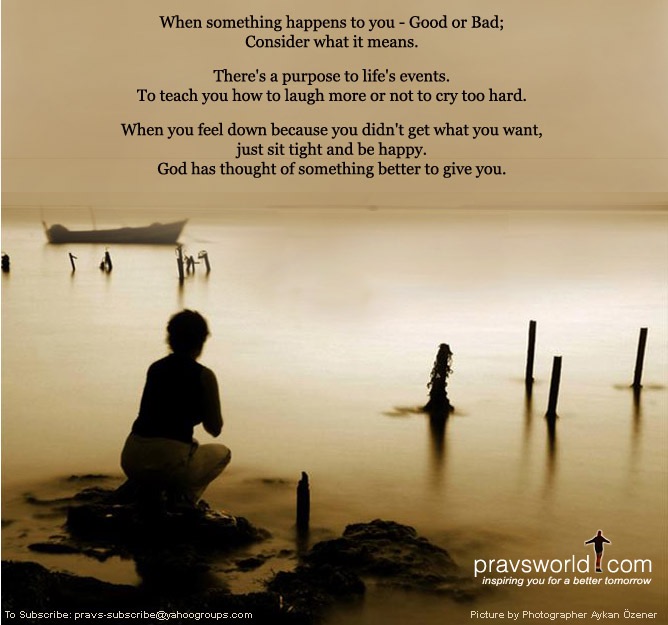
I feel as if we (humans in general) expect those better things referred to above to be worldly gifts. A job you enjoy more, a higher income, a man who loves you and treats you with respect, etc. However, it’s not always true that God provides a job you like better or that pays more. Sometimes the job you eventually get is not one you really enjoy, requires more time away from family and pays less than the income you had before. Still we assume worldly gifts when we hear or read one of the better than phrases, that is until it becomes apparent that a better replacement is simply not available. And then the better thing God has for you is spiritual maturity or a ministry you are now uniquely qualified for and with those come expectations from those who share your faith.

And while I understand that the spiritual maturity that results from being conformed into the image of Christ (through suffering in this instance) is God’s ultimate plan for me – and the resulting spiritual maturity is better for me from a spiritual perspective, that knowledge makes the idea that God has a better gift for me than the children I’ve lost, or the health Gracen previously enjoyed, no more palatable to this all too human heart.
On top of that, I’m not even sure that those pithy sayings are Biblical. Maybe the idea that God has something better in store is loosely extrapolated from the story of Joseph where he tells his brothers that what they intended for evil God used for good. If not, I guess I need some help finding chapter and verse for all those feel good sayings. I dare say the children God blessed Job with following the death of those he previously had, could never replace the unique relationship Job had with the ten he lost. They might have been a balm to his hurting heart and brought new joy to his life, but they were not better than those he lost.
What the Bible actually says is far more important to me than platitudes designed to make me feel better about hurtful things. Platitudes may make me feel better for a time but ultimately lead to further pain when they fail to play out. I much prefer hanging my hopes on God’s word of truth.
I also don’t believe God took my children from me in order to give me something better. Maybe I’m splitting hairs here, but I’ve always believed my children were a gift from God and implying that they were taken in order to give me a better gift also implies that God decided His initial plan for me wasn’t quite perfect and He decided to scrap that plan for a new and better one. I do, however, believe all the events that have transpired were part of His original overall plan for my life. And I chose to believe (because the Bible tells me so) that all of this will eventually result in something good despite the fact that I’m simply not feeling it at the moment. I imagine all the eventual good may happen in the “behind the scenes” places of our lives and David, Gracen and I may be completely unaware of it until we are made like Him – and isn’t that a cheerful thought?
Having said all that, this quote: “The most difficult time in your life may be the border to your promised land.” is not a comfortable one for me. I’m not saying it might not be accurate but rather that it maybe steps on my toes a little bit.
That quote makes me think (or maybe “realize” is a more accurate word) that I am far more like the ten faithless spies sent in to scout out the promised land than I am like Joshua or Caleb. And who wants to be likened to the ten faithless spies? I’m pretty sure I’ve never heard a message preached extolling the virtues of the ten spies who were afraid to enter the promised land. But countless messages have been given regaling Joshua and Caleb’s can do attitude. Maybe, more than being likened to the ten faithless spies, this quote makes me uncomfortable because the “promised land” reflects ministry to me in some corner of my mind – probably because I can’t identify a better thing that has filled or can fill the spaces of what’s been lost.
Whatever the reason, here I stand – not the virtuous Proverbs 31 woman who has no fear of the future, but instead just a very human woman who anticipates a less than bright future, standing with feet planted firmly in the moment, resisting the hand in the middle of my back forcing me forward into a future I never wanted, never anticipated, never dreamed of or planned for.
So no, I don’t want to step foot outside the current borders of my life in order to move forward into whatever comes after Gracen heads off to college – be that my personal “promised land” or not. I know that makes me a huge disappointment to many since I’ve repeatedly heard what a testimony our family has had, or can have. Why wouldn’t I want to embrace that future? To serve God in such a manner? To help and bless others with the lessons I’ve learned? How very selfish or ungrateful of me. After all, Christ paid it all, why should less be demanded of me?
The answer is complicated and not fully fleshed out in my mind. What I can tell you is that while others look in and recognize how painful this must be for us, their imagination falls far short of the reality of the anguish we’ve experienced and continue to suffer. In addition, I have counted the cost . . . I have walked through the fiery flames of anger and felt the flood waters of fear and sorrow spill over my head and I may have survived it all thus far, but I’ve certainly not enjoyed it and it diminishes a person in ways unfathomable for the heart and mind to comprehend or even explain.
Please also take into consideration that God never promised any of us personal safety. And while God is in control, and I can trust in eternal security and that God will be with me through anything he allows to transpire in the future, I have also had to face the stark truth that God was also in control when Cole, Bethany and Katie died. His sovereign control does not shelter me or anyone else from the grief and sorrow the loss of a loved one brings.
You may think I’m borrowing trouble by worrying about Gracen’s physical safety on campus or that my perspective sounds negative but the truth is I have very real things to fear due to the current status and progressive nature of Gracen’s disease. God’s sovereign control is not a consolation for me right now because I am well aware of exactly how much God’s good plans can hurt before the good part of His plans are realized in a believer’s life.
But, regardless of how resistant I feel to the idea that the promised land lays before me, I will take that next step, and the next one, and the one after that. If Gracen serves as the catalyst for taking that next step, instead of a the super-spiritual desire to please my Lord and Savior, that’s enough for now. Something better and the promised land can wait a bit longer while we face our next big transition. And maybe, given time, a little grace and mercy, one day I will feel less resistant to the concept of stepping into my promised land – but not right now. One reluctant step at a time is sufficient for now.
 Boxx Banter