
I’ve been reading and meditating on John Chapter 9 and 11 of late. Those two chapters are significant to me because they touch on the very things that have most impacted my adult life – disability (or illness) and death.
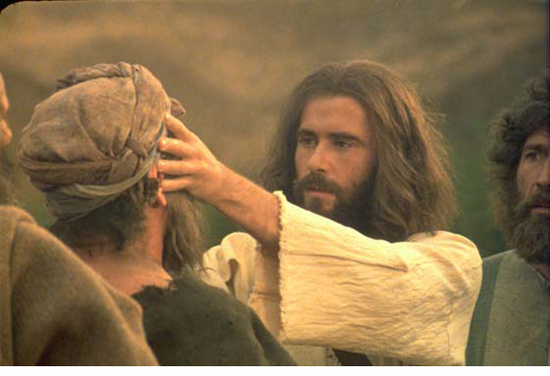
John 9 chronicles the story of Christ healing the man blind from birth.
John 11 tells of Christ raising Lazarus from the dead.
As I mulled those scriptures over in my mind I looked for similarities and differences. I noted that the blind man didn’t seek Jesus out for healing, but Jesus healed him anyway. And as I thought about that blind man I wondered why he didn’t seek out this miracle performing man. Surely he had heard the gossip. John 9:32 might answer that question for us.
“Since the world began was it not heard that any man opened the eyes of one that was born blind.”
The blind man held no hope for healing. Never had it been reported that a man born blind had been made to see. It was a foregone conclusion in his mind that he would never see the world around him. Why chase after the prophet who was stirring up so much controversy? How could he even find his way to the prophet? So he sat in acceptance of the circumstances he had always known with no hope of changing them as the world passed by around him.
I understand that mentality all too well. It’s hard to carry the hope of healing while simultaneously accepting what is deemed unchangeable. How does one invest the effort required searching for a cure while expending so much energy coping with what is? How was the blind man supposed to hunt for this wandering prophet when his very survival was contingent upon the alms he begged for day after day?
On the other hand, Mary and Martha knew that Lazarus could be healed. They had access to Jesus. They had cultivated a relationship with him. They believed He was the long awaited Messiah. They had likely seen Him heal others. So they sent for Jesus communicating their dire need for His presence. And then they waited . . . and waited . . . until it was too late and their brother was dead.
And when Jesus finally showed up their deep anguish bubbled up and out their mouths as they each told him that Lazarus would not have died if he had been there. Their faith is revealed alongside their confusion and vulnerability. They trusted Jesus to come, to step in and save the day. But he didn’t do it. And they still trusted him for resurrection at the last day.
One man without faith – without hope.
Two women with faith – with hope.
And in a rare turn of events Jesus answers the most common and difficult question that always arises when death and disease become a part of our lives. Why?
Why was this man born blind?
Why did Lazarus die?
And the answers are strikingly similar in both situations. In regards to the blind man Christ responded, So that the works of God could be revealed through him. And when questioned on the reason for Lazarus’s death He replied, So that God and the Son of God would be glorified.
Sandwiched between those two stories is John chapter 10 where Jesus proclaims, “I am the good shepherd”! And in that chapter Jesus lays bare the reason for which he came, “. . . That they might have life, and that they might have it more abundantly (in the fullest measure).” He proclaims his power to both lay down his life for the sake of his flock and to take it up again. He proclaims himself to be the long awaited Messiah. And maybe most remarkable of all is that he flat out tells his audience how to prove that he is not who he says he is. He tells them that if they won’t believe his words, they should believe his works.
And isn’t it interesting that “I am the good shepherd” falls right between the stories of death and disability? In the grand scheme of things what leads us to question the meaning of life more than disease and death . . .
When disease or disability become our eventual reality, we can be confident that there is an important purpose for our suffering – that the works of God might be revealed through us. And when death invades your life, stealing away your hopes and plans we can be assured that God and the Son of God will be glorified.
7 But we have this precious treasure [the good news about salvation] in [unworthy] earthen vessels [of human frailty], so that the grandeur and surpassing greatness of the power will be [shown to be] from God [His sufficiency] and not from ourselves. 8 We are pressured in every way [hedged in], but not crushed; perplexed [unsure of finding a way out], but not driven to despair; 9 hunted down and persecuted, but not deserted [to stand alone]; struck down, but never destroyed; 10 always carrying around in the body the dying of Jesus, so that the [resurrection] life of Jesus also may be shown in our body. 11 For we who live are constantly [experiencing the threat of] being handed over to death for Jesus’ sake, so that the [resurrection] life of Jesus also may be evidenced in our mortal body [which is subject to death]. 12 So physical death is [actively] at work in us, but [spiritual] life [is actively at work] in you. ~ 2 Corinthians 4:7-12 AMP
Our suffering is not in vain but has eternal value. And in the seasons of disease and death, where life gets real and all we’ve worked for and stood for is called into question, stands the good shepherd who is worthy of our faith and trust, who leads us and cares for us and is powerful enough to usher us from this earthly fold into eternity where we will experience life in its fullest measure.
***(From Wesley’s Commentary on 2 Corinthians 4:10 – alittle help understanding verse 10)
” . . . Wherever we go. . . Continually expecting to lay down our lives like him [Jesus]. That the life also of Jesus might be manifested in our body – That we may also rise and be glorified like him.”
 Why is that important to anyone outside the special needs community? It’s important because one day rare disease may impact you or someone you love.
 Two of my daughters were born with a rare genetic disease known as ARSACS. For 15 years their disease went undiagnosed. In fact, only two labs in the US were testing for ARSACS at the time of Gracen and Katie’s diagnosis. World Rare Disease Day seeks to raise awareness and promote research for diseases that are far less likely to receive research funding than common diseases do. That’s why I support Rare Disease Day.
 I’ve learned much about the medical community in my sojourn through rare disease. I’ve met warriors and wimps, fighters and folders, the courageous and the weak-kneed and have discovered that some emotionally separate themselves, and some, the bravest of the brave, count the cost and invest their hearts and souls with little regard for their own mental health. Many ride the tide between the positive and negative—between hope and hurt—just as parents, friends, and family do. They paint on brave faces then hide in the supply closet as tears flow unchecked down their faces. They smile encouragement and swallow back the fear of failure to cure, treat, and simply to help. And they carry the weight of the dashed hopes and expectations that loved one’s pile on their shoulders as they reach, ache, and long for a cure—a treatment—a miracle. They see victory . . . they experience defeat . . . all with the frailest of hope that one day, one day, disease will be vanquished and hope will reign supreme. And the wimps and folders, the weak-kneed and the emotionally distant are far too frequently former warriors and fighters, the courageously tenacious and the bravest of the brave who have stood in the gap for so many and for so long that they have paid a high personal price in the form of compromised mental and emotional health.
 Today, World Rare Disease Day 2017, I’d like to take a minute to appreciate and thank the dedicated medical researchers and practitioners that invest so much time and effort searching for cures, prescribing medications and treatments, holding the hands and hearts of those desperate for answers and hope.


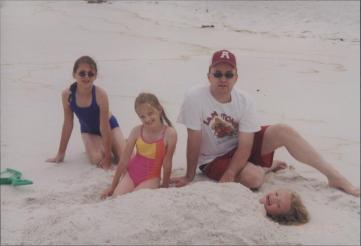 I miss sibling rivalry and laughter and two ganging up on one. I miss hearing how Gracen stood up for Katie at school, how Bethany watched out for Gracen and coming home to find all three watching music videos loud enough for the neighbors on either side to enjoy (?) too.
 I miss having all the bar stools at my counter filled. . . I just miss so much — it all haunts me while I’m simultaneously thankful for Gracen and David. Joy and sorrow side by side — both aware of all I have and all I’ve lost in every moment of every day. One word defines my life — bittersweet.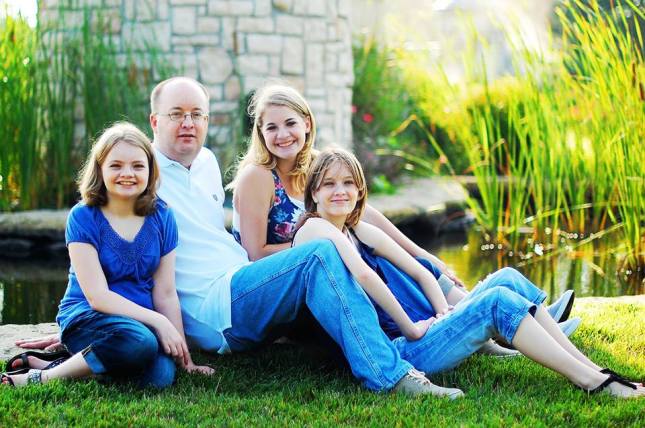
 2. Speak the loved one’s name. When a baby is stillborn or dies shortly after birth the family is left with a void they are unable to fill with memories of their child. Using their child’s name, asking about the infant’s birth weight, length and hair color affirm the child’s worth. Avoidance equals isolation.
 6. Never compare the loss of a loved one to the death of a pet (it’s more common than you think). The loss of a child and a spouse are the most devastating losses the bereaved endure. Don’t tell the grief-stricken that you understand how they feel because you lost a uncle, grandparent or parent. The level of intimacy in the severed relationship determines the depth of grief experienced.

 We’ve been indoctrinated with the message that we must be able to turn every negative into a positive. Our culture as a whole no longer helps people work through their grief, instead we demand that they set it aside, suppress it, or spin it into an uplifting message – all the better if they can tie it up with a Biblical bow. As a result, we leave hurting people enmeshed in an internal battle pitting their normal need to express and work through their pain and sorrow against societies demand to find the silver lining and move forward.
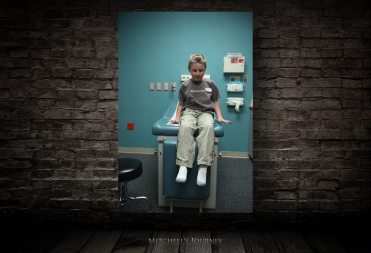

 I didn’t lose a son and two daughters and begin picking up the pieces to move into a hopeful future. I live with the knowledge that I will always be picking up broken pieces and there is no way to repair the pieces that have been falling since MD entered our lives.


 Boxx Banter