
RSS

Category Archives: Adversity

Hard Times, Satan’s Devices & Faith

Hard Times, Satan’s Devices & Faith

The last quarter of 2015 was particularly hard for me.  Gracen had settled in well at JBU, David had changed responsibilities at work, which he was really excited about.  I on the other hand, encountered, a big gaping void.

Preparing to send Gracen to college and living independently after I had spent the last year and a half helping with her personal care needs, left me anxious on a level I’d never experienced before.  Her physical safety was my primary concern and following the deaths of three children, let’s just say I had little confidence that I would not lose Gracen too.

1k0

In addition, in April or May of last year I began fielding a new and distinctly different set of questions.  With graduation on the horizon people began asking me what I intended to do with my time – with the upcoming “empty nest”.   Not one person acknowledged that I was not supposed to have an empty nest.  No one seemed to realize that fear for Gracen’s safety, a premature empty nest and an utter lack of purpose might be frightening and emotionally overwhelming.  Then again, maybe people did understand but felt ill-equipped to address it so avoidance was deemed the most comfortable solution for everyone; myself included.  Unfortunately, avoidance left me feeling alone, stranded in my grief, disappointment and fear.  It also left me feeling as if Katie was unimportant in the eyes of the world and as if my fears for Gracen’s safety were unreasonable in spite of the fact that I knew Gracen was at high risk for injury on campus.

IMG_3801

So, by the time graduation passed, I was a bit of a mess.  I began taking an anti-depressant early in 2015 and by June I was unquestioningly aware that I needed more help.  So an anti-anxiety medication was added to the mix and it made a significant difference.  I had not realized just how much anxiety I’d been living with until the miracle of modern pharmaceuticals provided some much needed chemical relief.

Still, I was weary, frightened and at loose ends so once Gracen settled into school and dorm life, I settled into my bed.  I found myself alone, overcome with the grief I had suppressed in Gracen’s presence, fighting to process it or push down to avoid the excruciating pain and rudderless. I also began sleeping later in the day which affected my medication schedule.  One day I realized that I couldn’t recall when I’d last taken my prescriptions.  Knowing I had an upcoming appointment with my PCP I decided to wait to see him so he could help me restart them safely.  Looking back, that was not a good decision.  A downward spiral took hold.

medication-tired

A typical day looked . . . okay, looks (present tense), because this is still a typical day in my world . . . something like this.  I wake up, get a cappuccino or chai latte, return to bed to read.  I read, write, browse Facebook and email and nap on and off throughout the day. David comes home, FOX news comes on and more often than not he makes dinner.  After dinner, I read, he watches Fox and plays on the computer and finally, lights out.  I toss and turn, mind whirling and when I can’t stand my thoughts and the inability to fall asleep any longer, I start reading again.

Unless I have an appointment with my grief counselor, my trauma counselor (for PTSD), or my PCP everyday is much like the day before.  I’m comfortable with that.  The silence and being alone is easier than being around people. People make me anxious – incredibly anxious.  How does one answer all the oh so simple questions without making others uncomfortable?  How do I answer them without feeling pitiful myself?  “What have you been up to?”, “Will you get a job?”, “Any new hobbies?” A simple, “I’ve missed you” leaves me paralyzed and frantically searching for an appropriate response.  “Me too” is what longs to escape but “Um, thank you” is generally what spills forth.  And as to the what have you been up to question, not much is my reply. No new hobbies, no plans for a part-time job.  The reasons for those brief responses go unspoken as the listener will either feel uncomfortable with my answer or will try to explain to me why a job or hobby would benefit me.  Regardless, a simple “no” is awkward enough as it doesn’t open the door for further conversation.

Is my current daily activity healthy?  Surprisingly, the answer is yes. . . and no.

All those churning thoughts and my writing are a means of working through my grief. The reading is also good for me.  I read suspense, mysteries, thrillers, and romance. They engage the mind.  If I was simply laying in bed, not working through my sorrow and not engaging my mind, that would be cause for concern.

Facebook and email allow me safe access to the outside world.

And the sleep; it’s good too.  I’m trying to take my PCPs advice and get some much needed rest.  He pointed out that should I fail to recharge spiritually, physically and emotionally, I will be running on empty when Gracen inevitably needs additional support. To say Gracen’s shift from walking to using a wheelchair was an enormous change is an understatement of vast proportions.  Wheelchair use involves a mirad of complications I had never considered.  Transfers into and out of the wheelchair, bathroom use with and without handicapped facilities, transporting the chair, finding safe and viable entrance and exit doors, dealing with weather – oh my, dealing with weather!, and a multitude of unforeseen considerations became the new norm.  No one can estimate the demands the next transition in her health will require.  Therefore, I need to be prepared, or be able to get up to speed quickly, in spite of the emotional impact those changes bring.

So I find myself withdrawing from the world around me, to rest, to grieve, to avoid assuming responsibility for making others comfortable with the realities of my life.  I don’t have the motivation or the energy to continue to push myself. Gracen was my motivation.  For her, I would, and still do, force myself forward, but in her absence . . . I lack the impetus to do much of anything.  I’ve struggled with the blues in the past, but never before have I found myself fitting the defined parameters of the clinically depressed.  Just hearing those words uttered by my grief counselor left me deeply ashamed and utterly humiliated.
IMG_4260

Why?  Why would a diagnosis of clinical depression leave me ashamed and humiliated?  I mean really, my counselors keep reiterating that I have suffered loss on a scale uncommon to the average individual, so depression is certainly not an uncommon or even an unexpected response.  I think I felt ashamed because depression is a mental illness and in our society a stigma is still attached to mental illness. Secondly, I had higher, albeit, unrealistic expectations for myself and for my faith.  Clinical depression represented, in my mind, both a personal failure to overcome and, far more painfully, a failure to avail myself of the power of God.  It stank of insufficient faith; not an insufficient God.

At some point along the way I drank the kool-aid and ascribed to the cultural expectation that I was capable of conquering every obstacle by sheer force of will and tenacity.  I should have realized, and in fact, from an intellectual perspective alone, I knew that was lie of epic proportions straight from the slithering serpent in garden of Eden.  That far too prevalent belief system is nothing more than the heart and mind’s rebellious desire to proclaim the soul god.  It’s the cunning and insidious whisper of the snake luring us into believing that with enough knowledge, with enough determination, with enough effort, we are in control.

347cd084-1316-4a6b-ae11-7351050ea284In truth, that idea is nothing but a craftily designed hologram. An idea without formative substance. It’s equivalent to the land of Oz and the impotent wizard hiding behind the castle doors and green drape.

How many times have you heard or used the analogy that if it walks like a duck and talks like a duck, it’s a duck?  Therefore, a Christian can easily conclude in the deeply buried regions of their heart and mind, that if they fail to conquer the human emotions grief generates, from guilt to fear, sadness to anger, and so forth, they are failing to walk by faith.  They are failing to apply the principles of their faith.  They are not the Christian they believed themselves to be and often worse, they have failed to live up to the perceptions and expectation of fellow Christians to inspire saints and sinners alike, to give God glory and praise in the midst of their despair and to minister to others.  In other words, God is not insufficient, their faith is insufficient.  They have failed God’s test of their faith.

But is that really true?  This duck analogy sounds good, but is it universally applicable? The truth is that in a paradoxical fashion, faith demands doubt.  The very essence of faith is to fall short of fact.  Jesus has always been the bridge that spans the gap between what we know to be fact and what we trust to be true.  When my faith, when your faith, falls short of expectation are we then dismal Christian failures?  I don’t think so.  We have simply lived up to the limits of our personal faith at that point of time – and lived up to the very essence of faith in general.

The longer I live the more aware I am of exactly how dependent I am upon the Lord God Almighty.  I am the instrument He forms at the potters wheel for His use.   I am made in His image but I was not, nor was any human, created with His perfect power and holiness. As a result, I am vulnerable to temptation and a failure to differentiate between truth and lies and good and evil on occasion.  And yes, I have fallen victim to Satan’s devices.  I’ve both allowed Satan to cunningly communicate a stark untruth about a simple diagnosis and to lead me to question God’s love and kindness by contemplating the idea that He may have withheld the desires of my heart in spite of the fact that I did my best to delight myself in Him.

What exactly does it mean to delight yourself in the Lord you might ask?   Gotquestions.org addressed that very question and their answer follows:

Psalm 37:4 says, “Take delight in the Lord, and he will give you the desires of your heart.” Taking delight in the Lord means that our hearts truly find peace and fulfillment in Him. If we truly find satisfaction and worth in Christ, Scripture says He will give us the longings of our hearts. Does that mean, if we go to church every Sunday, God will give us a new Rolls Royce? No. The idea behind this verse and others like it is that, when we truly rejoice or “delight” in the eternal things of God, our desires will begin to parallel His and we will never go unfulfilled. Matthew 6:33 says, “But seek first his kingdom and his righteousness, and all these things [the necessities of life] will be given to you as well.”

Did God withhold the desires of my heart?  No.  Children were my heart’s desire and I’ve been blessed with four.  I got to love and nurture each one for a finite amount of time.

Did God steal the desire of my heart from me?  The answer to that is no as well.  My children were on loan to me.  They were always His creation and David and I the chosen stewards.

Were they taken from us because we proved to be unworthy stewards?  I don’t believe that at all, in light of scripture.  God predetermined the number of my childrens’ days and in the case of my daughters he allowed man’s free will to intersect with Bethany and Katie’s number of days.  The Bible tells us that sin impacts all of creation and the cost of sin is death.  So be it accident or illness, intent or natural event, all death can ultimately be traced back to sin.
IMG_4284 (1)My grief recovery is complicated by the anticipation of more loss and the very real and reasonable fear of the destruction another loss will wreck within my heart.  Even grieving families that aren’t dealing with progressive disease often struggle with the anticipation and fear of more loss.  They’ve lost their naiveté – they know bad things can and will happen to them – not someone else – down the road.  But for most it is a vague Spector on the periphery of their minds.  For me it is a far more tangible presence and I must find a way to make peace with that and what it teaches me about the Lord.

Our family was living with progressive disease long before the collision that took Bethany and Katie’s lives. The difference between then and now is the loss of worldly hope.  There is a popular saying, “Where there is hope, there is life.”  I have lost the majority of my worldly hopes.  I know just saying that out loud will cause a great many people to reflexively remind me of all the worldly hopes that still lie before me.  What they don’t understand is that I no longer wish to have any worldly hope.  Worldly hope leads to expectations.  Expectations often lead to deferred hope and as we are told in Proverbs 13:12,  “Hope that is deferred afflicteth the soul: desire when it cometh is a tree of life.” – Douay-Rheims Bible.

I prefer to invest my expectation in eternal hope alone; that of eternal life with my savior and fellow saints, because that hope is the only one guaranteed to come to fruition.  I’m confident my hope of eternity will be fulfilled and not deferred.

However, I have yet to make peace with the role progressive disease will play in our lives, precisely because of all my prior losses.  It feels unfair.  It feels too much to ask of any one believer.  If this is what God’s love looks like, my more cynical perspective leads me to beg Him to share the love (with someone else)!  And yes, God can carry me through anything He allows to happen in my life, but before anyone reminds me of that truth (because I am well aware it’s true) put yourself in my shoes.  Google ARSACS (a rare form of Muscular Dystrophy) and read about what it does to an individual and then imagine walking that path with your child.  Imagine helping your child as their health declines.  Imagine standing by helpless to change it or improve their quality of life.  Imagine the things I’ve eluded to and left unspoken.  Making peace with God’s plans, with His will, with His sufficient grace is far harder when it’s personal, when you find yourself “feeling” as if His grace might not be quite be sufficient for you after all you have endured already.

PTSD-battle-PINI have reached the point of acknowledging that the best I may be able to hope for in regards to ARSACS, may consist of a cycle of repeated but temporary interludes of peace.

We live in a continuous grief cycle.  Gracen loses a previously mastered skill and we mourn and despair it’s loss and the daily ramifications that ripple out in waves from that loss. Eventually, we adapt to her new normal and settle into a wary peace until the cycle restarts with a new loss.  It’s just the way life works in our home.  Every time the cycle begins anew, we hurt.  Fear arises as does disappointment and sometimes even despair. I’m not sure if the Holy Spirit is actually doing a new work of trust and peace with each cycle or if each cycle simply forces me to acknowledge an as yet unconquered weakness (or doubt) in my faith.  Maybe I just keep spinning my wheels without making any forward progress.  Yet a person who is maturing rarely notices the subtle changes until enough growth has occurred and their pants are inch too short.  I imagine spiritual maturity is as subtle a process as manifest in physical maturity.  It’s only looking back far down the road that real progress is recognized.

Food-antidepressantToday, I am doing well to say without shame, my name is Janet Boxx.  I am clinically depressed.  I have anxiety issues.  I have PTSD.  I self medicate my anxiety with food.  (Ok, that I’m ashamed of – although I’m happy to report that while I may be a glutton, at least for now I’m not a suicidal, drug or alcohol addicted, glutton).  I lack the motivation to return phone calls, emails  and text messages; to clean my house, pay bills, shop for groceries, do laundry and sometimes even to shower.  It is what it is and my response to my life’s circumstances is not abnormal in the bereaved parents community, even two years down the road.

Having said all that; do not drop by unannounced!  I still have the capacity to feel great embarrassment and utter mortification.  Just because I’m comfortable in my current state of sloth doesn’t mean I’m equally comfortable having friends and family witness it.

Before speculation germinates, let me just say that David has demonstrated the utmost patience and support. He has taken on the tasks I normally do without complaint, anger or resentment.  He has a servants heart and demonstrates his love for Gracen and I in actions more than words.  He guards my privacy. David is better at compartmentalizing his grief than I am.  He has not, nor has ever, abandoned me to my grief and more importantly has never criticized or judged the way in which I am coping with the very same losses he, himself, is dealing with.  Our experiences with trauma are different because we were exposed to different things and took on different roles at the scene of the accident, at various hospitals, at home caring for Gracen during her recovery, with the medical community and the legal system and we simply deal with trauma differently.

This is what my life looks like when the Potter decides the pot He previously formed has served its intended purpose.  This is what my life looks like once I was fractured into minuscule pieces, returned to softened clay, and set to  spinning on the Potter’s wheel while He molds me into a new shape with a new or more complicated purpose in mind (after all, I am still a wife and mother).

b7d1824f3c676afed4e1e924034f0d73

And you know what?  As ugly as this lump of clay currently is, as uncomfortable as it is for me to find myself in this state, it’s okay to be a lump of clay in the Creator’s hands. There is no safer place to be and while others, myself included, may worry about who and what I’m becoming, I’m confident God is not.  He sees beyond the here and now – past the dark tunnel I’m traveling through – clear to an eternal future where He will literally light my world.

 
23 Comments

Posted by on January 29, 2016 in Adversity, Faith, Grief, Muscular Dystrophy


Tags: , , , , , , , , , , , , , , , , , , , ,

Do you know where you’re going to?

Do you know where you’re going to?


I was young when the movie “Mahogany” came out in theaters.  I don’t recall what it was rated but my parents told me I could not see it.  Kids being what they are, I defied their directive and saw the movie.  Regardless, the lyrics from the theme song resonate in my heart these days.  Take a look, do they speak to your heart as they do mine?

mahogany_head

Theme from Mahogany (Do you know where you’re going to?)

Do you know where youre going to?
Do you like the things that life is showin’ you?
Where are you going to?
Do you know?

Do you get what youre hopin’ for
When you look behind you, theres no open doors
What are you hopin’ for?
Do you know?

Once we were standin’ still in time
Chasin’ the fantasies that filled our minds
You knew how I loved you but my spirit was free
Laughin at the questions that you once asked of me

Do you know where youre going to?
Do you like the things that life is showing you
Where are you goin’ to?
Do you know?

Now lookin’ back at all weve planned
We let so many dreams just slip through our hands
Why must we wait so long before well see
How sad the answers to those questions can be?

Do you know where youre going to?
Do you like the things that life is showing you
Where are you going to?
Do you know?

Do you get what youre hopin’ for
When you look behind you, theres no open doors
What are you hopin’ for?
Do you know?

Unfortunately for me, the answers to the questions this song asks are a resounding “No!”. My heart longs for the days I was chasing fantasies, laughing at life’s serious questions, making plans but failing to plan how to make them come to fruition.  And indeed the answers to those questions are sad.

I now have no idea where I’m going.  I don’t like the things life has shown me thus far.  I may have received many of the things I was hoping for but have failed to hold on to them: they have slipped through my hands.  And I can’t turn around and reopen those doors, but I can choose to go forward.

Is it really necessary to have plans? To have dreams?  To know where I’m going?  Should I step outside my door today, might God set me on the path He wishes for me to take?

In this day and age we put a lot of stock in making a plan and working that plan.  We ascribe to the idea that failing to plan equates with failing to achieve, but I wonder if that is really true.

If I come to God void of my own personal objectives (which is, in fact, the place I find myself for the first time in my life) will He not lead me where He wants me to go?  Am I not a more malleable follower now than I’ve ever been in the past?  Having laid down so many hopes, dreams and expectations, and coming before Him a blank slate will He allow me to simply wander in the wilderness of inactivity forevermore?  Maybe He will if I don’t seek His will for the remaining days of my life.  Maybe He will stand back and wait for me to invite His will into my life.  Or maybe He will prove to be the gentle shepherd scripture describes Him to be.

9b7e60d28f94e6d7ee3d368dde940be6

Maybe like the Biblical shepherd He will simply lead me – through the valley of the shadow of death – by still waters – to green pastures – to a banquet laid before me with a restored soul (Psalm 23).  The Bible tells me that God is near to the brokenhearted (Psalm 34:18).  He draws close.  He doesn’t abandon me to my misery. It tells me to trust in the Lord instead of myself and He will direct my paths (Proverbs 3:5-6).  It also tells me that His Word is a lamp to my feet (shows me where I am) and a light to my path (shows me where I’m going) (Psalm 119:105).

reveal light

So maybe it doesn’t matter if I don’t know where I’m going and don’t like the scenery along the way.  Maybe it matters little if I receive what I was hoping for and have come to a place of closed doors, lost fantasies and a tethered spirit.  From God’s perspective I don’t need all the answers; I just need to trust that He knows them.  I don’t need to know where I’m going, I just need His Word to show me where I am and allow it to light the path He wishes for me to take.  Maybe it’s a good thing that my future appears void before me solely because I am no longer straining in a direction God never intended me to go.  Instead, I am allowing Him to lead me to green pastures and still waters that provide rest and nourishment for the next path He plans to lead me down

June 10

 
Leave a comment

Posted by on January 21, 2016 in Adversity, Faith


Tags: ,

Grieving Mother Vilified

imageJob Being Scolded by his Wife, c. 1790, Francois-Andre Vincent

I recently read a blog post that contained a reference to Matthew 2:18b, “. . . Rachel weeping for her children and refusing to be comforted, because they are no more.” It brought to mind another reference to a grieving mother in scripture. Specifically, Job 2:8-10 which says, “And he took a potsherd to scrape himself while he was sitting among the ashes. Then his wife said to him, “Do you still hold fast your integrity? Curse God and die!” But he said to her, “You speak as one of the foolish women speaks. Shall we indeed accept good from God and not accept adversity?” In all this Job did not sin with his lips.”

One scripture reveals a frequently overlooked truth about grieving mothers. Grieving mothers do not want to be comforted – they want their children back! The second scripture seems to expect the reader to remember and consider that Job’s wife is also a grieving mother, because it certainly doesn’t come right out and say it.

“Curse God and Die”, words spoken by Job’s own wife, yet another villain in the book of Job. But is she really?

Search the commentaries and you will find that many believe that to be true.

The truth is, in today’s vernacular, her words are shocking and if we take them at face value, they are not what one would expect from an upright worshiper of God. Still the conclusions drawn by some commentaries go far beyond painting Job’s wife as an angry grieving mother. They assign her a role in this story that can only be based upon conjecture.

For example, Matthew Henry’s Concise Commentary says of Job’s wife, “His wife was spared to him, to be a troubler and tempter to him.” Interesting conclusion but think about who spared Job’s wife. God initially gave Satan power over all Job owned and restrained him only from touching Job himself. So God did not save Job’s wife to play the role of Satan’s tormentor; Satan did. Satan can hope that Job’s wife develops the attitude and has the influence to undermine Job’s faith, but unless she was demon possessed, he has no power to make her play that role. Satan could have spared Job’s wife assuming what her response would be but he could not be certain because he was not created with the ability to know the hearts and minds of men. So, at best, Satan could make an educated guess at how Job’s wife would respond just as he did when he stood before God Himself boasting that Job, God’s paragon of integrity, would curse God if he should take away all of the people and things Job most loved.

The Pulpit Commentary seems to concur. Allow me to refresh your memory and remind you that Job’s wife did not encourage Job to curse God and die after the death of her ten children. Nope. As the Pulpit Commentary points out, “Job’s wife had said nothing when the other calamities had taken place” instead she had “refrained her tongue, and kept silence, though probably with some difficulty.” The commentary goes on to state that, “Now she can endure no longer. To see her husband so afflicted, and so patient under his afflictions, is more than she can bear.”

Well, that’s one conclusion. But whose to say that this woman simply struggled to stand helplessly by and watch her husband suffer fast on the heals of the loss of her children? Whose to say she isn’t terrified that she will lose him too and that living in anticipation of his death is much harder than inviting it because it gives her the illusion of control in a life that has become defined by chaos and suffering. It’s a, let’s just get it over with attitude, eliminating the anxiety she is fighting to control.

The Pulpit Commentary goes on to say, “Her mind is weak and ill regulated, and she suffers herself to become Satan’s ally and her husband’s worst enemy. It is noticeable that she urges her husband to do exactly that which Satan had suggested that he would do, and had evidently wished him to do, thus fighting on his side, and increasing her husband’s difficulties.” Ouch, that’s harsh!

Where’s the compassion? These commentaries seem to focus on Job’s suffering and ignore the very deep grief of a mother who has just lost every single one of her children. This woman carried those ten babies in her womb, fed them at her breast, and nurtured them as they grew. A mother of that day and age had very defined responsibilities. Raising and caring for her children and running her household defined the bulk of her identity and life’s purpose. Not only is it likely that she fears the death of her husband but the protection and security he provides as well. Unmarried women were extremely vulnerable in that age. This commentary seems to overlook the very real and reasonable fears and emotions Job’s wife was surely experiencing.

The Pulpit Commentary continues to support the conclusions they’ve drawn: “The only other mention of her (Job 19:17) implies that she was rather a hindrance than a help to Job. Curse God, and die; i.e.”renounce God, put all regard for him away from thee, even though he kill thee for so doing.” Job’s wife implies that “death is preferable to such a life as Job now leads and must expect to lead henceforward.”

Is the idea that Job’s wife might, in her grief, consider death preferable to life really that shocking? I’m thinking the people who wrote this commentary have no firsthand experience as bereaved parents. I know, from talking to a number of mothers in mourning that this is absolutely not an unusual concept for a grieving mother to draw.

But then comes Gill’s Exposition of the Entire Bible. Gill points out that “Job had but one wife, and very probably she is the same that after all this bore him ten children more; since we never read of her death, nor of his having any other wife, and might be a good woman for anything that appears to the contrary; and Job himself seems to intimate the same . . .”

Gill contends that Job’s wife was not blaming her husband for insisting on his integrity and justifying his behavior, nor was she wondering aloud how he could keep his integrity “among so many sore temptations and afflictions”. Gill further states that Job’s wife was neither rebuking him for his religion and continued practice of it nor was she mocking him or hating him for continuing to live according to his to his religious convictions as Gill points out that Michal did David. Instead Gill contends Job’s wife was “suggesting to him there was nothing in religion, and advising him to throw up the profession of it; for he might easily see, by his own case and circumstances, that God had no more regard to good men than to bad men, and therefore it was in vain to serve him . . . ”

Gill also points out that “curse God, and die: which is usually interpreted, curse God and then destroy thyself . . . or do this [curse God] in revenge for his hand upon thee . . . [even] though [cursing God would have the following result] thou diest”. Gill finds this interpretation unlikely concluding it is “too harsh and wicked to be said by one that had been trained up in a religious manner, and had been . . . the consort of so holy and good a man”.

Gill explains that the phrase curse God and die can also “be rendered, “bless God and die”; and may be understood either sarcastically, “such as “go on blessing God till thou diest; if thou hast not had enough . . . and see what will be the issue [result] of it; nothing but death;” or understood to mean “wilt thou still continue “blessing God and dying?”

“Her words could also have been offered sincerely, as advising him to humble himself before God, confess his sins, and “pray” unto him that he would take him out of this world, and free him from all his pains and sorrow . . . ” or may be interpreted, “bless God”: take thy farewell of him; bid adieu to him and all religion, and so die; for there is no good to be hoped for on the score of that [God or religion] here or hereafter . . .”

Hmmm, could Job’s heartbroken wife, who had likely lost every trace of naiveté about the fragility of life, simply been encouraging her husband to make sure he was right with God prior to his impending death? Could her statement have been so emphatic because she was afraid for the state of his soul if his circumstances indeed reflected Job’s standing before God, which was a common belief of the time?

Was Job’s rebuke of his wife heated or was he simply attempting to broaden his wife’s spiritual perspective?

The Bible tends to read as a narrative, yet we here in the West are accustomed to reading stories liberally sprinkled with adjectives designed to ensure the reader understand the emotion or context relevant to the story.

The Bible, however, doesn’t coddle the reader with adjectives, and therefore interpretation becomes more challenging. For example, Job 2:9 does not read, “Then his wife incredulously or angrily said to him, “Do you still hold fast your integrity? Curse God and die!” And how do we really know if the correct translation is “Curse God and die!” Instead of “Bless God and die!”?

Likewise, Job 2:10a doesn’t read, “But he” reasoned with, yelled at, strongly rebuked or patiently corrected “her,” “You speak as one of the foolish women speaks. Shall we indeed accept good from God and not accept adversity?”

Was Job’s wife a villain as she is frequently portrayed? Overall, it’s not an important detail; unless you’re Job’s wife. But have you ever wondered why God left all those helpful adjectives out of his inspired Word? Could it be that He expects us to learn enough about the way people respond to grief in order to better discern the correct interpretation? Could it be that He wants us to take our time, meditate on His Word and ask Him to reveal those things if they could Help us to understand Him and His ways better? Could it be a bit of both?

As a bereaved mother, the manner in which Job’s wife is portrayed and understood is important to me. I hate it when others make judgments about how well or poorly I am traversing this passage through loss. We judge Job’s wife based on a few words with opposing meanings. We judge her because we are unaware that her words even have opposing interpretations. We jump to conclusions because the vast majority of people can’t begin to truly comprehend how a grieving mother thinks and at best can only imagine her thoughts and feelings. But in making these judgment her reputation and her integrity is either lauded or maligned which I believes bears consideration.

Still, the one very important detail that every commentary I consulted failed to address is that at the end of the book of Job, God had words of rebuke for Job’s friends, but not for his wife. Now that speaks to me! Maybe what the Bible doesn’t say can be as significant as what it does say.

The character and intention of Job’s wife may seem insignificant to many, but those who write commentaries seems to believe it important enough to explore. More importantly, 2 Timothy 3:16 proclaims that “All Scripture is inspired by God and profitable for teaching, for reproof, for correction, for training in righteousness;”. So, in my estimation, God felt the words of Job’s wife were indeed significant. God inspired the writer to record her words that the body of Christ might profit from them.

 
1 Comment

Posted by on January 7, 2016 in Adversity, Faith, Grief


Tags: , , , , ,

Trauma Momma?

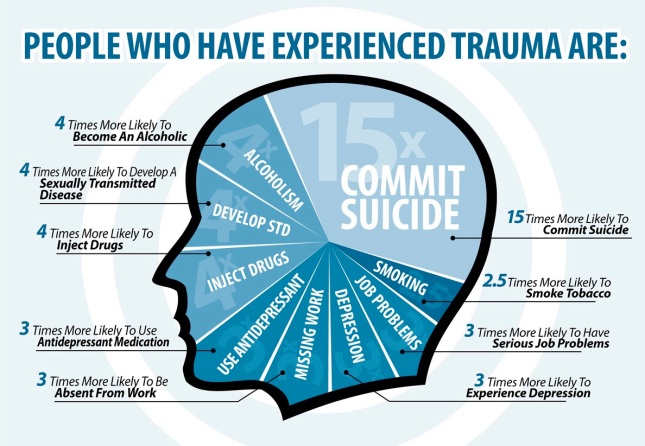
IMG_4279I haven’t wanted to talk about trauma and how it impacts an individual; those who grieve in particular. I haven’t wanted to go there primarily because of the reaction one receives if they try to talk about it; skepticism. I’m not sure if people think they can simply look at a person and tell they are dealing with the after effects of trauma, or if they simply don’t believe it happens to people outside of the military and first responder communities. Who knows? The truth is we all experience trauma; usually in small, manageable degrees. Generally we ride it out, push through it, brush it off and move forward and beyond it. We remain standing and to the outside world appear largely unscathed. But sometimes we experience trauma of a far greater magnitude. Below are the sobering statistics of how people are affected by trauma:
Traumatic experiences may or may not result in PTSD – Post Traumatic Stress Disorder. The general public understands little about this disorder. I understood little about PTSD and am slowly learning how it might impact an individual. What little people do know about the disorder has come from TV and movies and is usually, and justifiably so, attributed to military personnel who have seen and experienced frightful & life-threatening situations. Combat related PTSD generally results in the most severe effects and can dramatically alter an individual’s every day existence.

PTSD, like many other conditions, can be experienced in mild, moderate, severe or extreme forms. What most people don’t understand is that it can develop in an individual who lives in a continual state of heightened anxiety (soldiers on patrol who’ve never seen combat, individuals, especially children and family members who cope with life-threatening illnesses such as cancer, parents of special needs children, individuals who live in high crime neighborhoods or who have become refugees due to war or natural disasters all qualify) or PTSD can result from a single traumatic event.

If you asked a random group of people to describe the symptoms of PTSD, I imagine the single most common response would be the occurrence of flashbacks. A heightened sense of situational awareness is another common symptom of PTSD and I believe, the general public is vaguely aware that sounds, smells, and images can trigger disproportionate responses in those who suffer with PTSD. Less understood are the more subtle ways in which people who have experienced trauma internally process their experiences and the ways in which previous trauma changes an individual and therefore, how they cope with subsequent traumas.

Shock is an additional component closely related to trauma. One thing I didn’t understand about shock was the duration of time an individual might live and walk through life under the influence of shock. I didn’t understand that disassociation, a means of separating oneself from the events until one is capable of dealing with them, is what long-term shock looks like.

There was and continues to be a lot I don’t understand about shock and trauma. For one thing, people are amazingly resilient and for another, every individual is unique and can respond and react to the same trauma in unique ways.

So what kind of symptoms are commonly seen in individuals who suffer from PTSD?

*Extreme reactions (emotional and physical) to sights, smells or sounds (triggers) that remind the individual of traumatic events

*Avoiding people, places, and conversations related to the trauma

*Avoidance behavior designed to escape thoughts, memories and heightened levels of anxiety, abuse of alcohol, over-the-counter or prescription drugs, watching TV, spending time on the computer or reading excessively; anything that numbs pain or distracts the mind

*Experiencing feelings of emotional numbness or detachment, lack of interest in things previously enjoyed, guilt and blaming of self and others, depression

*Inability to concentrate, irritability and/or angry outbursts, difficulty sleeping

*Panic attacks involving intense fear, heart attack symptoms including chest pain, numbness, tingling, dizziness, shortness of breath, shaking, sweating and hot flashes

*Nightmares about an event

*Flashbacks (visions of a traumatic event where the individual feels as if they are reliving the experience while awake)


Aside from combat exposure, what kinds of trauma can precipitate PTSD? Surviving or witnessing situations involving extreme stress such as physical or sexual assault, natural disasters, torture, imprisonment, accidents and the sudden or unexpected loss of a loved one. Law enforcement officials, firefighters, paramedics, and medical professionals frequently deal with traumatic situations that make them vulnerable to PTSD.

Simply surviving traumatic experiences puts a person at risk for developing PTSD. However, most people will not develop the condition. Experiencing extreme fear or helplessness during the traumatic event, seeing others injured or killed, isolation after the event and dealing with additional stress such as pain & injuries, loss of a loved one, home or job, and a history of mental health issues all increase the risk of developing PTSD. Women are twice as likely as men to develop the condition.

There are several ways to lower the risk of developing PTSD. Support from family, friends, support groups and developing a coping strategy are chief among them. Surprisingly, how well an individual personally believes they responded during and immediately following a traumatic event or through the course of a series of lesser traumas plays a role in the development of PTSD. If an individual is able to act in a manner they perceive as effective during the traumatic event, if they feel good about their response in the face of danger, they are less likely to develop PTSD.

More than a year after the collision I received a CD from the McDonald County Dispatch Center of the 911 calls and the coordinated emergency response efforts related to the car wreck my family was involved in. It was disconcerting, to say the least, to hear my shrill voice in the background of two of the 911 calls reporting the accident. There was a definite tone of hysteria in my voice. However, the first emergency service provider who arrived on the scene, the Pineville Fire Chief, Gregg Sweeten, told me that when he approached me at the side of our minivan where I was kneeling and supporting Gracen’s head and shoulders, he thought I was a bystander who had stopped to help and had no idea that I was a passenger in the vehicle, let alone Gracen’s mother.

The grief counselor I see asked me how I felt about hearing that I was not initially identified as a victim. I hadn’t really thought about it from that perspective but I’m glad she asked because it led me to analyze my feelings. It helped me to realize that overall, I feel good about my response in the aftermath of the motor vehicle accident. There are things I wish I had the wherewithal to do, such as checking for a pulse or deciding if CPR should be started.  But, I am thankful that I didn’t become hysterical to the point of inactivity or worse by far, to the place where my behavior prevented Gracen, David and O’rane from receiving needed medical care.

I’m glad I was able to help a bystander locate O’rane’s bag so the hospital would be aware of the medications he was taking.  I’m glad I was coherent enough to explain to David’s mother the scope of our accident quickly over the phone. I’m glad I was able to tell the paramedics that Gracen is allergic to penicillin, to verbalize the medications she takes and the name and nature of her disease so the medical team might know about potential drug interactions, etc. Had I fallen to my knees screaming out my agony and despair emergency workers would have been distracted from caring for Gracen, and frankly, her life hung in the balance at that point in time.

I am beyond grateful that I was able to hold it together so that she got much needed medical attention and that I am not left with the suffocating knowledge and guilt that would have surely destroyed me had my reaction in the moments following the collision resulted in a failure for Gracen to receive prompt medical care resulting in her death.

I can’t say I’ve handled every traumatic experience in the way most beneficial to my daughter. There were moments when pain was not well managed well and I escaped Gracen’s hospital room, in effect abandoning her to the care of the medical staff and leaving David or my sister-in-law, Sandy, alone in the room to cope with this new trauma. How does a mother, or a father for that matter, determine if staying with their child when they are personally falling apart is more harmful to their child’s psyche than leaving the room so that the child doesn’t carry the burden of their parent’s despair along with their own? All I know for sure is that had another family member not been present, the staff would have had to drag me out before I would have left Gracen alone regardless of my state of mind.

Several years ago, I was driving home from dropping Gracen & Katie off at school when I heard a news report on the radio. The report stated that research had shown that long-term care givers were among those who suffered from PTSD due to the constant anxiety. I remembered thinking at the time, “I wonder if I have that?”

Looking back, and having become aware of lesser known symptoms of PTSD, I can see that not only was I actively practicing classic avoidance behaviors but that both Gracen and I were exhibiting emotional responses common to those who suffer from PTSD long before the collision that so impacted our lives. Observing the physical changes related to Gracen’s disease, coping with chronic daily migraines as well as complicated migraines coupled with painful medical tests, fears related to safety and an uncertain future took a toll. The most painful of which is the realization that the avoidance behaviors that allowed me to continue to perform day to day tasks while enduring the unrelenting anxiety also resulted in distancing myself from greater intimacy with my daughters.

IMG_4284

Avoidance behaviors serve to insulate your heart from further pain and are a form of psychological protection. For example, consider the mother of a child who is undergoing cancer treatment. You may find her consistently present in her child’s hospital room. She brings a book or her tablet to occupy her time while her child sleeps or during times when her child is undergoing tests she can’t be present for, such as an MRI. As her child’s condition worsens you may notice that during times when her child is awake the mother may still be consistently present, may meet every physical need but personally engages less frequently. She may play with her smart phone while her child watches a movie instead of watching with them. She may read while her child colors a picture instead of coloring with them. She slowly and without conscious awareness, disengages from personal contact. The behavior that grants her a distraction from her worst fears and the lack of control also creates an emotional disconnect that is nothing short of emotionally devastating when she becomes aware of them.

This is the face of PTSD.

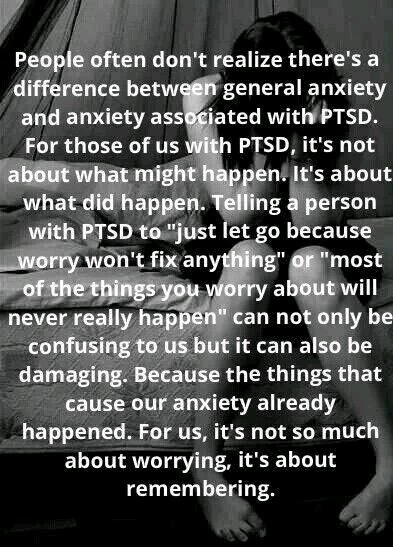
IMG_4280Rarely can you identify an individual who is coping with PTSD by simply observing their behavior. Unless you are present when they encounter a trigger, have a flashback or wake up screaming in the middle of the night, PTSD can silently hide beneath a veneer of socially acceptable behavior.



Even when someone suffering from PTSD encounters a trigger or experiences a flashback you may not recognize the trembling hands, the internal panic, the flinch as gruesome images assault their minds. When they drop out of normal activities you may simply think they are grieving instead of recovering from a night without sleep or filled with nightmares. And how many people are privy to the methods of distraction utilized or the inability for those affected to perform simple tasks like returning phone calls, making appointments or paying bills?

Then shame takes center stage causing the individual to castigate themselves for all they can’t control or accomplish without understanding why the lesser known symptoms of PTSD are plaguing them. Unless they’ve seen a counselor they may not even know they have PTSD.

And of course, depression plays an active role as well. There’s also a difference between a mild or moderate case of depression and full-scale clinical depression. While the symptoms of mild and clinical depression are the same, the intensity of the feelings and the degree to which everyday life are impacted differ greatly. Common symptoms such as a change in sleep patterns (either sleeping too much or too little), new eating habits (evidenced by weight gain or weight loss), sadness, and a complete lack of motivation abound.

Outsiders look in and can’t understand why this person declines invitations. Why they don’t return to normal activities, get a job, or do any number of other things in order to help themselves never realizing the extreme melancholy, fatigue and shame often prevents them for taking the initiative to do anything. It takes too much energy or exposes their vulnerability to the outside world. Both are adequate deterrents by themselves.

Who wants to admit they are clinically depressed? Aren’t those people in institutions? Who wants to confess to struggling with PTSD? Isn’t that just a bid for attention? Who wants to admit that simple things are much too difficult – that they can’t quite cope – that they aren’t enough – that the awareness of their utter lack of control is terrifying?

Where is your faith, one might ask? Right where it always was, solidly grounded in my Savior, Jesus Christ. Then why can’t you trust in His loving care?

Consider Isaiah 43:2 with me.

“When thou passest through the waters, I will be with thee; and through the rivers, they shall not overflow thee: when thou walkest through the fire, thou shalt not be burned; neither shall the flame kindle upon thee.”


We like this verse because we concentrate on God’s promised care. But it seems to me that we only meditate on the “good” parts of the verse. We focus on the fact that the waters won’t overflow is, the fire won’t burn us or kindle a flame on us and that God will be with us, but we overlook or ignore the less desirable truth this verse reveals. We will be in deep water fighting to keep our heads above the surface. We will walk through the fire. And God will be with us – but we will still feel the water rise, we will still feel the heat of the flames. Experiencing PTSD and/or depression are not evidence of a failure to trust God, they are simply normal responses to trauma. PTSD, depression and anxiety, represent the deep waters and the firery flames of life’s tribulations. So we’d do well to recognize that it won’t be easy in spite of God’s presence. Additionally it will likely take a great deal of effort to try to respond in a Biblical way. Thankfully, there is love and grace and mercy when we stumble or outright fail to behave as we believe or expect we should.

There is hope of healing. Hope in making peace with an unknown future when experience has taught us that it will be painful. There is hope that we will exit the firery furnace without the stench of bitterness clinging to our hair and garments. There is hope that shock, depression, anxiety and PTSD will not define us but instead refine us, but oh, it’s a slow and painful process and we need to show ourselves grace along the way.

My personal prayer is that I will lower my self-imposed expectations. That I will be oblivious to the expectations and perceptions of others and that I will find overwhelming comfort in the unfailing presence and love of God, because the spirit is indeed willing but the flesh is oh so weak.

 
4 Comments

Posted by on December 3, 2015 in Adversity, Faith


Tags: , , , , ,

Triumph Over Adversity

(Facebook Post 5/23/15)

With heartfelt thanks to Grant Johnson of Blue Horizon Productions – a clear look at what I like to refer to as “Gracen’s Moment of Triumph Over Adversity.”

https://vimeo.com/128670958


Tags: , , , , ,

Learning to Fly Solo Times Two

(Facebook Post 8/15/15)
JBU
The start of college is an exciting time for Gracen, and a bittersweet time for me. A time for her to spread her wings and fly. I am profoundly thankful she has this opportunity at all as we were not quite sure it would be possible, at least in the way we hoped it would happen.

Earlier this year I read through the doctors notes from the ER December 26, 2013. When every effort had been made on her behalf, a final prognosis note was entered into record. It read something like this: Should the patient survive, she will likely reside in a long term care facility. When David and I were finally allowed to see her in the ICU, I asked the nurse outright if Gracen was expected to survive and received the standard non-response: All I can tell you is that the next forty-eight hours are critical.

It never crossed my mind to take pictures of Gracen in the hospital, in fact the only ones taken were taken by a friend of Gracen’s. But looking back, I wish I had, if only to remind myself of how far she’s come, how far she exceeded the expectations of the doctors who saved her life. There are days I need the encouragement – a visual reminder – that my warrior princess has conquered overwhelming odds in the past and can still push beyond the prognosis of her disease.

I’ve done everything I can possibly think to do to ensure a smooth transition for Gracen into college. We’ve toured the campus multiple times trying to address every accessibility issue she might encounter in the dorm, the classrooms, and on campus itself, from the cafeteria, library and laundry facilities to ADA (Americans with Disabilities Act) desks and priority seating arrangements. I’ve spoken with the Support Services Director and the Facilities Director, who, by the way, have treated this neurotic mother with great kindness and the utmost respect, and have addressed every concern promptly.

I have scoured the ads and stores to determine if there are products available for purchase that will make dorm life easier, more “normal” for her, and purchased what I can. Her dorm room has been measured and mapped out on graph paper so that we can determine how her room can be laid out for maneuverability and access to outlets to charge the battery for either her scooter or the power wheelchair we hope will be delivered before freshman orientation begins. We’ve assessed bathrooms and showers and storage space for her manual wheelchair, a walker, and shower chair. We located and spoken with the campus nurse and are working with Gracen’s therapy clinic to arrange a new, abbreviated schedule of therapy sessions.

Arkansas Rehabilitation Services helped us to identify and acquire assistive technology to help Gracen in the classroom and we have been practicing to use Dragon Dictate and a Smart Pen.

Most important of all, for this neurotic mother anyway, is the iwatch Gracen received as a graduation present. It’s a luxury item to most, a high-priced toy to others (and definitely a toy from Gracen’s perspective) but it’s sole purpose is to grant Gracen access to emergency assistance should she fall in the shower or anywhere else on campus when she is alone. As long as her cell phone is nearby, she will be able to call 911, campus security, the school nurse or a friend for help.

On Thursday, August 20th, we will move Gracen’s things into her dorm room and on Friday evening we will return and Walker Residence Hall on the campus of John Brown University will become Gracen’s new home. David and I will probably take a boatload of pictures, which she will allow with annoyed indulgence, hug her, and do our best not to shed any tears in her presence before turning our backs and driving away. We will be happy and sad and far more worried than the average parent as we exit campus. And while David may trust the Lord to protect Gracen by keeping her physically safe, I will trust Him to protect her heart, mind and soul until her numbered days expire, and I will hope and pray that her number of days will be far greater than Bethany’s and Katie’s proved to be because as Proverbs 19:21 says, “Many are the plans in a person’s heart, but it is the Lord’s purpose that prevails.”

My heart will hope that Gracen will fly and I will share the wisdom of others who have gone before and tell her to stay strong –

staystrong
that she is not a one in a million kind of girl, she is a once in a lifetime kind of woman.

lifetimewoman

I will tell her life shrinks in proportion to one’s courage –

courage

And to keep on climbing, keep on reaching.  I’ll remind her that she’s come so far, that she need not be scared, because I am confident that she will fly! I’ll tell her to exercise discretion, use good judgment and then, and only then, take risks.

takerisks

And I will try to remind myself of those same things in the days and weeks to come as Gracen flies and I start looking for an identity beyond that of wife and mother and attempt to answer this question for myself, Who am I now?

possiblefaith


Tags: , , , , , , ,